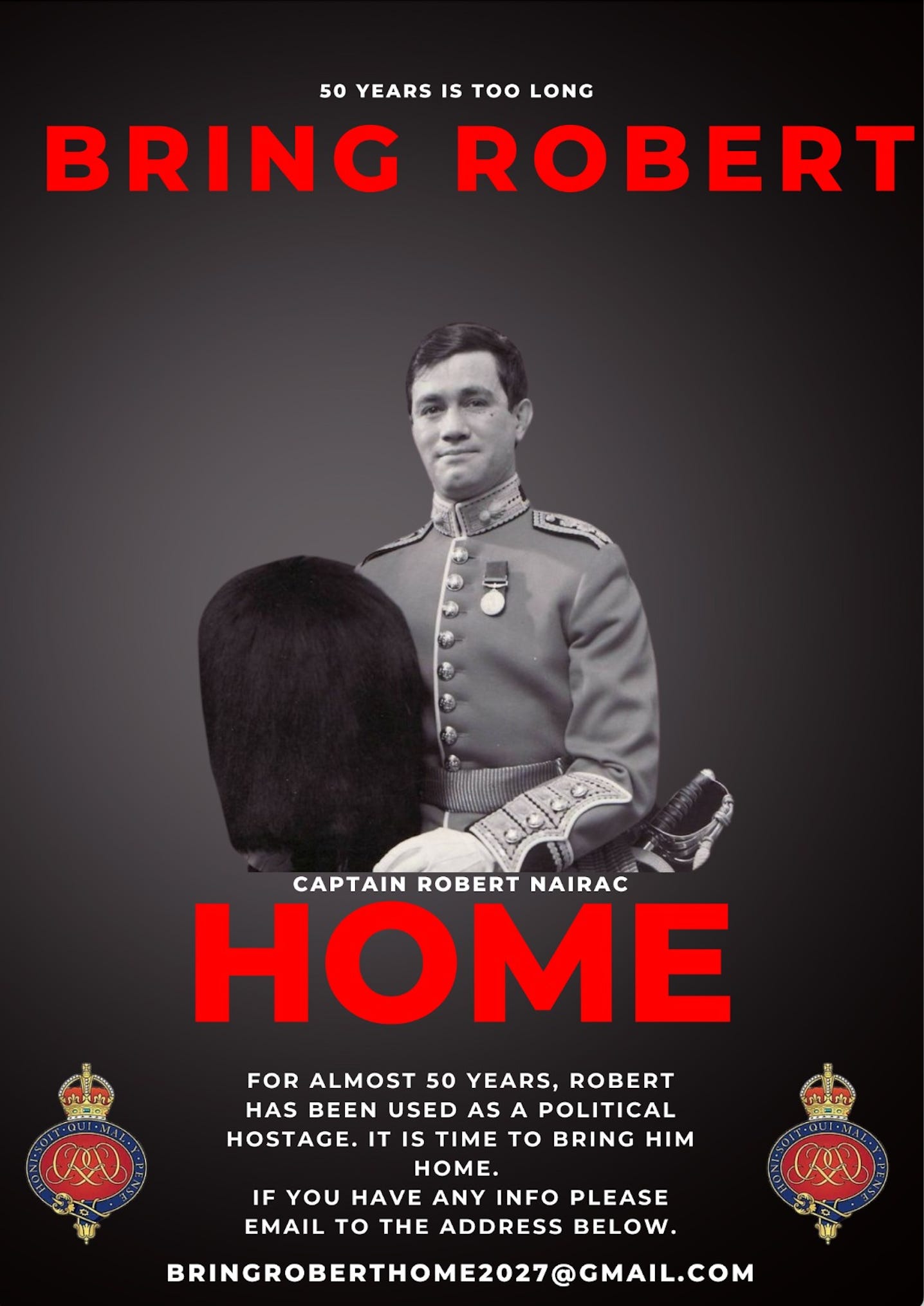
This includes the fact that some former IRA volunteers — individuals who were active during the period of Nairac’s abduction and death — now describe his fate, and events such as Kingsmill, as “war crimes.” Their adoption of this terminology invites scrutiny: they are now relying on definitions created and institutionalised by states whose own conduct has consistently raised grave humanitarian concerns.
The modern legal architecture of “war crimes” and “crimes against humanity” — the Geneva Conventions, the UN frameworks, and later the Rome Statute — was heavily shaped by dominant military powers, particularly the UK, the US, and allied states. These same powers have engaged in multiple conflicts where extensive civilian casualties have been documented by UN agencies, human-rights organisations, investigative journalists, and in some cases their own military inquiries. The wars in Iraq and Afghanistan, and Western-supported military operations in Gaza, have all resulted in significant civilian harm. These deaths are rarely denied; rather, they are reframed through bureaucratic terminology: “collateral damage,” “operational error,” or “proportionate use of force.”
This discrepancy between legal principle and political practice is further illuminated by a recent major development at the UN: the UN Security Council’s endorsement of Donald Trump’s 20-point Gaza peace plan, which authorises an international stabilisation force for Gaza and establishes a transitional “Board of Peace” potentially to be chaired by Trump himself and quite possibly Tony Blair as his subordinate.
This striking arrangement — whereby a former US president is centrally placed in the governance framework of Gaza — underscores how the institutions that claim to adjudicate and define “war crimes” and “justice” can themselves be instrumentalised by powerful states for political ends.
This pattern underscores a foundational asymmetry: although international humanitarian law exists in principle — embodied in the Geneva Conventions, the Rome Statute, and UN frameworks — its enforcement is contingent upon geopolitical power. States with overwhelming military and political influence can reinterpret, evade, or reject legal scrutiny. The United States’ refusal to accept International Criminal Court jurisdiction, the limited legal accountability for British military actions in Iraq and Northern Ireland, and the absence of prosecutions related to Western-backed operations resulting in large-scale civilian casualties all underscore this reality.
This does not imply that atrocities are morally insignificant, nor that suffering is somehow “equal.” Rather, it reveals that the labels “war crime” and “crime against humanity” are not applied according to universal standards but deployed selectively — most often against actors lacking the geopolitical capacity to resist or influence the legal regime.
Against this context, elevating Nairac’s disappearance as a singular moral outrage reflects selective moral reasoning rather than principled adherence to international law. The disproportionate focus on this individual case, contrasted with the relative silence surrounding far more extensive patterns of state violence, exposes whose suffering is recognised and whose is dismissed. This selective invocation of international law suggests a hierarchy of victims and perpetrators determined not by legal consistency but by political convenience.
When former combatants adopt the vocabulary of international criminal law — particularly when such law is constructed and applied by states they once opposed — it raises deeper questions about how definitions of “war crimes” are being understood, why they are being invoked, and which political narratives they ultimately reinforce.
Unlike powerful states that routinely deflect, reinterpret, or ignore accusations of wrongdoing, some former IRA volunteers have shown a far greater moral autonomy in how they use terms like “war crime.” Their willingness to apply this vocabulary even to their own former comrades demonstrates that they are not confined by the limitations or justifications of the organisation they once served. Instead, they appear guided by a deeper personal understanding of morality in war — one that allows them to call out actions they now consider wrong, regardless of loyalty or political allegiance. This stands in stark contrast to the behaviour of states that constructed the international legal system yet refuse to hold themselves to its standards.
Ultimately, the contemporary use of “war crime” is less a neutral legal classification than a reflection of power: who defines the law, who escapes its reach, and who is condemned by it. And until international humanitarian law is applied consistently — irrespective of political strength — its terminology will remain subject to selective deployment and contested meaning.
For my part, I do not regard either Kingsmill or the disappearance of Captain Nairac as “war crimes,” “crimes against humanity,” or moral equivalents of state-directed atrocities such as Bloody Sunday in Derry. This does not diminish the tragedy of the lives lost; rather, it reflects a deeper truth about both the nature of war itself, and the political origins of the terminology used to judge it.
It is compounded by the fact that the modern legal architecture of “war crimes” and “crimes against humanity” was constructed by dominant military powers — chiefly the UK, the US, and their allies — who have repeatedly refused to abide by the standards they imposed on others. Their own actions in Iraq, Afghanistan, Gaza, and other theatres of conflict consistently contradict the moral authority claimed in defining such terms. Consequently, the legal architecture they created has been hollowed out, emptied of moral authority, robbed of credibility, denuded of meaning, and drained of ethical force by their own conduct, rendering these classifications morally and ethically redundant. They have become less legal principles and more political instruments — abstract words detached from consistent application. In many ways, these labels have become abstract terms with no consistent relationship to the actions they claim to describe — little more than empty, selectively applied words.
The reality is that war, by its very nature, is immoral. It is a situation in which human beings are authorised — even expected — to kill one another in pursuit of competing political objectives. Every protagonist in a war seeks victory, and historically, victory is pursued by whatever means are judged necessary. To then isolate specific brutal acts within that wider framework and label them as uniquely immoral presupposes that there is some acceptable, sanitised form of killing. But war does not function on morally coherent lines. The entire enterprise is a moral quagmire. Singling out particular acts as being “above” or “beyond” the normal brutality of war often tells us more about political narratives than about genuine ethical distinctions.
It is analogous to the courtroom dynamic during the conflict in the North: IRA volunteers often refused to recognise or cooperate with British courts as part of their political and moral stance and in some cases, courts appeared to treat that stance as relevant to the proceedings, without endorsing the republican refusal to recognise British authority. Loyalist defendants who accepted the court’s legitimacy were sentenced under its authority. The law’s meaning became contingent on selective recognition, not universal principle. The international vocabulary of “war crimes” functions similarly: it is invoked or ignored depending on political convenience, not moral clarity.
Beyond the terminology, the covert activities carried out by Nairac and other British state actors in Ireland were unlawful from the outset. Investigations, reports, and testimonies have alleged that elements of British intelligence and security forces directed and colluded with loyalist paramilitaries responsible for murdering civilians, with senior governmental awareness. The Glenanne network, in particular, has been linked by researchers to a deliberate strategy of provocation intended to escalate communal conflict. Within this context, the events leading up to Kingsmill cannot be reduced to the simplistic narratives often presented today. The only gunman who spoke at the scene reportedly had an English accent, and Nairac was already known to the South Armagh IRA at the time. Whether or not he was directly involved, it is undeniable that British covert units and loyalist collaborators helped create the very conditions that preceded Kingsmill, at a moment when the IRA leadership had previously restrained volunteers from retaliatory actions.
These complexities raise serious and unresolved questions about who was ultimately directing events on the ground and whether the violence formed part of a broader pattern of manipulation and engineered escalation. For these reasons, I cannot categorise Kingsmill or the disappearance of Captain Nairac within the same moral or legal framework as state-executed massacres like Bloody Sunday — nor within the hollow and debased, selectively applied vocabulary of “war crimes” and “crimes against humanity,” which fails to capture either the moral reality of war or the political realities that shape how these terms are used.
⏩ Cam Ogie is a Gaelic games enthusiast.