Showing posts with label Northern Ireland Protocol. Show all posts
Tommy McKearney ☭ Jeffrey Donaldson’s speech to the DUP annual conference last month generated more interest than is normally the case for this event. 


The mainstream media concentrated not only on his support for a devolved administration but also his tacit acceptance of a Sinn Féin First Minister. Nevertheless, when viewed in its entirety his speech revealed much more than that.

His address illustrated the extent of the dilemma facing unionism, and how difficult it will be for its supporters to find an answer to their satisfaction. In reality, the North’s political process has not just stalled: it is fundamentally flawed.

Reading Donaldson’s speech leaves little doubt that he recognises the enormity of the challenge faced by unionism, although it is still not prepared to envisage an end to the union. In his effort to maintain Northern Ireland as a viable political entity, Donaldson is faced with the nigh-impossible task of appeasing the irreconcilables among his supporters while promoting a pragmatic agenda.

Aware that the present deadlock is detrimental to the unionist cause, he states bluntly that his supporters must not allow republicans to promote a claim that “Northern Ireland is a failed and ungovernable political entity . . .” The question is, though, how he proposes to fix this situation.

Several important points emerged throughout his analysis. To avoid the aforementioned failed and ungovernable entity, he was adamant that it is essential to restore the devolved administration at Stormont. Moreover, he was quite explicit in his rejection of direct rule from London, going so far as to say that “Westminster has imposed laws upon us that are not in tune with the needs or wishes of the people of Northern Ireland . . .”

Significantly, Donaldson emphasised throughout his address the need for achieving widespread support, saying that it is important to set about “restoring cross-community consensus that is essential for the political institutions to be re-established . . .”

So far so good and, up to a point, all very plausible. Nevertheless there still remains the major obstacle that is the Protocol and the Windsor Framework. And this really is a sticking-point, as Donaldson had to admit that, in spite of his best efforts to force the issue, the British government’s proffered resolution fails to meet the seven crucial points identified by his leadership colleagues and, more ominously, the party grass roots.

It is at this point that the matter becomes increasingly problematic for the DUP. As outlined above, it is clear that Donaldson and his closest advisers are convinced of the need, if not the imperative, to restore devolved institutions. They are aware too that the current British government is unlikely to make further major adjustments to its agreement with the European Union vis-à-vis the Protocol. Nor is it likely that a future Starmer-led government would be prepared to sour relations with Brussels in order merely to please the extremes of Northern Irish unionism.

The prolonged existence of an intractable impasse would, they realise, ensure the type of “failed and ungovernable entity” that would give rise to an irresistible demand for a border poll. Realists within the DUP leadership know that the result of such a referendum is no longer a foregone conclusion. Changing demographics, fractures within wider unionism, malfunctioning health and social services and an economy falling far behind that of the Republic are all factors arguing against the maintenance of the union.

Hence Donaldson’s plaintive call to all members of the party to be prepared “to face up to new realities and adapting to new circumstances,”all the while insisting that this has to be done in order to protect Northern Ireland’s place within the United Kingdom. Elsewhere he says, significantly, that the DUP will have to determine whether there is a sustainable basis for moving forward.

It would be a mistake to doubt his sincerity or his commitment to maintaining the union, or his conviction that retaining the connection is possible. It seems, therefore, that he is preparing to modify certain DUP positions although without specifically saying as much. Whether he can manage this manoeuvre without risking a mutiny is far from certain.

To effect his plan he has made a pitch to London for assistance. Contained within an unusually long leader’s address were several suggestions in what are a set of proposals appealing in effect to the British government. This he has done with a view to winning a Westminster package offering sufficient political space to facilitate the breaking of the present impasse and allow a return to Stormont.

Among the points are a request that the British government establish an East–West council of the United Kingdom, a body that pointedly excludes the Republic. The thinking behind this initiative is surely to provide a comfort blanket for those spooked by the presence of minor customs checks at Larne and the absence of these at Newry.

Then there is the emphasis on a need for a financial sweetener—specifically, £1 billion for the health service and the funds for providing thirty hours’ free child care per week (as already exists in England), as well as a five-year plan to enhance the economy in general.

From all this it is now almost certain that speculation about the DUP’s return to Stormont is most probably based on fact. What is not at all certain is how this will go down with hard-line unionists. After all, it’s not all about customs checks in the Irish Sea: there will be, for many, the difficult-to-accept spectacle of Michelle O’Neill of Sinn Féin stepping into the role of Northern Ireland’s First Minister.

Then there is the disturbing prospect of Michael O’Neill (no relation) eventually leading his players out onto the exchequer-funded turf of Roger Casement Park in republican West Belfast.

With Jim Allister and his TUV only too willing to rubbish any compromise, the Donaldson gambit is not guaranteed to succeed. There may also be more than a few disenchanted members of his own party willing to pull the rug from under their leader’s feet. It would be ironic indeed to see Donaldson suffer the same fate that he helped inflict on David Trimble twenty-five years ago.

Nevertheless, and no matter what the immediate outcome, a partitioned northern entity will remain an unstable political anomaly.

Tommy McKearney is a left wing and trade union activist. 
Follow on Twitter @Tommymckearney 

The North’s Political Process Is Fundamentally Flawed

Dr John Coulter ✍ As expected, the DUP’s annual shindig did not produce a magical breakthrough to unblock the Stormont impasse and all Unionism got was a lame-duck “making progress” waffle.

Given all the back-slapping which the DUP’s teams in the House of Commons and the Lords received, it is very clear the hardliners from the Westminster clique run the party.

Put bluntly, the numbers do not stack up for the party’s devolutionist wing to recommend a return of the power-sharing Executive this side of the Hallowe’en school holidays.

And also given the warm speech reception provided by DUP boss Sir Jeffrey Donaldson for Hilary Benn, British Labour’s Shadow Secretary of State for Northern Ireland, its abundantly clear the DUP is now riding two horses ahead of next year’s expected Westminster General Election.

The policy is to continue talking to Sunak’s Tories, but also hold out hope of a better deal from Benn and Labour boss Sir Keir Starmer if Labour gets the keys to 10 Downing Street.

But all this, in terms of a deal with Labour, could be up to a year away and will the Westminster establishment have the patience to allow Northern Ireland to operate without a fully functioning Assembly?

With the bloody Israel/Hamas conflict in the Middle East now taking centre stage over even the current Russia/Ukraine conflict, the DUP will be hoping any bad news for Northern Ireland concerning the cost of living crisis, the NHS waiting lists, or the impact of the Windsor Framework will be pushed far down the political agenda.

In DUP strategical terms, the ‘long finger’ approach to power-sharing seems the obvious path, but that is assuming working class loyalism can be kept on a tight leash by political Unionism.

If working class loyalism gets a whiff that the DUP, or even political Unionism generally, is deciding to go back to Stormont and try to mess up the Windsor Framework from the inside, there is the real danger that those unelected voices who seem to be shouting from the sidelines in working class loyalism could decide that it was time for political Unionism and loyalism to part company tactically.

There is already talk of a resumption of street protests against the Windsor Framework. However, given the experience of a winter street campaign in the 1985/86 era against the then Anglo-Irish Agreement, is there seriously much of an appetite in loyalism for parades in the rain, hail or snow and freezing cold of an Ulster winter?

Yes, a few youths may decide to chuck some bottles and bricks at the PSNI in the dead of winter, but they would really be cannon fodder for the real threat - a resumption of a serious terror campaign against the Irish Republic.

Is there really a new Glenanne-style Gang of loyalists waiting in the wings, or is talk about a Right-wing loyalist backlash against the Windsor Framework merely childish sabre-rattling to gain a few media headlines?

The original Glenanne Gang was widely linked to the 1974 Dublin and Monaghan no-warning loyalist bombs which murdered around 30 people and injured dozens more.

Skeptics may say loyalism no longer has the capacity for a bombing campaign as the main loyalist terror gangs, the UDA and UVF, are more interested in criminality and drug dealing than combating the Windsor Framework.

However, the nature of terrorism has radically changed since the 9/11 attacks in America. Gone are the Seventies days of the Ulster Workers’ Council strike, which collapsed the then power-sharing Sunningdale Executive, when Northern Ireland witnessed massed ranks of loyalists marching in roads and streets.

Terror gangs are no longer organised along the lines of British Army regiments with battalions, brigades, companies and platoons. Radical Islam has perfected the concept of the cell structure where one small gang of a handful of activists does not know what another gang is doing.

This makes it more difficult for the security forces and especially the intelligence community to infiltrate these terror gangs.

Dissident republicans have already tried this tactic with the various factions - New IRA, Real IRA, Continuity IRA, ONH and Republican Action Against Drugs. Ironically, the decision by some of these terror gangs to work together has made it easier for the intelligence community to infiltrate them.

The strategy which modern day loyalists are likely to adopt in any violent campaign against the Windsor Framework is not likely to involve the UDA or UVF because of existing infiltration of them by the security forces.

The most likely campaign would be to conceive new small groups of terrorists who have no previous convictions or connections to loyalism. Such operatives would be difficult to spot as while they would be loyalists, they would not be associated with the Loyal Orders, loyalist marching bands or had a profile at previous anti-Protocol rallies.

They may not even be members of any Unionist party. In reality, they are ordinary Protestants operating well under the radar of the intelligence community.

A cell would be established with one target in mind and that is the only operation they carry out. This would be contrary to the strategies of previous terror gangs, such as the Mid Ulster Brigade of the UVF during the era of Robin ‘The Jackal’ Jackson, or Billy ‘King Rat’ Wright where numerous murders and attacks were carried out.

Likewise, it is unlikely such cells would cause chaos in Northern Ireland. The real target would be the Irish Republic. For example, in 1974 when it became clear Sunningdale was heading for the political rocks, the Irish government attempted to break the logjam by putting proposals on the table which amounted to joint authority by another name.

However, following the Dublin and Monaghan bombing massacre, the Republic’s administration withdrew its proposals. Similarly, in spite of the supposedly current booming Southern economy, does the Republic have the financial clout to withstand a no-warning and indiscriminate loyalist bombing campaign.

The Israel/Hamas conflict has clearly emphasised the horrors being suffered by the civilian populations. The South’s Achilles heel is not attacks on Gardai, the Irish Defence Forces or Leinster House elected representatives, but to target ordinary innocent civilians as was demonstrated in the 1974 attacks.

The delicate balancing act which the DUP, and political Unionism generally, must adopt is to keep the pro-Union community on board with any proposed return to Stormont whilst ensuring at the same time that militant voices within loyalism who would favour a use of violence remain unheard.

Just as Sir Jeffrey can state that he is the leader, not just of the DUP, but of overall political Unionism, another question remains - who is the real leader of loyalism? Put bluntly, are there being in the dark shadows now calling the shots?

Follow Dr John Coulter on Twitter @JohnAHCoulter
Listen to commentator Dr John Coulter’s programme, Call In Coulter, every Saturday morning around 10.15 am on Belfast’s Christian radio station, Sunshine 1049 FM. Listen online. 

Loyalist Protocol Bashing - Childish Sabre-Rattling Or Sinister Plotting?

Dr John Coulter ✍ In spite of the well-choreographed weekend DUP conference, its abundantly clear the hardliners run the party as the modernisers’ ‘Save Stormont’ message clearly fell on deaf ears politically.

Unlike the Trimble era in the Ulster Unionists in the years after the signing of the 1998 Good Friday Agreement, the so-called No camp with the UUP was exceptionally vocal at meetings of the Ulster Unionist Council is expressing its displeasure at the party leadership’s direction.

Unlike the UUP in the late Nineties and early Noughties, the DUP carefully managed to give the public impression of a totally united party.

There was no ‘Banter at the Bus’ style confrontation between the DUP and UUP for the media. The UUP’s internal battles between the No camp pressure group Union First and the Yes camp pressure group Re:Union were not laid bare for the media to lap up.

If DUP boss Sir Jeffrey Donaldson had got his way, the party’s MLAs would have been marching up Stormont steps this morning to kick-start the power-sharing Executive.

His leader’s speech was clearly a back-slapping exercise in DUP party unity, with a clear emphasis that the Windsor Framework did not meet the party’s seven tests and although talks with the British Government were “making progress”, more laws were needed to secure a return of the Assembly.

But the reality must be faced - the hardliners in the DUP’s Westminster cabal have a firm grip on the party. Yes, Sir Jeffrey could have kick-started Stormont this morning, but that could have triggered a Sinn Fein-style walkout of hardliners at the party conference.

Remember the 1986 Ard Fheis to vote on whether Sinn Fein elected TDs should end their boycott of the Dail? When Northern modernisers Gerry Adams and Martin McGuinness won the vote, out walked the hardliners who still backed abstentionism under the leadership of Rory O’Brady to form the fringe Republican Sinn Fein party.

Sir Jeffrey could have called the DUP hardliners’ bluff, but that would have sparked a major re-alignment in political Unionism again. In one camp, would have been Doug Beattie’s UUP along with Sir Jeffrey’s wing of the DUP under a ‘Start Stormont’ banner.

In the rival camp, would have been the DUP hardliners, Jim Allister’s TUV and the unelected voices within loyalism under their banner of ‘Shaft Stormont’.

Electorally, within Unionism at next year’s expected Westminster General Election, we would have witnessed a re-run of the February and October 1974 Westminster General Elections when pro-Assembly Unionists (who supported the old Sunningdale Executive) squared off against the hardliners in the so-called ‘Treble-UC’ - a coalition of four Unionist parties opposed to Sunningdale; the UUP, DUP, Vanguard Unionist, and United Ulster Unionist Party.

In spite of split Unionist votes in many constituencies, pro-Union candidates still held the majority of Northern Ireland’s Commons seats in 1974.

A split Unionist ballot paper in 2024 may not yield the same result with many nationalists silently, but tactically, voting for the best Pan Nationalist Front (Sinn Fein, the SDLP, or Alliance) candidate to unseat a Unionist.

This could see Commons seats, such as East Antrim, East Londonderry and Lagan Valley, which have been Unionist of one shade since their formation in 1983, fall to either Sinn Fein or Alliance.

Unionism is already a minority ideology in Stormont and across Northern Ireland’s 11 super councils in terms of seat numbers. A split Unionist vote, or indeed, increasing pro-Union voter apathy, could see this result replicated at Westminster with the majority of Northern Ireland’s Commons seat being some shade of nationalist green.

The bitter medicine which Unionism must now swallow is that the only way to curb the Windsor Framework is to internally implode it from inside the Stormont Chamber. Unionism has not learned the tactical lessons of 1974 and 1985. You cannot alter the game by shouting from the sidelines - it can only be done on the pitch! In this case, the pitch is inside the Stormont Assembly.

In 1974, when the might of Unionism and loyalism forced the collapse of the then Sunningdale power-sharing Executive, the pro-Union community had no workable Plan B to replace Sunningdale.

In 1985 following the signing of the Anglo-Irish Agreement which gave Dublin its first real say in the running of Northern Ireland since partition in the 1920s, the Ulster Says No and Ulster Still Says No rallies across the Province had no impact on Dublin interference.

The Donaldson camp has clearly put party unity ahead of political progress and opted for the ‘long game’ - waiting for the outcome of the next General Election in the hope Tory rule comes to an end and Unionism gets a more favourable reception from a Labour Government under Sir Keir Starmer.

In the meantime, the people of Northern Ireland will continue to suffer the cost of living crisis with no functioning Stormont Executive in place. The gamble for the DUP then becomes not just the hope that Labour will win the General Election, but that pro-Union voters will stay loyal to the DUP/UUP ‘Save Stormont’ agenda.

Would a combination of hardline DUP, the TUV and street-protesting loyalism create enough electoral havoc for the ‘Save Stormont’ DUP that it results in Donaldson being toppled as DUP boss after the election?

The biggest threat to Donaldson, especially in his own Lagan Valley stronghold, is not the street protests, but unionist voter apathy or anti-Stormont loyalist candidates splitting the vote.

Likewise, what happens if the anti-Stormont brigade within loyalism turn its attention away from the streets and onto the ballot box, not just by putting up candidates, but by either organising a mass boycott of the election or a mass vote spoiling exercise?

The other high wire political agenda could be to allow certain seats to be lost to the Pan Nationalist Front to get rid of anti-Stormont Unionist MPs, in the hope that the seats could be won back at a future General Election with more moderate agreed Unionist candidates?

Follow Dr John Coulter on Twitter @JohnAHCoulter
Listen to commentator Dr John Coulter’s programme, Call In Coulter, every Saturday morning around 10.15 am on Belfast’s Christian radio station, Sunshine 1049 FM. Listen online. 

DUP Has Only One Choice - Save Stormont!

Dr John Coulter ✍ And so the game of political ping-pong continues as to whether the DUP can be persuaded to come back into the power-sharing Executive.

While there is a significant section of the DUP wants to return to the Assembly and restore devolved government, even the dogs in the street know that whilst publicly the issue is the Windsor Framework, privately the stumbling block to any return is who controls the DUP - the devolutionist wing around party boss Jeffrey Donaldson, or the Westminster faction around Lord Dodds, Sammy Wilson and Ian Paisley.

The pan nationalist front of Sinn Fein, the SDLP and Alliance certainly wants devolution restored. There are many in the Unionist community, too, who want Stormont up and running, especially within the UUP.

If the DUP rejects any future proposals from the British Government, would the Westminster establishment be prepared to introduce controversial legislation which allows MLAs who want to make Stormont work the chance to resume their seats.

This option would be much better than see Stormont permanently mothballed again, as in 1972, to be replaced by either Direct Rule from London, or some form of Joint Authority involving the Dublin administration.

Perhaps there is one last ace card which can be played to save Stormont - a united front by all the Christian Churches. Whilst we may live in an increasingly secular society, a lot of people are still involved in church life. This has been an issue I addressed two years ago.

With a UK General Election expected next year, and with less folk from the pro-Union community putting their trust in the ballot box, there is the real danger that some DUP Commons seats could fall to some shade of green in the pan nationalist front.

Stormont’s future depends on who will rule the DUP. Put bluntly, will the DUP put Province before party unity? Earlier this year, I penned another column in which I suggested the Christian Churches should form a mobilisation front to get voters not only registered, but organised to turn out on polling day.

But with the situation deteriorating to the point that the Assembly may not be restored by later this month and the DUP may wish to extend its Stormont boycott until at least after the General Election, the spectre of long-term Joint Authority looms ever larger.

The problem with any influence of the Christian Churches is that as soon as their representatives meet together to form some kind of united influential front, they start arguing over petty theological matters.

Numerous gatherings of church groups already exist, such as the Irish Council of Churches (ICC), Evangelical Alliance (EA), the Caleb Foundation, and the Evangelical Protestant Society (EPS).

Whilst the ICC would be perceived to represent the liberal wing of Irish Christianity, the EA as its name clearly suggests would be evangelical in theology, whilst Caleb and the EPS would be largely fundamentalist.

Whilst these groups would largely represent the majority of shades of theological Christian opinion in Northern Ireland, trying to get these various groups to work together is a challenge in itself.

In hard practical terms, any proposal for the ICC and Caleb to join forces to get the British Government to pass legislation to restore Stormont would be shot down before it had ever left the runway!

Could the leaders of the four main Christian denominations in Northern Ireland - Presbyterian, Church of Ireland, Methodist and Catholic - take a delegation to 10 Downing Street to directly lobby PM Sunak as part of a ‘Restore Stormont United Front’?

If the Westminster establishment can push ahead with the legacy legislation in the face of strong opposition, surely too, that same Westminster establishment could get cross-party support for a law which would allow those MLAs who want devolved government restored (included any potential rebel DUP MLAs) to set up power-sharing?

In short, how many of the existing 90 MLAs would sign up to this potential legislation? Opponents of such a plan would point out that the so-called ‘Big Four’ denominations do not speak for all Christian Churches and places of worship in Northern Ireland.

For example, there have been suggestions that some Pentecostal churches and churches from the Reformed Presbyterian denomination (also known as the Covenanters) have been heavily infiltrated by supporters of the TUV.

Irish Christianity could find itself in the unenviable position that the ‘Big Four’ go to Downing Street to ask for specific legislation to kickstart Stormont, while hardline evangelicals and fundamentalists attached to other Christian denominations form an equally strong delegation to demand that there be no Stormont until the Windsor Framework is entirely scrapped.

The bottom line is that Northern Ireland society needs Stormont restored. The Christian Churches now have a tremendous opportunity to assert their authority by lobbying for special kickstart laws.

But the big question still remains - will the Christian Churches have the courage of their convictions to demand such legislation. Its not just the future of Stormont which hangs in the balance, but the very influence of the Christian faith itself.

Follow Dr John Coulter on Twitter @JohnAHCoulter
Listen to commentator Dr John Coulter’s programme, Call In Coulter, every Saturday morning around 10.15 am on Belfast’s Christian radio station, Sunshine 1049 FM. Listen online. 

Could Christian Churches Force Stormont Back?

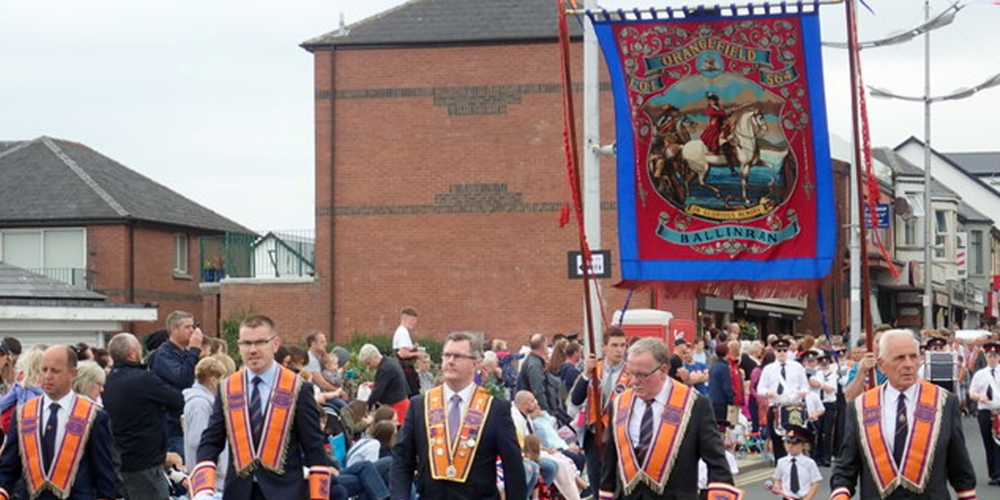
Dr John Coulter ✍ The Orange Order has a brilliant opportunity to use its traditional Twelfth demonstration platforms to build both Unionist political co-operation as well as kickstart the Stormont Executive.

For generations, the Loyal Orders - and especially the Orange - have played a pivotal role in influencing Unionism politically.

But with Northern Ireland facing crumbling health and education sectors as well as a cost of living crisis, the time has come for the Orange to really step up to the mark and provide a constructive example to the Unionist family’s political leaderships.

I outlined the importance of the Orange as a catalyst for Unionist co-operation in an article published in 2016.

Although the Orange has openly voiced its opposition to the Northern Ireland Protocol and the Windsor Framework, the summer marching season could be the platform to create a mood within Unionism which could see the DUP re-enter a Stormont Executive come the autumn.

Okay, folk may point to North Antrim MP Ian Paisley Junior’s hard-hitting ‘ice age’ interview on the BBC Nolan Show as an indicator of a hardening of the DUP’s attitude towards the British Government and Westminster political establishment in general.

Then again, as someone who grew up with Paisleyism in North Antrim, and call me cynical, but I strongly suspect that the ‘ice age’ utterance has more to do with who runs the DUP than a clear statement of policy.

Ironically, just as the DUP found itself as a Westminster power broker when the then Tory Prime Minister Theresa May needed DUP MPs as part of a ‘confidence and supply arrangement’ to prop up her Conservative Government, the DUP could find itself back on the front row of British politics if after the next UK General Election, there seems to be a hung parliament and Labour needs DUP votes to prop up Sir Keir Starmer’s administration.

However, the DUP cannot afford to let the people of Northern Ireland hang about politically to await the outcome of any UK General Election, especially if a similar election in the Republic throws up a Sinn Fein-led, or even majority rule, republican movement government in Leinster House.

While the Loyal Orders can maintain their dogmatic stance against the Protocol and Framework, they could also use the platform speeches over the Twelfth - as well as the Royal Black Institution’s August Black Saturday demonstrations - to gently persuade the DUP of the necessity of having Stormont back, even in shadow form.

The Loyal Orders, especially the Orange, were once the cement which held the many strands of Protestantism, Unionism and Loyalism together. The upper class businessman and the working class labourer could both sit side by side in the lodge room and call each other ‘brother’.

While some may try to dismiss the Orange Order as a movement now for middle aged folk and pensioners, it should not be forgotten that almost every Orange lodge on parade on 12 July will be accompanied by a musical band.

Indeed, while membership of the Loyal Orders may have dipped over the past generation, there is a thriving marching band scene, especially among the flute band fraternity. Herein lies the influence of the Orange Order. It can be a forum for influence amongst that fraternity with many of these bands based in loyalist working class areas.

The real danger is that the DUP digs its political heels in so much over the traditional marching season that time runs out for devolution to return and some form of joint authority with Dublin, dressed up as 21st century Direct Rule, is foisted on Northern Ireland.

The Dublin government got its toe inside Northern Ireland’s door in 1985 with the then Anglo-Irish Agreement, which saw the Maryfield Secretariat established near Belfast.

Sinn Fein is pushing hard for the British Irish Ministerial Council to be given more powers in the running of Northern Ireland because of the devolution logjam.

Although the DUP held its council representation during last month’s local government poll, if the cost of living crisis bites even harder this year, at some point could the DUP be punished at a future Westminster General Election?

Perhaps the solution is for the Stormont Executive to be reformed by the DUP, but with limited powers until new legislation can be brought forward at Westminster to safeguard the Union for another generation?

This may be viewed as a sticking plaster solution for a major cost of living crisis, but at least the devolution engine would be ticking over. Come the 12 July, the Orange Order has a wonderful opportunity to turn the key in the devolution ignition.

With tens of thousands of people listening to demonstration speeches that day, the Order cannot afford to waste this golden opportunity to be the power broker of Unionist politics.
 
Follow Dr John Coulter on Twitter @JohnAHCoulter
Listen to commentator Dr John Coulter’s programme, Call In Coulter, every Saturday morning around 10.15 am on Belfast’s Christian radio station, Sunshine 1049 FM. Listen online. 

Orange Order Must Use Twelfth Demos To Kickstart Stormont

Caoimhin O’Muraile ☭ I was reading a piece about a County Fermanagh Orangeman called Stuart Brooker recently and was intrigued by what he had to say. 
 

I assume, as a unionist, the man would be loyal to his government in London who I am sure are doing their upmost to maintain the Union between “Northern Ireland” and Great Britain. That nice man, the British Prime Minister, Mr Rishi Sunak has been running his blood to water for the likes of Mr Brooker yet, it appears, he has not yet done enough to satisfy this loyal Orangeman, well that’s bloody gratitude for you! 

Mr Brooker opposes the deal made between the United Kingdom Government and the European Union recently which has become known as the “Windsor Framework”. According to Stuart Brooker and, it would seem, many other men of the Loyal Orange Order, along with elements within the Democratic Unionist Party (DUP) this deal, which to any rationale thinking person offers everything to the six-counties not enjoyed by the rest of the UK, he thinks will “erode his Britishness” whatever that is.

There is nothing in that agreement, as far as I and others can gather, which will interfere one jot with this perceived “Britishness” but still Mr Brooker is not happy. The “Winsor Framework” was agreed to replace the “Northern Ireland Protocol” which, again, for some reason caused much offence to many unionists and infuriated loyalists. So, the Protocol has gone, as requested, and the “Windsor Framework” is in. It is a sovereign agreement between the government of “His Majesty, King Charles III” who Mr Brooker and the likes of swear undying loyalty to and the European Union. It is not something the “Northern Ireland Assembly”, even if it were sitting, could override. It does not have such powers.

“We can go right back to 1985 the Anglo-Irish Agreement and from all those years ago we can see things being chipped away, a little bit at a time” he remarked. He considers it of “great concern to himself and unionists in general”! Could Stuart Brooker's fears be well founded? Possibly, and possibly not. If he feels going into a united Ireland will take away his “Britishness” - and by that I can only assume he means culture and citizenship, then I don’t think it will. There are many people residing in the twenty-six counties who have maintained their British citizenship, having come across to live from London, Liverpool, Birmingham, Manchester, Sheffield the list is endless. 

So why then should Mr Brooker surrender his British citizenship and identity? The only difference is if a person does not become an Irish citizen, then in Presidential and constitutional elections they do not get the vote. All other elections, providing residence is registered, a vote is given including a general election. Just as these people have come from Britain to live, some have taken out Irish citizenship while others have not. The same will apply to Mr Brooker from Fermanagh. The only difference, and advantage, would be for Mr Brooker is he would be entitled to a British and/or an Irish passport automatically unlike the people from Britain who are not. He is on a winner all the way but, for some obscure reason, he cannot see that, are he and the lads and lasses in the DUP suffering from some kind of arrested mental development which causes some kind of desire to self-harm? 

If on the other hand, Mr Brookers meaning of “Britishness” means being allowed to march down a street with a big drum shouting how much he hates “Taigs” (Catholics) then yes, his fears may be justified. There is no room for sectarianism or racism in the twenty-six counties and that includes anti-Semitism and sectarianism of any kind. But that is not, in any part of Britain proper, across the pond, how most people view themselves. They do not see themselves as bigots who must bang a silly drum to prove superiority, or racists or anti-Semites. There are a few exceptions but generally speaking Britain and British people, despite having many other faults, are none of these. If Mr Brooker wishes to celebrate the 12th July, as some people in Donegal do, then that’s fine but without the hate filled sectarianism and flag waving.

It is not the “Windsor Framework” which may or may not erode his “Britishness” but the changing face of the six counties, “Northern Ireland” in general. The once guaranteed Protestant majority, those who are most likely, though not exclusively, to oppose a united Ireland are no longer a majority. Even when they were there was always a tiny minority of Protestants who were not opposed to unification, some even actively supporting it, but in most cases, they just had to keep their mouths shut as they were a tiny number. 

Today, those who come from a Roman Catholic background are in a small majority according to a recent poll in the six counties. However, and just as not every Protestant is in favour of the union, equally it cannot be taken for granted every Catholic would favour a united Ireland. But it is the changes in the population which are the cause of those who wish to maintain their “Britishness” dwindling in numbers and neither “Windsor Framework” or none would change that. 

This was the case back in 1985, the year Mr Brooker alludes to, but now times have changed and down here in the twenty-six counties changes have happened, for the better I’m pleased to say, as the Catholic Church has lost most of its once tight grip on society. Today not even a loose hold remains of those religion dominated days which is a good thing. These changes in the population would have happened with or without the Good Friday Agreement, which is often and wrongly heralded as the cause of all things good when it comes to change on the island, it is a perfectly natural chain of events which would have occurred irrespective of governmental interference. The younger generations are more enlightened than their forebearers.

Yet still, the unionist parties, the DUP more so, seem to oppose anything which might lead to a united Ireland irrespective of what the population of the six counties may want. We don’t know what they, the electorate of the six counties, want because the British Secretary of State will not allow a referendum. Are Mr Brooker and the DUP shit scared of what the result might be? The electorate appear not to matter, count for nothing, compared to the dominance of the DUP, the Brexit result in the six counties proved that! I wonder what Jeff “Donny” Donaldson, DUP leader, would say if, horror of horrors, his boss, Rishi Sunak, said:

Now listen here, Jefferey, this is the agreement which “His Majesty's Government” and the EU have reached and you are fucking having it, I’ve run my blood to water for you ungrateful bastards trying to get this deal. The alternative is a flight to Rwanda with all those other people we don’t want.

What would the response of the DUP and the likes of Mr Brooker be?

Let’s be honest, to the likes of the DUP and TUV, the UUP have moderated in recent decades, the electorate never really have counted for much. The voters of the six counties voted to remain in the referendum on EU membership but this minor detail was overlooked. Now, what would the reaction of these people be if in the event of the British Government ever allowing it, a referendum on remaining part of the UK or coming into a united Ireland, the majority voted for the latter? Would this “will of the people” be conveniently overlooked, ignored to suit the machoism of the DUP and the likes of Mr Brooker?

Down here in the twenty-six counties we have a multicultural society. It is no longer a monolithic state tolerating only one religion. Today we have Roman Catholicism, Protestantism, Presbyterianism, Hinduism, Islam, Judaism. In fact you name it, we’ve got it, so there is absolutely no reason why Mr Brooker and other presently constituted as unionists could not fit in nicely. We even tolerate Godless souls like me! S

Seriously Stuart Brooker's perceived “Britishness” is being eroded by many outside factors, but the “Winsor Framework” is not one of them. These outside factors will increase as the decades pass and eventually the weight of public opinion will have changed so much since the eighties, the decade referred to by Mr Brooker, that the British Government will have a choice. Either bow to public opinion or adapt a full and openly fascist dictatorial style of government. The latter might suit the likes of the DUP but the people in Britain, by that I mean England, Scotland and Wales, would be unlikely to tolerate it, again with a few exceptions.

Final point, and one perhaps Mr Brooker and other unionists might wish to consider and that is the future of Scotland as being a constituent part of the UK is very uncertain. If Scotland eventually does break away the union will be severely weakened anyway. In England there are growing numbers who are beginning to question this United-kingdom and, for those who study history, the Acts of Union. What the future holds nobody knows but the unionists in the six counties are in a perfect position to prepare theirs and plan the best future for themselves and their voters in a reconstituted united Ireland.

🖼 Caoimhin O’Muraile is Independent Socialist Republican and Marxist.

What More Do These People Want?

Dr John Coulter ✍ Now that Westminster and the European Union have signed off on the Windsor Framework (WF), Northern Ireland now needs a good dose of common sense politics, so bring back the Stormont Executive.

With the sidelining of both the DUP and European Research Group (ERG) of Brexiteer MPs as a result of last week’s House of Commons vote on the Stormont Brake, Unionism needs a Plan B which will both get Stormont fully functioning and make any potential amendments to the Windsor Framework.

With council elections due on 18 May, the DUP can spin the WF vote in the Commons that at least the party’s Stormont boycott stuck the boot in the Protocol.

Then again, given the ridiculous nature of the original Protocol, conspiracy theorists could rightly claim the Protocol was intended to be a political Trojan horse and those who introduced it knew it would fail, forcing the EU to come back to the negotiating table.

The bottom line may be - in terms of UK politics - the WF is a better deal than the Protocol.

Unionism may need to show a bit more maturity than it did with both the Sunningdale and Anglo-Irish agreements of 1973 and 1985 respectively. In both cases, Unionism had no workable alternative.

Perhaps Unionism needs to recognise that in negotiations, both sides never get 100 per cent of what they want and compromise will always be the order of the day. While a fully functioning Stormont will not solve all the challenges which Northern Ireland faces, its return will help to some degree to combat the cost of living crisis.

Unionism needs to fully understand that the British Government will not allow the DUP to keep Stormont on the long finger indefinitely. At some point, either the DUP must enter a power-sharing Executive, or as in 1972, Westminster will mothball Stormont and some form of Direct Rule will return.

Again, another bottom line must be recognised - there must be a political solution to the Stormont impasse otherwise a section of the hardmen in loyalism will tell political Unionism that they have had their chance, so move over and let the gunmen and bombers have a go at the Windsor Framework!

Put bluntly, the ballot box must always remain supreme in Irish politics. As a society, we can never allow a situation where the gun and bomb return to Irish politics.

So what should Unionism campaign for to unlock the current stalemate at Stormont? The obvious solution would be for the Northern Ireland Secretary of State Chris Heaton-Harris to pass legislation at Westminster to allow those parties and MLAs who wish to participate in the power-sharing Executive and Assembly to form a devolved government.

This would clearly involve the SDLP, Sinn Fein, Alliance and Ulster Unionists. The key question would be - how many DUP MLAs would be prepared to break ranks and join the Stormont bandwagon? Would such a working Assembly backfire on the peace process and be the very spark which would ignite loyalist terrorism?

Given the cuts and financial challenges in the PSNI budgets, would the police have sufficient manpower to control and contain loyalist violence?

Perhaps in the corridors of Westminster, the political elite are coming to the conclusion that the current Stormont project as envisaged by the 1998 Good Friday Agreement has run its course; that the Assembly should be scrapped and Direct Rule imposed.

A key criticism of Direct Rule pre-devolution was that the Northern Ireland Office (NIO) was staffed by MPs who represented not just the Government of the day at Westminster, but also came from constituencies in Great Britain.

The solution would be the Molyneaux Option proposed by staunch integrationist, the late Jim Molyneaux, the former UUP leader. He believed that power should rest with the sovereign Government at Westminster and that the NIO should be staffed in terms of ministerial posts by MPs elected from Northern Ireland’s constituencies and parties.

If that were implemented at present should Stormont be mothballed after the May local government elections, the NIO would compromise DUP, SDLP and Alliance MPs. Such a scenario would place the spotlight of pressure away from the DUP and onto Sinn Fein as the party still operates its 1905 foundation principle of abstentionism from taking its House of Commons seats.

If Sinn Fein considers itself a truly democratic party, and already takes its seats in the Northern Ireland Assembly, the Dail, Europe and local government, then why not Westminster?

There would be no way Sinn Fein could maintain abstentionism yet demand a ministerial post in the NIO.

Whatever route Westminster now decides to take, there will be a realignment within Unionism between those who are prepared to make Stormont work, and those who will never accept any agreement or framework.

Yes, the WF has its faults, but its a better deal compared to the Trojan horse Protocol. It can be worked upon from the inside through negotiation - but it requires Unionism to have the common sense and courage to take the step of triggering power-sharing at Stormont.

Forget republican spin about border polls and the need for Dublin rule if there’s no Stormont. Even the most bitter republican recognises that financially folk are better off in the Union.

As for the Republic, it cannot afford to run Northern Ireland economically, and besides, it could not cope with a 1974-style no warning bomb blitz from loyalist extremists.

As for Unionism long-term, they must become persuaders that the Irish Republic should leave the EU as the Republic will soon have to become a major ‘giver’ to EU funding. The Republic has milked the EU cash cow totally dry. Time for the Republic to ‘jump ship’ from the EU.

Don’t laugh. They all laughed in 1994 when the so-called Referendum Party was launched. Those skeptics were’t laughing in 2016 when the UK as whole voted ‘leave’. Irexit would solve the Irish Sea border in an instant.
 
Follow Dr John Coulter on Twitter @JohnAHCoulter
Listen to commentator Dr John Coulter’s programme, Call In Coulter, every Saturday morning around 10.15 am on Belfast’s Christian radio station, Sunshine 1049 FM. Listen online. 


Stormont Brake Or Break Stormont? The Dilemma For Unionism

Dr John Coulter ✍ Where does Unionism in particular and Northern Ireland in general go if the DUP decides not to adopt the Windsor Framework?

While many organisations and parties right across the political spectrum are debating how the Windsor Framework will play out in practice, all eyes seem keenly focused on the DUP.

Essentially, what the DUP wants to avoid is the public infighting which plagued the Ulster Unionists in the aftermath of the Good Friday Agreement a quarter of a century ago between the No camp based around the Union First pressure group and the Yes camp based around the Re:Union pressure group.

This current debate, as we are weeks away from the Silver Jubilee of that that Agreement, has become a battle for the heart and soul of the DUP - and precisely who leads it.

On one hand are the modernisers around current boss Sir Jeffrey Donaldson, the Lagan Valley MP who quit the Ulster Unionists as a result of the Good Friday Agreement. This camp would roughly favour most of the Windsor Framework and would kick start the suspended Assembly in the morning.

On the more militant wing of the DUP, mostly based at Westminster, are the traditional original Paisleyite wing fronted by the late Dr Ian Paisley’s son, Ian Junior, the North Antrim MP.

Throw in the Protestant Loyal Orders (Orange, Black, Apprentice Boys and Independent Orange Order) as well as the Loyalist Communities Council (LCC) and the DUP modernisers are facing pressure from a number of sources across the pro-Union spectrum.

My personal preference is a twin-track approach. Let’s get Stormont up and running and the Executive Ministers back at their posts to tackle head-on the cost of living crisis, and at the same time, establish a special committee of MLAs to discuss the out-workings of the Windsor Framework.

But what the pro-Union family needs to consider is a Plan B if the DUP bends to the militants in the party and rejects the Windsor Framework. Does Unionism have an alternative?

Sinn Fein will quite naturally see a DUP rejection of the Framework as a chance to emphasise its call for Joint Authority of Northern Ireland by Dublin and London. But as former Tory PM the late Maggie Thatcher once said - that is out!

Again, the key question is whether Stormont itself could survive a DUP rejection? There are some mutterings the DUP could opt for a ‘half way house’ - agree to a Speaker to keep the Assembly on political life support, but refuse to take its ministerial positions in the hope of gaining more time to negotiate on the parts of the Framework its voter base finds unpalatable.

The real problem is that the DUP has its eye on the 18 May local government elections. Could the party lose votes to Jim Allister’s TUV, or see swing votes to the UUP, or even protest votes to Alliance? Indeed, could the Northern Ireland Secretary of State Chris Heaton-Harris (at the behest of PM Sunak) call the DUP’s bluff and implement a snap Stormont poll?

I am a firm supporter of the need for a fully functioning devolved Assembly. My late father, Rev Dr Robert Coulter MBE, represented North Antrim in the Assembly from 1998 to 2011 and was the UUP’s representative on the Stormont Commission for that period of time.

He was one of the backroom team which helped bring the Good Friday Agreement into reality, and prior to the Assembly, he represented North Antrim in the Northern Ireland Forum for Political Dialogue from 1996-98 and was UUP Chief Whip in that Forum.

Whilst I miss my dad terribly, in one way I am glad he is not here to see the absolute mess which the current Assembly finds itself it.

Perhaps Heaton-Harris’s role is to create legislation at Westminster which would allow those parties who wish to operate devolution to enter the Assembly, elect a Speaker and take up Executive roles.

Such a radical move in the situation where the DUP as a party rejects the Windsor Framework. After all, if Heaton-Harris can bring about legislation to extend the deadline for an Assembly election to January 2024, he can create a legal situation for pro-Assembly parties to kick-start devolution.

That will almost inevitably lead to a realignment within Unionism, only this time into pro-assembly and anti-assembly groupings. On one hand, you could see a merger between the UUP and those within the DUP who want devolution to work (even if the DUP as a group rejects the Framework), and on the other hand, the militant DUP, TUV and elements of loyalism who totally reject the Framework.

If Stormont cannot be saved, devolution will be mothballed for at least a generation. Perhaps Heaton-Harris may wish to consider the so-called ‘Molyneaux Solution’ once favoured by the late James Molyneaux when he was UUP boss.

This was to have the Northern Ireland Office staffed by Northern Ireland elected MPs (provided those MPs took their seats at Westminster). In such a scenario, the current crop of DUP, SDLP and Alliance MPs would take over the various roles at the NIO under Direct Rule with Sir Jeffrey obviously the firm favourite to be the new Northern Ireland Secretary of State.

This obviously would create a huge problem for Sinn Fein, which still operates its outdated abstentionist policy of not taking its House of Commons seats. If the Scottish and Welsh nationalist MPs can take their seats, why can’t Sinn Fein. After all, Sinn Fein does take its seats in the Assembly, the Dail and Europe.

With Unionists heading off to the United States for the traditional St Patrick’s Day celebrations, no doubt the Biden administration with its nationalist agenda will be heaping more pressure on the DUP.

Mind you, given Biden’s Vietnam-style retreat from Afghanistan, the last thing Northern Ireland needs is a politically lame-duck US President trying to tell us how to run a country!

But Stormont or no Stormont, deal or no deal, one element must be maintained - the gun and bomb must be eradicated from Irish politics. Dissident republicans have already shown their unwillingness go adhere to this; the last thing Ireland (north and south) needs is for a militant loyalist faction to go on the rampage over the Windsor Framework.

Sensible and level-headed political rhetoric will be required in the coming days.
 
Follow Dr John Coulter on Twitter @JohnAHCoulter
Listen to commentator Dr John Coulter’s programme, Call In Coulter, every Saturday morning around 10.15 am on Belfast’s Christian radio station, Sunshine 1049 FM. Listen online. 

DUP Says No, But Ulster Says Yes! What Then?