Even today while reading Jaz McCann's brilliant book on his 6000 days spent in jail, Nairic made a cameo appearance, allegedly involved in the cross border kidnapping of a Provisional IRA activist. Although Belfast solicitor Kevin Winters has cast serious doubt on the reliability of many of the supposed sightings, Nairac will continue to hover like some scenes of crime phantasm, his shadowy presence concealing more than revealing.
If Bobby Sands is the IRA's most name-recognized Volunteer, then Robert Nairac is his equal in terms of British soldiers being remembered. Sands and Nairac, who died four years apart, may not have survived the war physically, but in terms of popular memory, they are always knocking on the door, never to be refused entry on the grounds that they are strangers. Although Bobby Sands was laid to rest in a place where he avowedly requested not to be interred, his family at least know where his remains lie and have the opportunity to visit the hallowed ground where he rests. Not so for the family of Robert Nairac.
Regardless of the allegations against Captain Nairac, even if he is guilty on all counts, there is nothing that justifies his disappearance. His fate is an IRA war crime that unlike the IRA has not gone away. It will persist as a live war crime for as long as the dead soldier's remains stay in a state of concealment.
The recovery of Captain Robert Nairac's body has become a project to which a former IRA leader, Martin McAllister, has invested considerable time and energy. His endeavours of almost thirty years were brought into the public sphere last week in a televised documentary, The Disappearance of Captain Nairac. It is the work of Alison Millar and Darragh MacIntyre, no novices when it comes to turning over the heavy stones which have suppressed beneath their weight many secrets from the North's violent political conflict.
The recovery of Captain Robert Nairac's body has become a project to which a former IRA leader, Martin McAllister, has invested considerable time and energy. His endeavours of almost thirty years were brought into the public sphere last week in a televised documentary, The Disappearance of Captain Nairac. It is the work of Alison Millar and Darragh MacIntyre, no novices when it comes to turning over the heavy stones which have suppressed beneath their weight many secrets from the North's violent political conflict.
 |
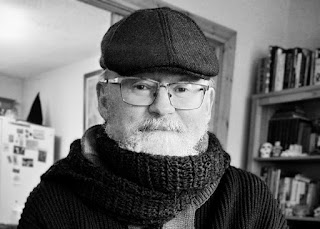
| Martin McAllister |
I first met Martin McAllister in Crumlin Road Prison in 1974. He arrived from a military hospital, after being shot by the British Army during an IRA operation in South Armagh. That he made the jail at all was down to the 'chivalry' of a British Army medic who intervened to stop Marines kicking him to death having failed with their bullets. His capture came just a month or so after he and eighteen others had blasted their way out of Portlaoise Prison. Climbing the career ladder was not for him. Fighting the war was.
When Brendan Hughes was moved to the H Blocks Martin McAllister replaced him as O/C of the Long Kesh cages eight months after the disappearance of Robert Nairac. A no-nonsense leader, there was no one then who could envisage him committing himself to the search for the remains of the dead undercover soldier. The Volunteers under his command knew him to be a principled republican. None of us realised just how principled, even though he had earlier been suspended by the IRA leadership within Long Kesh because he had the temerity to write to the outside leadership to boldly state his deep disquiet about another IRA atrocity, the Kingsmill massacre: 'a war crime of the worst sort.' It is the IRA equivalent of Bloody Sunday.
Martin McAlister would have shot Robert Nairac had he confronted him during the IRA's armed struggle. The Grenadier Guard would as readily have ended the IRA volunteer's life. But the chivalry of the British Army medic who saved his life has endured with Martin McAllister, a chivalry he seems determined to reciprocate, even if it gets up the noses of some erstwhile comrades.
Why trying to do the humane thing should annoy people needs an explanation, but from them, not from Martin McAllister. His quest is honourable: to bring to an end the unpardonable cruelty that the IRA policy of disappearing people amounts to. The surviving family and friends of Captain Nairac endure this cruelty every day, from which there is no respite. Returning British war dead to their families would be an infinitely more authentic act of chivalry than the posturing political pomp of laying wreaths for British war dead.
Robert Nairac was brave but also, in the view of others, stupid. The late Clive Fairweather, a former SAS colonel - footage of whom featured in the broadcast - told me over alcohol one evening in Edinburgh almost twenty years ago that Nairac was, in that unforgettable Kenny Everett phrase, a cupid stunt. A stupid intelligence gatherer may be an unkind way to characterise the Grenadier Guard, but it helps bring out the complex make-up of the missing soldier who managed to blend archaic Catholicism with a love of Ireland, while at the same time immersing himself in a killing machine willing to bring its own violence to Irish Catholics, ostensibly in pursuit of peace. With these themes running through it the documentary fleshes out the character of Nairac, serving up a persona as bizarre as it was brave.
Emphasizing only the bravery of Nairac and downplaying that of McAllister, was not the purpose of the documentary makers. This is a both a story of reckless courage in war and contemplative courage in peace, illustrating that sometimes our enemies can be more empathetic than our friends.
 |
| ⏩Follow on Twitter @AnthonyMcIntyre. |