Showing posts with label Kate Yo. Show all posts
Kate Yo πŸ”– Picking up a book is an exercise in great humility. 


It says the person who wrote this book knows more than you do. This book is an exception to that. It attempts to tell the story of the first blanket man, Kieran Nugent in a few easy pages. Nugent born in 1957, the same year as the raid in Brookeborough RUC station. This attack opens the book, then it's simply left. However Kieran's father hailed from Armagh, so too was Vincent Conlon,  the driver of the lorry that got the team away saving the lives of most of the crew.

On the back of this pamphlet, hardly a book as it has less than one hundred pages and costs ten pound, is a picture of Joe Cahill. Joe was responsible for the capture of the arms shipment discovered in Cohn in county Cork as he'd failed to organise the pick up. The cheques that came from Clan na Gael and Noraid were signed to Joe Cahill, although most of the money came in cash. That way the U.S. government couldn't keep tabs on it. This was the brain child of Michael Flannery. This money was to be used to feed and clothe the people of the north, as it was recognised that the men would be either imprisoned or dead. For families like the Nugents, but the money was skimmed off to buy guns. In particular the Armalite AR-180: the semi automatic commercial version that was light transportable and magazine fed. Instead of explaining this the author/editor merely touches on the poverty of the time and writes instead of things in current affairs such as happenings in Ghana and Malaysia.

This tells the reader two things: firstly, that Kieran is unknown to Morrison and, secondly, that this pamphlet has been cobbled together for publication to coincide with the fiftieth anniversary of the blanket protest. For all of Sinn FΓ©in's publicly of this "book launch" around seventy people attended.

Eventually we read about Kieran. Growing up in West Belfast and going to Slate Street school where Morrison tells us another blanket man Jaz McCann is head master there. Kieran is one of eleven children and the family insights appear to come from the youngest, his sister Eileen. At 15 Kieran survived an assassination attempt where he was shot by loyalists in a drive by shooting on the corner of Merrion Street and the Grosvenor Road, his friend was fatally wounded. After this Kieran joined the IRA. D company at this stage was down to eight or nine volunteers and others came from Clonard to strengthen it, namely Jimmy T Pot and Finbarr McKenna who was later killed on the Springfield Road.

Kiran had been on remand for five months in 1974, suspected of being involved in a shooting, but the case was thrown out. He was then billeting around various homes. He'd been staying in Frank Gillen's flat, and when Cullingtree was being raided he jumped fourteen feet on to concrete smashing his ankles. He lay undiscovered all night until a postman came across him and went for help. He was then taken south but soon returned to Belfast and reported to the IRA. 

He was arrested again in 1976 in a Bedford van moving guns from one dump to another. On remand in Crumlin Road there were discussions on how to fight the criminalisation policy. In the book/pamphlet this information is taken from other more knowledgeable writers such as Laurence McKeown and Jaz McCann. After being sentenced to three years he was taken to reception at Long Kesh where they asked him what size of clothes he took. He told them I'm not wearing your monkey suit. So they gave him a parcel but he refused to carry it, so the screw carried it, and when they reached the cell about ten of them forcibly stripped and beat him. They then threw him into an empty cell where they even refused to allow him to sit. Eventually one of the screws threw a blanket at him and Kieran is quoted as saying "so, in fact he ( the screw) started the protest". He was then held incommunicado.

His elderly parents showed up at the republican press centre where neither Morrison nor Tombstone Tom Hartley knew who they were or the whereabouts of their boy. They got no help from there and were forced to engage a solicitor.

After release Sinn Fein took him on the campaign trail, presenting him in front of audiences in Mexico and the U.S. He was arrested by the Feds in New York obviously due to someone dropping a dime to the Feds. Hardly surprising due to what has subsequently unfolded as regards informants. Kieran was also interviewed by Tim Pat Coogan for his book On The Blanket and spoke of his time on the protestt. The rest of the book is press releases from . . . you know . . . the author/editor.

Kieran's addiction and subsequent death gets a very small mention. The foreword of the book is by Morrison himself rather than another author as that is the usual format. Gerry Adams has a paragraph at the front where he invites readers to imagine being the first on the blanket.

Imagine?

Imagine being through all that and then being abandoned by your comrades in the movement. As The Dark is quoted as saying:

Kieran Nugent the first IRA man on the blanket protest. Kieran died in 2000. They called him a river rat as he spent his last days drinking by the river in Poleglass. Why didn't somebody in the movement not see he'd problems and help him. He was the bravest of the brave.

According to Morrison's book there were those in the movement who knew he had problems. Richard McAuley who lived in Sevastopol Street had been awakened one night by loud banging on his door. It was Kieran in a bad way. Kieran had been doing an all nighter in the press centre which didn't close. He was surrounded there by pictures of the hunger strike and his dead comrades. McAuley sent him home.
 
They all knew.


 The book ends quote "Kieran Nugent . . .  the first blanket man."

I'd suggest, Kieran Nugent the first blanket man abandoned by his comrades, haunted by his memories, self medicated on alcohol and dead of a heart attack at 42.

May he rest in peace.

Danny Morrison, 2026, Kieran Nugent: The First Blanket Man. Publisher: An Fhuiseog

Kate Yo is a Belfast book lover.

Kieran Nugent πŸ“š The First Blanket Man

Kate Yo πŸ”– Prison doctors . . .  screws in white coatsA McIntyre.


"Sweet light of Jesus what am I going to do? " ..Everything carried on, the world kept moving as if nothing had changed. But I knew..I knew a choice was coming. One I did not want to face." - Martina Anderson Choosing The Struggle.

Who could blame a woman in distress, especially in the eighties (1985) and especially an unmarried woman living in Buncrana on the run and pregnant. for choosing an abortion? Martina had been arrested along with another woman in Derry and charged with possession of a firearm and causing explosions.

She got, and jumped, bail, fled to Donegal along with her co-accused.

However Martina was no shrinking violet, she was a revolutionary. She grew up in the Bogside, one of seven sisters in a family of ten plus two parents. Her mother Betty is said to have been a stalwart for republicanism and her father Billy, nicknamed Dinky, was a Presbyterian. She writes of the economic hardship endured by such a big family who had little work. This situation was very common for those times. She drew a picture that could be replicated all over the North for those times, indeed even throughout the whole island.

This book however, has more than one aim. Not just to tell her story but of the sacrifices made by her and others to get the North of Ireland to this point. There's more to it though. More important than an outline of her life, she wants to push feminism forward, and to tell the story of the hardships imposed on women through incarceration for the cause of a united Ireland. But also she acknowledges that there is a dearth of accounts from women activists who went to jail. She does this very well.

After being charged with possession of a firearm and plotting to cause explosions she went on the run with her co-accused to Buncrana in Donegal just across the border from Derry. This was 1981. She was still there in 1985 when she found out she was pregnant. She had been seeing Paul Kavanagh but he was arrested in 1981 in England and given a natural life sentence. Due to this he wrote to her telling her to move on with her life, and she agreed and moved on. At that time she was living in a flat in Buncrana and working in a bar. During her spell there she was asked to go on an IRA operation. She then found herself pregnant in 1985 and being on the run was unable to go to England for an abortion so she flew to the continent and had it there.

That was quite something in those days, to fly to a country where the language and system was totally unknown and be able to access abortion services. The book doesn't say but I'd hazard a guess it was Germany, as that country was facing its own difficulties with the Bader-Meinhof. Perhaps there were underground links there to help her in this situation.

It was also a rather reckless thing to do as people were turned for less. It's doubtful the intelligence services on both sides of the border were aware of her trip abroad and its purpose as it could have scuppered the whole IRA operation she was involved in. However, it is written elsewhere that Peter Sherry was tracked from his home to the flat in Scotland where all five were arrested. Pat Magee too may have been under surveillance as this was shortly after the Brighton bombing. Her account of the arrest mirrors Magee's in his book, even the jest - well if you're looking for any more (info) you won't find it here.

After this arrest and charge she was taken first to Brixton, a men's prison which she describes as a hell hole and then on to Durham prison. Her account of the effect of prison on women is as good as any of the male writers such as Jaz McCann or Laurence McKeown.

For these women there were no other republicans in the jails with which to associate. To their credit they set about organising the women there in to small acts of taking control away from the prison authorities. Small, perhaps insignificant, acts of rebelliousness. There are no regular visits from families far away with little money. No regular parcels or Christmas skits that some have wrote about, just the impoverished environment of prison and its effects on the women's bodies and psychological health.

Slopping out for these women had the added degradation of the remains of menstrual periods, with no proper sanitation, toilets that didn't flush properly and sewage regurgitating into toilet bowls. Cockroaches and Victorian buildings with very little light, one window so high up on the wall only the sky was visible and very little natural light. Sometimes only one sanitary towel a day was given, period pain with no pain relief, locked away at night with severe pain and heavy flow. 

Martina was diagnosed with dysmenorrhea (severe pain and cramps). This led to a prison doctor who was ex-military performing an operation. He wanted to perform a hysterectomy but Martina thought that was too drastic and knew that all she needed was pain relief and polyps removed. They offered a D&C performed at an outside hospital by this ex Colonel Francis who was named within the prison as Dr Death. He had been known to have performed hysterectomies on many women, claiming he was an expert in that field. She was taken to hospital under armed guard and returned to the prison and simply left. Martina claims this botched surgery left her incapable of having children.

Martina's health suffered in later years due to the poor diet served while incarcerated. Her bones became a problem.

Martina married Paul Kavanagh and later the two were able to provide a good steady home for any needy child but were prevented from adopting as they were both ex-prisoners. This must have been a severe blow as many ex-prisoners after release went on to have their own families and settled down to parenthood well.

Martina emerges from this book a very likeable person, a principled and dedicated revolutionary. The reason for her abortion however is very controversial. On the one hand she has achieved a good account of imprisonment on women but on the other hand she has pushed back the abortion debate. Her book ends around the time of the repeal of the eighth and her party's fight for women's choice. The reason she chose abortion kills the argument. Choice for . . .  abnormalities, for mental health, reasons that are understandable, but to go on a bombing campaign? She speaks to those women who have had abortions. Speak up don't be silent, for you are not alone. However Martina's choice, or rather the reason for it is unique to her. In that she is alone.

Martina Anderson, 2026. Choosing the Struggle: an autobiography. Publisher: Beyond the Pale Books. ISBN-13: 978-1914318337

Kate Yo is a Belfast book lover.

Choosing The Struggle

Kate Yowith a piece based on a Crime World podcast from Nicola Tallant.

County Lines is where illegal drugs are transported from one area to another, often across police and local authority boundaries (although not exclusively), usually by children or vulnerable people who are coerced into it by gangs - National Crime Agency

A boy is missing. He had told his mum that he was going to meet some friends at Cavehill.

He was a compliant child with a strong relationship with his mother. He always kept in touch with her when out. As the day wore on with no word from him, his mother Fiona Donohoe went and got a friend to come with her to look for him in the Cavehill area at 7pm on Sunday 18 June 2020. It happened to be Father's Day but Fiona was a single parent and this is thought to be of no consequence to Noah's investigation. 

At 8pm mom Fiona called the police to report her boy missing. To their credit the PSNI already had a car in the area and were able to respond within minutes. On the Monday the child's bike is found and an investigation began. The police were treating this as a missing person case. They looked at CCTV of him leaving his Fitzroy Avenue home, on his bike with his bag on his back. He's seen again in the Queens Quarter coming out of one street without his bag. There is CCTV footage of him where - instead of going his usual route - he takes a detour. He is seen again in the Tigers Bay and Northwood Road area. This is not an area where young Catholic boys would be found. It's noted that a young boy, naked - abandoning his bike on a Sunday afternoon - and no calls were reported to police. A peculiarity of the north of Ireland as communities here are still hesitant to call the police. Old scars run deep.

On Monday the 18th his bike is found. The police in the CCTV could see that he was not followed, and didn't have a hunted look about him: they are still treating this as a missing person case. In fact they offer the bike to the family but they refuse to take it back, seeing it as evidence. The police then left the bike outside the police station in pouring rain, losing any forensics on it. At one junction the boy is seen to fall off his bike. The trauma of the fall hitting his head led to speculation about the possibility of mental health issues. The helmet he was wearing was not dusted for prints or forensically treated either. Donal MacIntyre has seen this helmet, and also knew that the mother had reported him being a bit out of sorts in the few days leading up to his disappearance. But there were no mental health issues before this. Interestingly one expert found that people who run away during a mental health episode usually travel in a flat or downward position. Part of Noah's journey was uphill. This suggests that Noah was going somewhere by request.


In Norwood Road one person reported that Noah was seen taking off his top. His clothes were found in one area but scattered over a few houses. One person picked them up and placed them outside one house. Even at this stage the PSNI are still treating this as a missing person case and stored the clothes in an open bag at the police station where any officer could walk to look or rummage through them, again leading to a loss of any forensic value. Donal MacIntyre says it is unforgivable that a naked child abandons his bike on a Sunday afternoon and the PSNI did not have the wit to bag the clothes and put them away for forensic examination. According to police this naked very slim boy then dashed behind houses where there was a storm drain with a heavy lock, and opened it to get inside.

The child's body does not support this. Except for some minor scratches on his knees and feet, Noah's body was in a pristine condition. This drain was like a tunnel underground going all the way down under Crusaders football ground and then down the Shore Road toward Belfast Lough. In the upper part of the drain the water was pure mountain water but as it went downward it became contaminated from sewage overflow. Noah's death is recorded as drowning, but no water was taken from where he was found to compare with the water in his lungs. A high ranking officer was photographed by a journalist with a long lens looking down a manhole two days before Noah was found nearby, leading to a theory the police were running a shadow investigation. However the police said that this officer was only there to encourage the troops.

Two and a half years later the police release to the family lawyers information that they have footage of Noah leaving his home around 3am and was gone for thirty five minutes. He left home wearing M&S flip flops and earphones but returned home without them. Obviously this has been known to the police very early on when Noah had first gone missing. Why then was there not a public appeal at that time?

There are questions also to be asked about the Coroner. He came out in August 2020 and said there was no evidence of a third party, and we may never know what happened resulting in it being recorded as death by misadventure. In 2020 the coroner commissioned an Oxford university expert for a psychological assessment of this. But he did not include this new evidence of Noah leaving home. This in turn disenfranchised the expert report. Did the coroner leave out this primary evidence knowingly, or was it also not released to him?

One police officer that was involved in the Stephen Lawrence case said that this kind of policing does not inspire trust and opens the door to conspiracy theorists. Chris Driscoll went on to say if you cannot tell the family something due to operational reasons then tell the family that. This is what he did with the Lawrences and they understood that. Tell them - they will find out in due course. This is the kind of policing that inspires trust. Surely due to the history of the PSNI you would think they'd rather have this kind of policing - open and transparent - but they failed to do even basic police work. The family had nothing to do with this child's death so why hide this evidence from them for over two and a half years?

Donal MacIntyre says that he has no doubt the PSNI will try to ambush the inquest with more evidence that will upset the family. The result of all of this is that Noah did not get the investigation he deserved. Journalists will bring expert eyes on this and be able to investigate the investigation.

"Journalists can make a difference" - Donal Macintyre.

Kate Yo is a Belfast book lover.

Did The PSNI Run A Shadow Investigation?

Kate Yo ✍ I was in Dublin's Olympia theatre the night that Gerry "the Monk" Hutch was freed. 


We sat in the circle surrounded by chatter, and a few women in tiny groups gathered together talking secret squirrel.

The event was billed as sold out, but there were empty seats around us most likely left by people off celebrating elsewhere. The event on that evening was Nicola Tallant's OmertΓ  discussing the Regency Hotel attack, who carried it out and why. The catalyst for the feud is the killing of Gary Hutch in Spain, that led to a decade long feud that left eighteen people dead. It was this murder that dragged the Monk in.

The attack in the Regency was carried out by the Hutch gang. Six men entered the Regency during a boxing weigh-in and shot David Byrne dead. The real target was thought to be Daniel Kinahan and Sean McGovern. The attack was over in six minutes, carried out by six men, a shooter and three fake gardai in uniform, along with a man dressed up as a woman, and Kevin "Flat Cap" Murray. After shooting Byrne dead using AK 47's assault rifles the gang fled to waiting cars.

By chance a Sunday World photographer took nine successful pictures, one after the other of flat cap and the man dressed as a woman running away.


After the Regency shooting someone somewhere suggested brokering a peace deal. Three days after the Regency the gardai bugged Jonathan Dowdall's car and fitted it with a tracker. Gerry Hutch and Jonathan Dowdall then travelled north for republicans to broker this deal. The dissidents themselves were heavily infiltrated at this time due to Denis McFadden in the MI5 sting. 

Hutch had good relations with republicans, stretching back a long time. Unknown to both Hutch and Dowdall, Gardai had bugged Dowdall's Toyota Land Cruiser with a listening device and and attached a tracker. The two men in the car travelling north, talked freely, about the feud and other stuff while the Gardai listened and followed where they went.

Dowdall could be heard telling Hutch, them Kinahans are a fucking big army. Hutch is heard saying
the cunts who done Eddie have to fucking go.  This was Gerry's brother shot dead three days after the Regency attack and in revenge for the murder of Byrne. 

Also the Monk's brother Patsy became a target, Kinahan wanted him dead, because he knew Patsy would want revenge following the killing of his son Gary in Spain. The men are heard saying after the attack that David Byrne was left in a heap and the gardai were running around like headless chickens. Dowdall tells Hutch I'm in this with you to the bleeding end. The men also discussed the disposal of the three yokes, thought to be the three AK47's used in the regency hotel. Hutch tells Dowdall they'll be 100 percent on the man and the woman but after that they'll only have speculation.

The tapes, ten of them, show Dowdall's true colours. He came across as callous and manipulative, and the tapes also gave insight into gang culture in Ireland. In court Hutch's team tried to have these tapes collected from the listening device thrown out. They claimed that eight out of the ten of the tapes were recorded in the north and therefore they were out of the court's jurisdiction. This led the three judges to listen to the tapes in private, and they allowed them to be used in evidence.

The spotlight during the trial focused on Jonathan Dowdall. Both the Dowdall family and the Hutch family were known to each other stretching back to when they were kids. One of the Hutch's worked on Dowdall's mother's street trader stall. Dowdall had a good reputation in the community both as a business man and politician. He began his own small company, employing about twelve men. He had a
luxury home on the Navan Road. It was Dowdall and his father that booked a room in the Regency to be used during the attack, they then handed over the key to the Hutch gang.

Dowdall was charged along with the Monk for murder. Within three months he'd made a deal with the cops to remove the murder charge for a lesser sentence of facilitation and serve four years along with
turning state's evidence. Dowdall knew his own words could be used against him and set about constructing a new narrative, to the point of almost rewriting the history.

During the trial Dowdall became petulant. Saying he'd never committed a crime in his life, he wasn't himself back then, that the Hutch gang were terrorising his family, and on and on he went. But the judge had the measure of him, and recognised that Dowdall was a sophisticated and manipulative liar. Dowdall is now in the witness protection programme.

The discussion centred around the breaking of omertΓ , what was it like to live in hiding, as the judge said, living your life looking over your shoulder. Yet, once the agreement for WPP was secured Dowdall didn't have to make himself look good. He could have got into that witness box and denied all knowledge of the crimes that had happened. Whatever the situation now he and his family are currently in hiding.

These discussions on OmertΓ  by Nicola Tallant that I went to in Belfast and Dublin were absolutely brilliant in their analysis of the Regency attack. And there are other events on this throughout our island.

If there's one in your area - go. You won't be disappointed.

Sources

The two events OmertΓ  in Belfast and Dublin.

Nicola Tallant's book The Clash Of The Clans.

Kate Yo is a Belfast book lover.

OmertΓ 

Kate Yo πŸ”– “Gerry Adams and Martin McGuinness were like de Valera in 1927 taking their parties into a partitionist assembly for the first time.”


Jake MacSiacais was born in the Mater and according to his mother when her time came to deliver she showed up at the hospital and was instructed by the nun on duty firstly that she had to have a bath. However, his mother was barely able to pull the bath board into place before her baby came into this world. He was called after his father Gerard, but since around five years old he was given the nickname Jake and it stuck. 

The family were living in Ardoyne in the granny's house and there was always this feeling of “enveloping Irishness”, despite her four sons including Jake's father being economic conscripts to the British army.

In 1961 his parents got their own house but Jake remained with his granny Lizzie, until she became unable to look after him.

Jake then moved around the corner to his other granny’s house but eventually at school age he moved into his parents in West Belfast. The first chapter of the book is called 30 years growing, and what the author does is to tell the story of his own life running parallel with the outbreak of the troubles. His childhood was typical for the time as dark clouds began to gather over his innocence.

Loyalists were becoming active again and Gusty Spence released a statement that:

from this day on we declare war on The Irish Republican army and its splinter groups. Known IRA men would be executed without mercy. Less extreme measures will be taken against anyone sheltering or helping them, but if they persist in giving them aids then more extreme measures will be adopted.

Basically their rule of thumb was if you can’t kill an IRA man any Taig will do.

Around this time there was an incident that told Jake that there was another tribe out there that did not like their Irishness. Jake’s mother had a long term friend who worked in Graves Mill with her and she was a Protestant living in a loyalist estate. His mother took her children to visit the friend but had the door slammed in their faces. Jake also had a similar experience with his friend James Watt, nicknamed Tonto. He never saw Tonto again until he was in Crumlin Road jail in 1977. Tonto faced charges of murdering Catholics. He was also a UVF bombmaker and then eventually became a born again Christian. 

In 1975 Jake was charged with eleven counts of conspiracy to cause explosions. These charges were based on documents detailing plans of British barracks and installations. He was given three years for each count to run concurrently and sent to Long Kesh. Upon release Jake was ready to take up where he left off. This period of freedom ended when a British soldier was shot and wounded in West Belfast. He was shot from behind Ard Monagh flats in Turf Lodge.

Joe McQuillan, whom Jake only met that morning, was driving a car in which Jake was a passenger. They were being pursued by the Brits. Joe accelerated and managed to get well in front out of the Brits' sight long enough for Jake to hide a number of items between a hedge and a garden wall. When they reached Norfolk Way they met two army vehicles blocking their path.

Jake was charged with being a member of the Provisional IRA and possession of a rifle. A soldier identified Jake as the man coming out of the flats immediately after the shooting. Again he was sent to Crumlin Road jail to A Wing where he was debriefed upon arrival. Debriefing was to see if there were any clues during interrogation that the detectives may have learned or revealed that could be quickly sent to the outside. A few weeks later Jake was sitting in his cell reading when he had an Eureka moment. Jake knew that Joe admitted possession of an armalite and hijacking, but Joe also knew of the stuff that Jake put behind a garden wall and these were never mentioned or recovered.

The information the detectives had about the flats was very accurate and no one person could have known all of that, therefore there must have been a concealed spy post in the flats. Word was sent to the outside and the spy post was discovered within a week. This post was manned by two soldiers and they were given access to the roof via a trap door in an informers bedroom ceiling.

This informer's father was a prominent republican and instead of getting the death penalty like other informers, he was only exiled for a year.

Jake then describes what life was like in Long Kesh and the events leading to the hunger strike. When the fast ended life became more bearable in the Kesh. Prisoners were given fresh cells with furniture and within days they had their own clothes.

The screws were so relieved at being safe they let their guard down and this eventually led to a mass escape. It was announced that any prisoner who would do work and join the prison population would receive fifty percent of their remission back.

The most prominent prisoner to do so was the former PRO who would later profit from a highly contested account of  the hunger strike that did nothing other than wound families. This man has severed all his connections with the Republican Movement and has since written two books neither of which I will ever read. 

Jake was released in 1982 and went to St Louise’s college where he completed his O and A levels. At this time electoral politics was a hot topic of debate and it became the focus of the next Ard Fheis in 1983 where RuairΓ­ Γ“ BrΓ‘daigh declined to stand again for President of Sinn Fein. Γ“ BrΓ‘daigh cited the rejection of Eire Nua among his reasons. Γ“ BrΓ‘daigh was succeeded by Adams who remained President for 35 years.

Abstentionism was also debated at the next IRA convention and the ban against taking seats in the Dail was lifted. 

Jake’s private life was also developing. He met his wife Chrissie and they moved into their own house and their children came along.

Jake was working away in different jobs but by 1990 he was responsible for the northern input to An Phoblacht. He also spent time working at the Feile.

Things were developing politically. Arms had newly arrived in Ireland, and it was the time of the Anglo Irish agreement, The army was deeply opposed to both this Agreement and the Hume-Adams imitative. Adams agreed saying the Anglo Irish, Agreement was a disaster for republicans, but by 1993 it appeared that Adams was well down the road with the Hume-Adams imitative.

Jake had fallen out with some comrades over political differences. 1994 began a very unsettling period for the Movement.

Adams was given a U.S. visa and Jake thought this would exact a heavy price tag for republicans. A hot topic of debate in the Movement was the differences between Hume-Adams and the Downing St declaration. However it became a moot point as both were enshrined in the G.FA some years later.

At this point Jake felt that Sinn Fein was headed into a revamped Stormont, despite sloganizing there’d be no return to Stormont rule.

There was a serious danger of the army splitting in two, and this was the last thing Jake wanted, so he was determined not to do anything to contribute to this. Jake felt the leadership was not in control of events. The two things republicans’ had set their face against – the Unionist Veto and an internal settlement - and Jake feared they would become a reality sooner or later. He became very guarded about what he said.

He felt along with many others the IRA constitution had been violated. It looked like Sinn Fein was headed into Stormont with the Unionist Veto unchanged. A large number of the IRA’s front line soldiers left the Movement as individuals. Jake also left the Movement on October-16-1997.

This was a major change for Jake outside the Movement and he suffered deep depression alongside post-traumatic stress.

He writes, “in my personal life I had to reach the depths before I reached the heights." He continues:

If I offended or upset anyone all I can say is forgive me my trespasses as you so often and so readily forgive your own. Remember we are Gaels as were our ancestors before us. We don’t sleep we simply rest from time to time. BeirΓ­gΓ­ Bua.

Jake MacSiacais, 2022, Surfing Into Life On A Bathboard: A Gaeilgeoir Republican's Pathway To An Imperfect Peace. Beyond The Pale. ISBN 13: 978-1-914318-17-1 Paperback.


Kate Yo is a Belfast book lover.

Surfing Into Life On A Bath Board

Kate Yo ✒ πŸ”– Rose Dugdale was the daughter of a retired Colonel of the British Army and millionaire Eric Dugdale. 


Her mother Caroline had previously been married to John Mosley, brother of the fascist Oswald. John was a ladies' man and this along with the controversy over his brother, led to divorce. Caroline wanted out. Finding herself alone with two small sons she was on the look out for a suitable husband. She married Eric Dugdale and they had two daughters, Bridget Rose and Carol.

Rose was one of the last debutantes to meet the queen in 1958. Britain was changing and Rose did not do what was expected of her to find a suitable husband, settle down and produce children. Instead she went to Oxford.

There she was radicalised by the students of the day. Her subject was economics and became strongly influenced by Marx. She often quoted Mao saying revolutionaries should learn from the working class and peasants. While at Oxford during a demonstration she met Walter Heaton. Wally had heard of her, this woman who was giving away her fortune to the poor.

Wally was ex-Coldstream Guards, and had been to Malaya where he was sent to fight terrorists. He found when he got there that he wasn’t fighting terrorists but protecting corporate interests. Heaton hated the British Army for their treatment of Malayans who were forced to live in an interment camp called Kampong Coldstream. Anyone in the town but not in the camp was treated as a terrorist. Inside the camp conditions were harsh and often brutal.

Wally hit it off with Rose. She had learnt of these injustices in the class room while Wally had seen them on the ground. They were like an aphrodisiac to each other and carried on an open an affair, with Rose moving in to the Heaton family home despite his wife and children there. Together they set up the Tottenham Claimants Union, and put homeless families into squats. They became aware of Northern Ireland after watching the situation on television in Rose's flat.

When she first came over to the North she was regarded with deep suspicion. Naturally this English woman who was giving away a fortune was seen as a plant.

Quickly they realised that giving money to pensioners and putting families in to squats is not what was needed at this time; that It was time to take up arms, and over throw British rule in Ireland and rip up the whole British class system. They burgled Eric Dugdale's home while the family were at the races. They were caught and charged, with Heaton getting six years while Rose walked free. The judge believed that Rose had fallen under Heaton's influence and gave her a fine.

Rose looked up to the Price sisters because they were young and idealistic and could see the bigger picture as regards to feminism, and she wanted to help them in some way. By this stage Rose was involved in a relationship with Eddie Gallagher. Although Eddie had met Albert Price in a safe house in Dublin he never told him that he was working on something to help free his daughters. They organised a raid on Rossborough House with Eddie's semiautonomous crew. They believed they could push the British into releasing the sisters in return for the valuable art work. They were very mistaken as Albert Price appealed publicly for the return of the paintings as neither he or his daughters wanted the art work destroyed.

The Garda found the artwork in a cottage that Rose had rented for herself and Eddie. As they searched the cottage and arrested Rose they found the bedroom doors locked. When the guards went to Rose for the keys she asked did they not need a warrant. No, as they had permission from the owner.

Rose was given nine years for this and another nine to go concurrently for the bombing in Strabane.

Rose found herself in Limerick Prison where she was the only woman there. Later she would be joined by Marion Coyle. She asked to speak to her solicitor and when they met Rose gave him a small urine sample as she believed she was pregnant. He wrote to her soon afterwards saying that the answer was yes. The pregnancy was not known to the authorities of the jail until very late in the day, and proved to be a security nightmare.

Rose was delivered of an eight pound blond baby boy. The child could only be with her until breast feeding stopped. After that period was up her solicitor Myles Shevlin and his wife in Chapelizod took the child in.

Eddie had other plans though. He wanted his son to go to the O’Neill family who had a safe house in Navan where he would be given a republican upbringing.

When Rose was released her son remained with the O’Neill family. Her thinking was that her boy was at school and had made friends. She purchased a one bed cottage in Eugene Street in the Coombe.

This area was known as munchkin land and was very near to St Theresa’s Gardens, an area besieged with drugs. At that time in Dublin unemployment was running at 20% and drugs and unemployment were rife.

A priest, Father Smyth, was living in the flats complex and he gathered together mothers from the area to try combat the drug dealers. Youth of St Theresa’s were queued at flat windows and put their money in and received the drugs. Rose led evictions and wanted punishment shootings like there was in the North but republicans thought this would bring a backlash from the guards.

The mothers, some fathers and this priest got in touch with both the Official IRA and the Provisionals. They contacted Christy Burke, a councillor and known republican, but he was reluctant to get involved. Burke's reasoning was that if he were involved the media would think they were IRA. This was true, especially with Rose involved. She had moved from Eugene Street into the flat above the Sinn Fein centre and also worked in their paper and chaired meetings. Ruari was with her at this time, due to John O’Neill’s return to his home town in the North. Rose believed her son would become a target if his relationship with herself and Eddie were known.

While she was in Sinn Fein's office Jim Monaghan (of FARC fame) came in to rejoin the party. He’d been in prison and on his release Dublin City Council had given him a flat in St Theresa’s complex. When Rose and Jim met it was described as love at first sight. She regarded Jim as an intellectual and of almost monastic calm.

Rose wanted a child with him but she was 44 and they could not conceive. Instead, he taught her everything he knew about bombs. 

Sean O’Driscoll was given access to Jim’s as yet unpublished memoir, and the detail it provides was extensive. He was regarded very highly by the IRA but not so with Sinn Fein. He could build a bomb out of anything. When the fertiliser the IRA used wasn’t doing as good as it should, he recommended a German make. He came up with grenades that could do damage to military vehicles: improvised, reducing a mortars recoil by using two packets of digestive biscuits.

Why Rose and Jim fell from Sinn Fein favour was interesting. In the H Blocks republican prisoners engaged on a project of analysing Irish history from a Marxist perspective. A book emerged from that project, Questions Of History, and it was published by the Sinn Fein education department. This caused shock within Sinn Fein. Jim and Rose wanted to produce a follow up book but were told in no uncertain terms there’d be no book.

O’Driscoll writes that Jim visited Rose in the nursing home everyday and that she contacted Covid and survived.

In my interviews with dozens of people for this book – colleagues in Tottenham, fellow inmates in Limerick, students in Clondalkin - not one of them ever questioned Rose’s sincerity.

Sean O'Driscoll, 2022, Heiress, Rebel, Vigilante, Bomber: The Extraordinary Life of Rose Dugdale. Publisher Sandycove. ISBN-13: 978-1844885558


Kate Yo is a Belfast book lover.
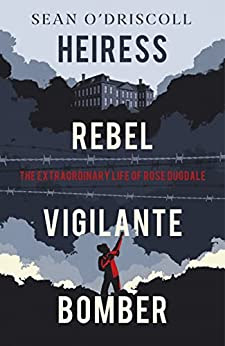
Heiress, Rebel, Vigilante, Bomber

Kate Yo ✒ They would be willing to sacrifice small lives for great reputations." - Chris Mullan to Paddy Armstrong. In Life after Life.


There is no prison play or production that does not show how the human spirit can soar.

Gerry Conlon embodied this spirit both in jail and out of it. What came across as Gerry's nervous energy was a lust after the truth to clear his name, and his daddy's name. This play takes up where the film ends. This is Gerry's story on the outside and it is told warts and all.

A young man from Peel Street, the Lower Falls, just out of prison after seventeen years. With plenty of money in his pocket, he was thrust upon the world stage where he was lifted shoulder high. Gerry insisted he walk out the front door a free man after a miscarriage of justice. Paddy Armstrong and Carole Richardson left by a back exit to avoid the world's media. Is it any wonder that his life became tumultuous?

It's a funny thing freedom writes Paddy Armstrong, I've thought about it every day for the last fifteen years, missed it, craved it and nearly died for it, and now that I have it I have no idea what to do with it. And so they partied. Their lives were adrift, out of control, with no moorings.

The play shows the partying having this tumultuous effect by assaulting the senses. It used strobe lighting and loud sound to create an almost psychedelic effect. A bare stage except for a metal bed with a small Wall behind it. The stage remains this way all through the two hour show, yet Shaun Blaney was able to hold the attention of an audience all the way through this show.

Blaney gave a brilliant solo performance that took his audience from Belfast to Dublin, to the Oscars and to Portsmouth where Gerry got clean off drugs. In addition to this, Blaney played many parts: Gerry and his nervous energy, his mother Sara and many other characters.

Gerry wants a film made of their story and he goes about trying to make that happen. This takes him on a huge journey where he acts as a consultant in the film. There's a lot of banter in it, with people such as Daniel Day Lewis, who came to Belfast and followed Gerry around to get the accent right, and Gerry through Blaney claims that Daniel never tasted poverty food until he came to Gerry's ma's house.

There is a scene where Gerry is at the Oscars and he doesn't realise it would be fours long. He gets impatient, so he goes to the gents where he holds court with all the famous faces. He banters with them all. Liam Neeson, Johnny Depp and a full room  - it's felt you are in the gents there with them. His film won seven Oscars and lifted sixty five million dollars at the box office. But Gerry just couldn't sit still. Not for four hours.

Another scene is where a car load of them stop on the road and the banter leads all involved to reenact scenes from The Quiet Man. Blaney pulls this off on his own, and he does it magnificently, just like he did in Stones In His Pocket. You meet Daniher, and Maureen O Hara, and you go to the race with them, and hear the music from the film.

That's a lot to pull off for one person - and to top it all off he looked like Gerry!!

This play is based on Ricky O'Rawes book. I haven't read it so I'm sure there's more to the story or even a better understanding of it, if I'd read the book. The three of them Gerry, Martin Lynch and Ricky O'Rawe met for drinks and were invited to attend Martins plays. Later, Martin Lynch was asked by Gerry if he would take his dad's old letters and turn them into a stage play. The letters never materialised, so they based the show on Ricky's book.

Martin Lynch in the show's programme tells of meeting Mrs Conlon at Cyprus Street Advice Centre and boasts he was probably the first person to write the name Gerry Conlon in a ledger. This is where arrangements were made for Gerry's daddy to go to London to get him a solicitor.

Paddy Armstrong also wrote of Gerry in his book Life After Life and there's an interesting story behind it. They meet each other on the wing after Paddy had been voluntarily removed to the block. Paddy was having a bad time. He'd asked to go to the block, his mood was very low. This energy that Gerry had enabled him to push on and Paddy wasn't doing so good. He had just come out of the block which he had asked for but he felt like he could have stayed on. There is some evidence in the book that Armstrong may have suffered a nervous break down. Gerry's wrote of Paddy in his own book that Armstrong had a pale prison pallor that some men get. He didn't recognise Paddy that day on the wing, in Gartree maximum security jail, some of the Balkan street ASU were also housed there. However he didn't recognise Paddy: Gerry it's me. Paddy! They embraced and clung to each other. Paddy wants to say are you drowning too my friend . . .  or is it just me? But instead he says I'm great Gerry, happy to see you. 

Before going to the block, Armstrong and another prisoner were at odds, and Paddy was in his sights, so much so that Paddy was warned by others that this guy had him in his sights and for Paddy to get in there first. So a boiling bucket of water was produced and mixed with plenty of sugar for it to stick. It was poured by Armstrong over the other prisoner and then Armstrong gave him a few wallops of a sock with a battery in it. This resolved the issue but it upset Paddy so he asked to go to the blocks. On Armstrong's first day back on the wing he spotted Gerry who didn't recognise him. According to Armstrong there was a difference to Gerry: he was still the same person but stronger, not beat down, It was the first that Paddy had seen him since their appeal was lost eleven years earlier and eight years from Gerry lost his dad.

While they both worked as consultants on the film Armstrong had told Gerry about Goa. A prisoner that Paddy knew told him all about it, and in turn Paddy told Gerry all about it. And so, off they both went to Goa. When they came back to Dublin rejoining the film crew, the three police officers Vernon Atwell, Thomas Style and John Donaldson, that fabricated their confessions and wrecked four innocent lives were in the dock In the Old Bailey where they were cleared of all charges.

Blaney tells us that £240,000 was gone through in nine months. The British government paid compensation in three instalments. 

In one scene Gerry is in Portsmouth where he went to rid himself of drugs and there is a farewell scene between Gerry and a lady friend. This scene is very moving and music from back then was played to a hushed audience. 

Blaney's women characters are something to behold. All of the women smoking, sounds of the frying pan cooking, sounds of the rain, the gestures, portrayed perfectly! Blaney brought Gerry and his wee mammy Sara back to life, like they'd risen up and returned to tell this tale.


When the roller coaster lives ended, Blaney as Gerry returns us to Belfast, back to look after his mother. He is dealt a hard hand getting cancer himself. Mum says to Gerry you haven't spoken your father's name to me in fifteen years, say it. And Blaney does, over and over. Here Gerry learns of his own daughter. She called him daddy. He loves being called daddy.

Daddy.

Kate Yo is a Belfast book lover.

In The Name Of The Son

Kate Yo πŸ”– has been reading a sordid story of espionage and abuse. 


They steal identities
They break the law
And they sleep with the enemy
The true story of Britain's secret police.

“This is not about a lying boy friend, or a boyfriend who cheats on you. This is a fictional character created by the state, and funded with taxpayers money.”

That line makes you sit up and take notice. It's a refence to undercover police spies infiltrating domestic political activist groups based mainly in London during the sixties.

The sixties were a time of revolutionary ideas and revolution. This generation wanted to do things differently from their parents. They had benefited from good education and wanted to change the political structure in Britain.

The Left was diverse in its aims but they were united by one thing, opposition to the Vietnam war. There were protests against it in London, and the first happened around 1967/68 in Grosvenor Square. 

Thousands marched to the American Embassy and were held back by police. Civil disorder broke out, with the crowd fighting police and throwing firecrackers. To stop this disorder police rode horses through the crowd. These scenes were watched on black and white televisions, alarming the country. Harold Wilson's government was fearful these groups could bring down the political and economic structure. Whitehall turned to the police, Special Branch in particular, to provide answers.

Conrad Dixon, a Special Branch officer in Scotland Yard told his superiors, "give me ten men and one million pounds, and I will sort the problem out for you." Dixon's idea was so strongly supported it was funded direct from the treasury.

For Dixon’s plan to work, it had to be something that activists would not believe. Police spies among activists not for weeks or months but years. When Dixon had chosen his ten men he called them the  Special Demonstration Group - SDS. This group was so secret that even some high ranking police did not know of its existence. 

It was in place for four decades. This unit needed had to have absolute secrecy. The men grew their hair long, wore civilian clothes and were expected to live among these groups as one of them.

Once they did that they needed to do a jackal run. It was called this in reference to Frederic Forsythe's book, The Day Of The Jackal. The main character in the book did this graveyard search, combing through graveyards looking for dead children who were born close to the time they themselves were born.

Afterwards they went to St Catherine's House to get the birth certificate of the child he had chosen.

Bob Lambert Special Branch officer / SDS recruit stole the the identity of Mark Robert Robinson who was born in Plumstead in East London in 1959. The child died at the age of seven of cardiac failure after being born with a malformed heart.


Once they had the birth certificate, they looked at the parents' names and occupations on the certificate and created a back story to make their characters like real people. Over eighty dead children were used in this way.

Once they completed their back story they needed to find a flat. The seedier the better. Then they had to insert themselves into these groups. That was going to be difficult with no ties in the community.  And to overcome this difficulty they looked to women who were activists and then use her integrity in the group. Once they established a relationship they then needed to create an exit strategy for when their deployment ended.

This usually meant going to a foreign country.

Robert Lambert was a skilled manipulator who went from Robert “Bob” Lambert to Bob Robinson. Around 1983 Lambert was tasked with infiltrating the Animal Liberation Front (ALF) and London Green Peace. He went to a meeting and struck up a conversation with a girl called “Charlotte”. She had just finished work and he offered her a lift home in his van.

All SDS officers were supplied with a van. They needed a van for their story to work. This van was to take them to work as a gardener in the more well heeled areas in London, and this excuse was also used for visiting his real family and meetings where all SDS officers met weekly to give their take on what was happening.

As Bob and Charlotte's relationship grew, she became pregnant. Bob Lambert did nothing to persuade Charlotte to terminate. Indeed, the opposite was true. He threw himself into fatherhood and was with Charlotte for the birth of their son.

At the hospital where Charlotte's family were, he told her he had to leave. Her family objected very strongly, telling him that Charlotte needed him, but he left her despite their objections.

Unbeknown to Charlotte he was already married with two children. Charlotte didn’t come from a very stable background. She had very little money and after some time on benefits, took on some part time work. Depending on her family to mind her baby. Charlotte at first didn’t mind taking on the family's financial responsibility. But after a while she felt he needed to do something to contribute toward putting bread on the table. Lambert refused, saying his efforts were better used by the ALF.

When their son was eighteen months he accused Charlotte - one of four female relationships during his deployment - of neglecting their sex life, and arguing with her when there was no need. He then left Charlotte for Karen, telling Karen that a woman tricked him into having a baby while telling him she was on the contraceptive pill.

Lambert took the boy to his meetings with his handlers, as cover. Some took their dog as cover.

In 1987 activists left incendiary devices in three Debenham stores. Later Caroline Lucas named Bob Lambert under parliamentary privilege as the third operative who left a incendiary device at Debenhams store in Harrow. The stores were targeted for selling animal fur. There wasn’t anybody hurt in these incident. The other two activists were arrested shortly after the incendiaries went off causing millions in damage. With their arrest, which he had secured, Bob Lambert knew it was time to get out of Dodge.

He organised a false raid on Karen's flat where they police let it slip they were looking for Bob. When news of this got out Bob told Karen he had to go on the run. He said he was going to Spain. Karen offered to go with him. But he insisted he go alone. He also rang Charlotte saying he would return, that he could never leave his son. This was a text book exit strategy. 

Instead of going to Spain he returned to Special Branch, where he was promoted to a managerial position. Now he became the spy master.

Charlotte tried to move on with life. Eventually she married a man who treated her son like his own. He died after being with her for five years, and Charlotte thought that her son had now lost two fathers.

She did try to find him at the time, going to social services and the Child Support Agency, but they drew a blank. How could they find him when Charlotte didn’t even know his real name? Twenty four years later when Charlotte's son was a 25 year old man, Charlotte came home from work. It was such a lovely day that she made coffee and took it and the paper with her to read. She went into shock as there was Bob looking out at her.

She couldn’t believe it. Her parents were sceptical. Her father went to the shop and bought a paper. When they compared pictures of Bob they were satisfied it was him.

Bob Lambert retired from Special |Branch and became an academic with a teaching post at St Andrew’s University. He wrote a book Countering Al Qaeda In London, and this launched him on to the speaker circuit. His pals still in the SDS and Special Branch couldn’t believe it. He was breaking his own rules not to bring their activities to light as this would damage the integrity of their mission.

Every time he spoke publicly he was taking a grave chance. He went to give a talk in London, organised by two anti-fascist groups, one society many cultures and unite against fascism. Five former London Green Peace activists organised to go to this talk where Lambert was speaking along with some MP’s. After he spoke but before the applause broke down one man got up from his seat and shouted I have a question from the floor. He said I am Dave Morris London Greenpeace, (no links to the wider green peace movement, although it was a peaceful group unlike the ALF)

Morris asked:

are you going to apologise for organising disgusting infiltration of groups including Morris own group five years as Bob Robinson? We are outing you today because you were involved in this activity, and we want to ensure you are not infiltrating the groups here today.

A few days later Lambert became aware that the Guardian newspaper was to do a piece on him, so he issued a statement. He apologised for the deceit and for forming fake relationships and friends. He apologised most especially to Karen.

No mention of Charlotte. She rang his secretary and tried to get through to him but his secretary said he wasn’t available.

But she took a message for him. He then rang Charlotte and sounded emotional. But it was no use: she couldn’t believe a word he said.

This trauma was all too much for Charlotte, it led to months of psychiatric treatment in the Priory hospital in London. Charlotte said she had been very confused about it all, and says:

I don’t understand. What am I supposed to have done that I was chosen by the state to be treated like this? I was no threat to national security. And what was my child? Collateral damage?

Paul Lewis and Rob Evans, 2014, Undercover: The True Story of Britain's Secret Police. Guardian Faber. ISBN-13 : ‎978-1783350346

Kate Yo is a Belfast book lover. 

Undercover ✑ The True Story of Britain's Secret Police

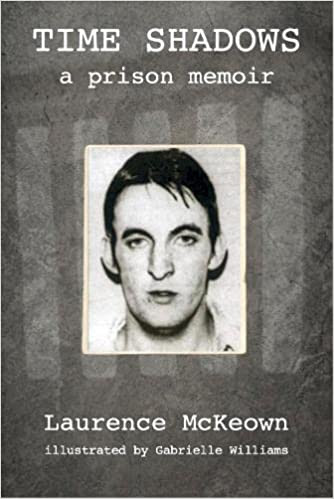
Kate Yo πŸ”– This sad tale is an elegy, it’s like a poem of serious reflection, a lament for the dead. It is also a memoir.


Laurence McKeown's story is unique in that it is told from inside the prison hospital as he spent 70 days on the fast. The background of the author is dealt with in a small preface and the memoir proper begins in chapter 1. He is on the run and went home one night after a dance in Moneyglass and had not prepared a billet, causing him to wake up around 4 a.m. to an RUC man standing in his bedroom.

Taken to Castlereagh where he is interrogated and removed to the Crum where he is on remand for causing explosions in Randalstown and Antrim, and attempted murder after an attack on a mobile patrol.

There are shadows while on remand. The building at the Kesh of new blocks to house newly sentenced prisoners under the new criminalisation policy. One Sunday Barney McReynolds, the OC, gathered his men together in the yard and told them that any prisoner who is sentenced and sent to the blocks is not to wear a prison uniform and not to do any prison work. Short and sweet, it was as simple as that.

The first prisoner to be sentenced under the new rules was Kieran Nugent. Kieran had already suffered a loyalist gun attack when he was shot eight times in the back, arms and legs at the corner of Merrion street and the Grosvenor road. His friend with him was fatally wounded.

The story of the hunger strike is widely known so it's best to look at the book in a somewhat different way: the degree of light that over shadowed everything, and the dark spectre of death.

The light is a joy to read, and it was that joy was always overcast. A little story is told of a guy from Belfast who was chatting to his friend through the door and became somewhat boastful, saying his area had all the up to date equipment when a rural guy jumped in and said:

I bet you guys never got your hands on a Massey Ferguson 165
Fer fuck sake said the Belfast slabber, we had that many of them we were sending them to you lads down the country
The response was well we could put them to better use seeing as how the Massey Ferguson is a tractor you idiot.

These lighter moments are beginning to surface.  Seamus Kearney’s new memoir tells of sing-songs and skits taking place. After half eight at night, things on each wing became much livelier. The guards had left and the prisoners could speak privately without being overheard.

The author recalls being asked to sing and confessed that he didn’t have a note in his head, but the good natured abuse you got was much worse. So he sang going through the desert with a horse with no name.

At night when the prison was quiet, Bobby’s singing was always left to the end. He says that Bobby had a folksy voice rather like one of the Simon and Garfunkel two, and that his voice was filled with emotion. Included in his batch of songs was Bobby McGee.

Freedom is just another word
With nothing left to loose.
Nothin ain’t worth nothing when it’s free
Feeling good and easy lord when Bobby sang the blues,
Good enough for me.
Good enough for me and Bobby McGee

Hack Ramsey put a chair outside the author’s cell door and took the record player from the canteen and proceeded to play the latest ELO album. He played it over and over again. The wing fell silent while he played the ELO. It was the first time the men had heard music in a number of years.

After 70 days on hunger strike, Laurence's mother had him moved to the RVH. It was here that he awoke to a female voice and a gentle woman’s touch. Raw emotion. This is very symbolic moment, rather like Seamus Kearney’s woman in the pink coat, or the little girl in the red dress in Schlinder’s List.

Darkness is never far away, as the protest took it’s toll upon the minds and bodies. Paddy Quinn was going through a rough patch and was unable to keep water down. This was a bad sign, Martin Hurson had suffered dehydration and his death was partly due to this.

Death shadows had sounds. This haunting sound came from Paddy’s room. A loud bellow, like the sound of an animal in distress. Then it would stop and begin again, almost running into each other. He was hyperventilating. Paul Lennon, the MO, put a paper bag over his patient's face and held him down reducing the amount of oxygen Paddy was taking in. He started to calm down and his mother had him removed to an outside hospital.

This book was only published last year, in 2021. And there are responses to more recent events. In an interview the author had with Brendan Hughes, the author reports what Brendan had to say.


Then there was the confusion as to who was OC, Brendan or Bobby. Bobby had always been subordinate to Brendan, but when the two met in the evening on 18-December-1980 Bobby reportedly said, Dark you fucked up. The author believed that Brendan could not live with the decision he made on the evening of December 1980. The author believes that Brendan’s ego had been dented, and in later years he moved the blame on to others. In Brendan's mind he was the one who was right and it was the others who let him down.

The author feels that Brendan then became very vociferous in his public attacks upon the republican leadership. Brendan attacked those who had been close to him, such as Gerry Adams, and that by identifying and naming him this introduced a new low. Richard O’Rawe made a claim that there was a deal on the table in 1981 just before Joe McDonnell died, and that the army council on the outside had rejected this deal and allowed 6 hunger strikes to die unnecessarily.. This claims the author, caused division.

He goes on that’s it’s ironic after all that the British state had thrown at the prisoners “it was one of our own who in one short sentence sewed division and doubt”.

Laurence McKeown, 2021, Time Memoirs. Beyond the Pale Books.
ISBN-10: 1914318110
ISBN-13: 978-1914318115

Kate Yo is a Belfast book lover. 

Time Memoirs

Kate Yo
answers thirteen questions in a Booker's Dozen. 

TPQ:
What are you currently reading?

KY: I’m just finishing up Carol Anne Lee’s Somebody's Mother, Somebody's Daughter: True Stories from Victims and Survivors of the Yorkshire Ripper. This is one of those books that deals with true crime but it gives a voice to the victim rather than dealing with the crime and regurgitating trial transcripts. Each chapter is titled by the woman’s name, giving the story of each victim, their circumstances and why those circumstances led that woman to be selected as a victim during the five years of Sutcliffe’s reign. Street walkers, poverty stricken women turning to prostitution to feed themselves or their children. Sutcliffe didn’t rape these women, he simply came up behind them and whacked the back of their heads with a hammer. Blows hard enough to cause him to grunt by their impact. Some of these women were in the areas used for prostitution. He’d pull up beside them, they asked if they wanted some business, charging him a fiver. He took them to a lonely spot, hammer their heads and interfering in their clothing, exposing their breasts, and eventually running a knife along their torso effectively exposing their intestines. 

The police investigation of these crimes was handled very badly, going way off track and led by the nose to believe a hoaxer's letter and audio tape, sending the investigation down a blind alley, hampering it, that led to the time wasted. The hoaxer John Samuel Humble was eventually exposed and jailed. The role of the media played its part, looking for salacious headlines, with the patriarchal attitude that these women out on the street at night and in local bars without their menfolk deserved their fate. Even after death the women’s families bore a stigma that being one of Sutcliffe’s victims meant their loved one was a prostitute when that was not always the case.

TPQ: Best and worst books you have ever read?

KY: I don’t really have a best book but the worst has to be Danny Morrison’s West Belfast.

TPQ: Book most cherished as a child?

KY: Anne Holm’s novel I am David. It was a school book but I really enjoyed it, I think it paved the way for me to Like books that dealt with struggle to be cover come by resistance. 

TPQ: Favourite Childhood author?

KY: As above. Holm and lots of comics such as the Bunty, got from Smithfield's many second hand book shops.

TPQ: First book to really own you?

KY: Evicted: Poverty and Profit in the American City, by Mathew Desmond. Again I love anything with a sociological bent.

TPQ: Favourite male and female author?

KY: This is difficult to chose just one. The two male authors are Michael Connelly, for his Bosch series (but I cannot warm to his Lincoln lawyer series), and Jonathan Kosof’s Rachel and Her Children: Homeless Families in America All his books are fantastic but the best one for me is Rachel and her children, homeless families in America, they may be a bit dated but they are still relevant. 

Female author. Again I’d like to chose two. That would be Rachel Clarke. Her three books are all great reads. A journalist, a mother, a medical doctor and author. I have great respect for her, writing about the NHS in a constructively critical way. She had an event here for her second book where I had the good fortune to meet her, I’m not long finished her third. The second would be Linda Tirado for her blog post that went viral, eventually ending as the basis of her book. Hand to Mouth: Living in Bootstrap America.

TPQ: A preference for fact or fiction?

KY: Fact. Always.

TPQ: Biography, autobiography or memoir that most impressed you?

KY: This is the best question of all. That book would be Solitary: Unbroken by Four Decades in Solitary Confinement. My Story of Transformation and Hope

The life story of a black kid growing up poor in Treme an extremely poor neighbourhood of New Orleans that David Simon serialised in his mini series of the same name. Any reviews of this book, I’ve read all fail to mention the Black Panther chapter of self defence in the inner transformation of Woodfox. Yet understanding of this is crucial. A young thug who stole from his own people, threatened passers by with a gun, high speed car chases, and stealing cars led Fox at 19 to be released from Angola after two years with no sense of direction. With time on his hands he eventually got into trouble again, but escaped before his court case and left New Orleans. He went to Harlem and was arrested there. He knew if he gave his name he’d be sent straight back, so he gave a false name and ended up in the tombs. That was a real shock to him, coming from Angola an 18,000 former slave plantation to a high building. In Angola he worked outside cutting cane with white guards on horse back and guns in their lap rode up and down the lines of working prisoners shouting they should work harder in suffocating heat. The whites worked inside. On his second time in Angola he was put in to the dungeon straight from reception. They put him in the red hat, the dungeon. The most restrictive cell block in the prison. A tiny cell 3 feet wide by six feet long with a reinforced steel door and a small window. The bunk Was steel with no mattress and a bucket to piss in. He learnt nothing in prison but in the red hat it changed who he was. He writes: 

the conditions there were a test. My anger my hate, the heat, the stench, the filth, the rats and the pressure turned me into something new. When the freeman came to let me out I met his eyes with defiance. He took me back to reception. I was there for ten days.

In New York’s Harlem before his arrest he spotted adult black men and women in black leather clad gear and afros escorting women to cash their government check and get groceries without being robbed. They asked people can you read? If not I will teach you. In the tombs they shared their food and gave political talks. These people were uniting prisoners in the tombs like they did in Harlem. He was impressed by them, leading him to join the Black Panther Party. The Black Panther Party was established in California by Huey Newton and Bobby Seale but was officially over by 1982, decimated from the inside out. When eventually his real name was discovered they talked about starting a protest and maybe escape. But then it was agreed he would go back to Angola to start a prison chapter there. In Louisiana again, they offered him a deal that he did not take. He was offered that the police would clean their books on him and give him fake charges, plead guilty and get 15 years max but out in half of that. Instead he went for trial. Louisiana had habitual felon laws, the three strikes and you’re out, except there it was more like one strike. With him already having a felonious charge against him, under the habitual felon law that if you had one conviction they could enhance your sentence, up to life imprisonment even for non violent crimes. Three other members of the Black Panthers arrived in the prison but they kept them separate, cut their afros - and they joined him in establishing the Black Panther prison chapter. He took an oath to the party and received a little red book of sayings from Mao Tse-Tung. The purpose of the party was to educate, agitate and stay strong. While incarcerated there he was fitted up for the murder of a guard, with snitches offering evidence against him. This case was to stay in the courts for forty years. He was in Angola under CCR (Close Cell Restrictive), with his cell being overlooked by four guard towers who were under orders of shoot to kill. 

Eventually he was released in 2016. Where he pleaded for freedom not justice.

Youths were passed through schools that don’t teach, forced to look for jobs that aren’t there, and finally left stranded in the street to stare at the glamourous lives that surround them.

There was still the fight for Black Lives Matter. In the prologue he speaks to activists, welcoming them. He says to them:

look at me and see the strength and determination of the human spirit defy all evil. They did not break me for I have witnessed the horrors of man’s ’cruelty to man. I did not lose my humanity, I bear the scars of beatings , loneliness, isolation and persecution. I am also marked by every kindness.

Who wouldn’t be inspired by that book? 

TPQ: Any author or book you point blank refuse to read?

KY: No.

TPQ: A book to share with somebody so that they would more fully understand you?

KY: Odd question this. I feel that writing out these Q/A’s made me reflect on what I read and has enlightened me to understanding me!! So I’d need more time to think about it.


TPQ: Last book you gave as a present?

KY: I gave an audio book of Ian Cobain’s Anatomy Of A Killing. An excellent read. 

TPQ: Book you would most like to see turned into a movie?

KY: This is London by Ben Judah. Told from the diverse point of view of those who lived there.

TPQ: The just must - select one book you simply have to read before you close the last page on life.

KY: Don’t know. 

Kate Yo is a Belfast book lover. 

Booker's Dozen @ Kate Yo