


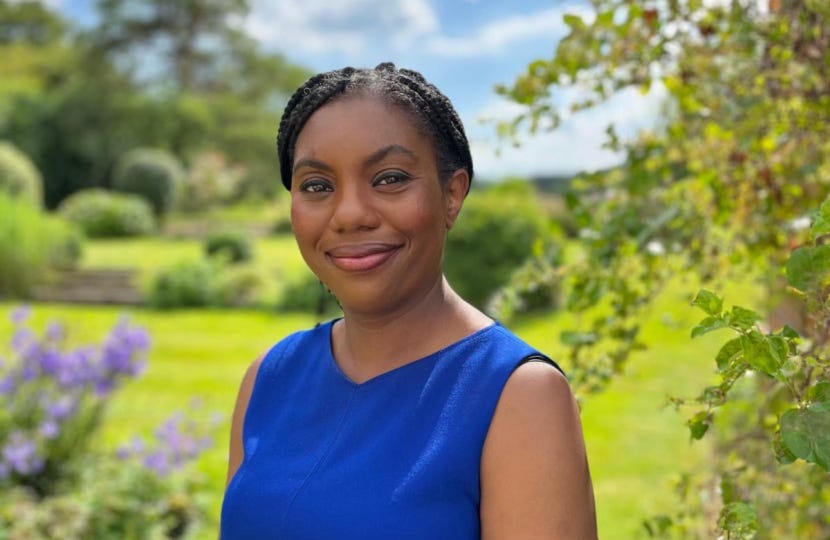
Kemi Badenoch, the contender for the Tory Party leadership in Britain has stirred up controversy through her comments that not all cultures are equally valid.
(30/09/2024)
She referred to women’s rights, gay rights and even hating Israel as signs of which cultures are less valid. Not surprisingly some right wing “feminists”, like the ones currently campaigning for the man who advocates sexually assaulting women in the US came out to agree with her. Key amongst them Kellie Jay Keen, who saw fit to bring up child marriage,[1] an issue Trump and every US president would know something about, given the huge numbers of child marriages in the US, where it is legal in 37 states.[2]
There are “cultures” they say where women have fewer or even no rights, gays are hounded or even killed and even where witch burnings are legal. Badenoch said
Imagine belonging to a culture that hated genocide. I am tempted to say the joke writes itself, except it is no laughing matter. Although she brought up the issue in relation to immigration, when Badenoch says some cultures are less valid, what she really means is that there are countries that the “civilised” can bomb into the stone age, there are people Western troops can rape, women who can be bombed in maternity hospitals just as Israel does. What she does not mean is that Britain will not supply weapons to regimes like Saudi Arabia, her concern for women only goes so far. In fact, she would personally sharpen the sword or knot the whip used to mete out lashes to women, if there was money in it for British companies. Between March 2015, when the Saudis began bombing Yemen, and March 2024 the Saudis received 8.2 billion in weapons sales. BAE received 25 billion in the same period and has 6,700 employees based in the country.[4] Maybe some of these people whose culture she thinks are less valid are just fleeing the British bombs dropped on them by the head chopping misogynists in Riyadh.
But what is a culture?
There is no agreed upon definition of what is a culture, but it is popularly understood to be the norms, customs, beliefs, practices, artistic production and world view of a given set of people, who are in turn not that easy to define. It is a malleable term that can be twisted and distorted to suit any agenda. But Badenoch had specific people in mind. Of course, she meant Muslims, though she pointed out she didn’t mean all Muslims, certainly not the ones buying British bombs.
But are there cultures where rape, witch burning and the persecution of gays is not only legal but socially acceptable? Well yes, but let’s look at some of the facts and the British or Western values Badenoch thinks are being undermined.
Witch burning
Well, belief in superstitious nonsense is prevalent everywhere. Most people believe an invisible man in the sky not only controls their everyday lives, but blesses the bombs as they rain down on the innocent. But that aside, what about witches?
Well, it was Germany that gave us the Malleus Maleficarum and the witch hunts that murdered thousands of women in Britain and Ireland between 1450 and 1750 and King James (yep the bible basher) was particularly obsessed with the issue. That was a long time ago, however, nowadays:
It is now, what it always was, the persecution of women in the economy. But nobody in Britain burns witches nowadays, do they? Well, it depends on what you mean by a witch. The term is as malleable as culture. Acid attacks are a modern form of witch burning, where women are attacked for being women. Britain has the highest rate in the world of recorded acid attacks, with 1244 incidents in 2023,[6] not all of them against women, but a significant number were and racists have tried to paint it as an Asian problem. But police statistics tell another tale and debunked that myth as far back as 2017.
Some right wing “feminists” have also made similar arguments to Badenoch. They ignore all their campaigning on rape when a migrant is charged and talk about imported problems. But rape has been an historic problem in Britain and indeed around the world. “[Police ]Forces recorded 194,683 sexual offences in 2021-22, including 70,330 rapes, the highest number since records began in 2002/03.”[8] We also know now that it is part of police “culture” in Britain to rape women, particularly in Manchester. Not sure who is sharing which “British values” Badenoch and her “feminist” friends were referring to. Rape in every society is committed mostly by the partner of the woman or someone she knew. Migrants are not beating a track to Britain to rape women. Women in Britain are being raped by their husbands, boyfriends, partners and other relatives. That is a statistic that holds true around the world.
As for political rights. It is true that Britain has had three female prime ministers (well, two and a half), Thatcher, May and Truss. None of these female leaders defended women’s rights. In fact Thatcher was particularly hostile to women. She cared so little for women that she agreed to fund the Afghan Mujahideen, the forerunner of the Taliban.[9] The Tories shared the same values as these troglodytes and that is the tradition Badenoch stands in, despite the illusions and denials of right wing “feminists”. The US has yet to have its first female president, though that may change with the vote in November. Meanwhile, a host of countries that do not share Badenoch’s commitment to “British values” and the rights of women, as she would claim have had female leaders, including a number of Muslim countries, such as Indonesia, Tunisia, Mauritius, and Bangladesh has had two female leaders in the last 25 years, with both of them serving two non-consecutive terms each. One of them was recently overthrown, a fate that should have befallen Thatcher, but didn’t.
But how does Badenoch fare on women’s rights? Well, she has abstained on extending abortion to Northern Ireland, buffer zones for abortion clinics and she opposed government supports for women going through menopause. As Minister for Equality, she refused to outlaw discrimination against women going through the menopause, despite the fact that one in ten women between the ages of 45 and 55 leave the workforce due to menopause symptoms.[10] She has no commitment to women.
Cultures change over time. Before the British arrived two of the most celebrated Arab poets were gay. After the British imposition of anti-gay legislation and the promotion of conservative figures, their books were burned. They are not static and within certain cultures there are those who oppose the most reactionary elements of them, like Irish women who campaigned for contraception, abortion and divorce for decades. Badenoch is just an old-fashioned imperialist, who likes to play up her own black and migrant credentials to attack other minorities. She does not defend women and the tropes about migrants repeated by KJK put her firmly in the Tommy Robinson camp she joined after the recent race riots. It is a myth that the West is some bastion of women’s rights, when it is the West that promoted and props up the most reactionary anti-women regimes in the world. The British police have a record of rape culture both on and off duty. They represent a greater threat to women than the “less valid” cultures of Badenoch’s delirium. Badenoch is the enemy of women, as is her entire Tory Party, hangers on and Tommy Robinson’s new found “feminist” friends.
[1] See.
[2] The Guardian (09/07/2024) I was handed to a complete stranger’: the survivors fighting to end child marriage in 37 US states – and the people who want to keep it legal. Alaina Demopoulos.
[3] The Telegraph (28/09/2024) Migrants who come to Britain must uphold its traditions, not change them. Kemi Badenoch.
[4] CAAT (27/03/2024) UK Arms to Saudi Arabia
[5] The Atlantic (30/10/2013) When Governments Go After Witches. Ryan Jacobs.
[6] See.
[7] BBC (17/11/2017) Everything you know about acid attacks is wrong.
[8] BBC (21/07/2022) Rape offences at highest recorded level.
[9] Declassified UK (08/09/2021) Margaret Thatcher’s Support For Afghan Jihadists Covered Up By Uk Censors. Phil Miller.
[10] The New Stateman (02/03/2023) Kemi Badenoch refuses to outlaw menopause discrimination.
(30/09/2024)
She referred to women’s rights, gay rights and even hating Israel as signs of which cultures are less valid. Not surprisingly some right wing “feminists”, like the ones currently campaigning for the man who advocates sexually assaulting women in the US came out to agree with her. Key amongst them Kellie Jay Keen, who saw fit to bring up child marriage,[1] an issue Trump and every US president would know something about, given the huge numbers of child marriages in the US, where it is legal in 37 states.[2]
There are “cultures” they say where women have fewer or even no rights, gays are hounded or even killed and even where witch burnings are legal. Badenoch said
We cannot be naive and assume immigrants will automatically abandon ancestral ethnic hostilities at the border, or that all cultures are equally valid. They are not. I am struck, for example, by the number of recent immigrants to the UK who hate Israel. That sentiment has no place here. We must recognise that the world has changed.[3]
Imagine belonging to a culture that hated genocide. I am tempted to say the joke writes itself, except it is no laughing matter. Although she brought up the issue in relation to immigration, when Badenoch says some cultures are less valid, what she really means is that there are countries that the “civilised” can bomb into the stone age, there are people Western troops can rape, women who can be bombed in maternity hospitals just as Israel does. What she does not mean is that Britain will not supply weapons to regimes like Saudi Arabia, her concern for women only goes so far. In fact, she would personally sharpen the sword or knot the whip used to mete out lashes to women, if there was money in it for British companies. Between March 2015, when the Saudis began bombing Yemen, and March 2024 the Saudis received 8.2 billion in weapons sales. BAE received 25 billion in the same period and has 6,700 employees based in the country.[4] Maybe some of these people whose culture she thinks are less valid are just fleeing the British bombs dropped on them by the head chopping misogynists in Riyadh.
But what is a culture?
There is no agreed upon definition of what is a culture, but it is popularly understood to be the norms, customs, beliefs, practices, artistic production and world view of a given set of people, who are in turn not that easy to define. It is a malleable term that can be twisted and distorted to suit any agenda. But Badenoch had specific people in mind. Of course, she meant Muslims, though she pointed out she didn’t mean all Muslims, certainly not the ones buying British bombs.
But are there cultures where rape, witch burning and the persecution of gays is not only legal but socially acceptable? Well yes, but let’s look at some of the facts and the British or Western values Badenoch thinks are being undermined.
Witch burning
Well, belief in superstitious nonsense is prevalent everywhere. Most people believe an invisible man in the sky not only controls their everyday lives, but blesses the bombs as they rain down on the innocent. But that aside, what about witches?
Well, it was Germany that gave us the Malleus Maleficarum and the witch hunts that murdered thousands of women in Britain and Ireland between 1450 and 1750 and King James (yep the bible basher) was particularly obsessed with the issue. That was a long time ago, however, nowadays:
The harshest place for witches, or rather, female foreign domestic house workers the government thinks are witches, may be Saudi Arabia. An entire police unit is dedicated to fighting witchcraft crime, and religious judges often convict people with laughable evidence.[5]
It is now, what it always was, the persecution of women in the economy. But nobody in Britain burns witches nowadays, do they? Well, it depends on what you mean by a witch. The term is as malleable as culture. Acid attacks are a modern form of witch burning, where women are attacked for being women. Britain has the highest rate in the world of recorded acid attacks, with 1244 incidents in 2023,[6] not all of them against women, but a significant number were and racists have tried to paint it as an Asian problem. But police statistics tell another tale and debunked that myth as far back as 2017.
In reality, just 6% of all suspects in London over the last 15 years were Asian.
For the same period (2002-16), 'White Europeans' comprised 32% of suspects, and African Caribbeans 38% of suspects. About one in five suspects remain unknown – either because they can’t be identified, or because the victim has refused to identify them.
The number of Asian victims is 421 – around one fifth of the 2,196 total for the 15-year period. Almost half the victims (987) are White European, and one quarter (557) are African Caribbean.[7]
As for political rights. It is true that Britain has had three female prime ministers (well, two and a half), Thatcher, May and Truss. None of these female leaders defended women’s rights. In fact Thatcher was particularly hostile to women. She cared so little for women that she agreed to fund the Afghan Mujahideen, the forerunner of the Taliban.[9] The Tories shared the same values as these troglodytes and that is the tradition Badenoch stands in, despite the illusions and denials of right wing “feminists”. The US has yet to have its first female president, though that may change with the vote in November. Meanwhile, a host of countries that do not share Badenoch’s commitment to “British values” and the rights of women, as she would claim have had female leaders, including a number of Muslim countries, such as Indonesia, Tunisia, Mauritius, and Bangladesh has had two female leaders in the last 25 years, with both of them serving two non-consecutive terms each. One of them was recently overthrown, a fate that should have befallen Thatcher, but didn’t.
But how does Badenoch fare on women’s rights? Well, she has abstained on extending abortion to Northern Ireland, buffer zones for abortion clinics and she opposed government supports for women going through menopause. As Minister for Equality, she refused to outlaw discrimination against women going through the menopause, despite the fact that one in ten women between the ages of 45 and 55 leave the workforce due to menopause symptoms.[10] She has no commitment to women.
Cultures change over time. Before the British arrived two of the most celebrated Arab poets were gay. After the British imposition of anti-gay legislation and the promotion of conservative figures, their books were burned. They are not static and within certain cultures there are those who oppose the most reactionary elements of them, like Irish women who campaigned for contraception, abortion and divorce for decades. Badenoch is just an old-fashioned imperialist, who likes to play up her own black and migrant credentials to attack other minorities. She does not defend women and the tropes about migrants repeated by KJK put her firmly in the Tommy Robinson camp she joined after the recent race riots. It is a myth that the West is some bastion of women’s rights, when it is the West that promoted and props up the most reactionary anti-women regimes in the world. The British police have a record of rape culture both on and off duty. They represent a greater threat to women than the “less valid” cultures of Badenoch’s delirium. Badenoch is the enemy of women, as is her entire Tory Party, hangers on and Tommy Robinson’s new found “feminist” friends.
[1] See.
[2] The Guardian (09/07/2024) I was handed to a complete stranger’: the survivors fighting to end child marriage in 37 US states – and the people who want to keep it legal. Alaina Demopoulos.
[3] The Telegraph (28/09/2024) Migrants who come to Britain must uphold its traditions, not change them. Kemi Badenoch.
[4] CAAT (27/03/2024) UK Arms to Saudi Arabia
[5] The Atlantic (30/10/2013) When Governments Go After Witches. Ryan Jacobs.
[6] See.
[7] BBC (17/11/2017) Everything you know about acid attacks is wrong.
[8] BBC (21/07/2022) Rape offences at highest recorded level.
[9] Declassified UK (08/09/2021) Margaret Thatcher’s Support For Afghan Jihadists Covered Up By Uk Censors. Phil Miller.
[10] The New Stateman (02/03/2023) Kemi Badenoch refuses to outlaw menopause discrimination.
⏩ Gearóid Ó Loingsigh is a political and human rights activist with extensive experience in Latin America.


