Showing posts with label RTE. Show all posts
Jim Duffy ✍ The Irish have a very timid understanding of security and defence and governments are easily intimidated by fanatical devotees of neutrality and their reducing of every debate to pointless chants.


RTÉ is the same. Just look at the mass coverage the station gives to Paul Murphy when Murphy demonstrates a spectacular lack of basic understanding on the topic. In an article earlier this week RTE gave Murphy one third of the article in comments despite demonstrably not knowing what he is talking about.
 
Why is PBP given so much disproportionate coverage in general on RTÉ? It is on 3% in polls. It lost a seat on the general election, yet RTE pretty much gives it equal coverage with SF despite SF being seven times more popular than PBP. It gets more coverage than all the bigger parties in opposition. 

I know there is a history of political bias in RTÉ, as when RTÉ current affairs was basically a branch of the Workers Party. Now it appears to be a branch of PBP, with Paul Murphy and Richard Boyd Barrett pretty much having guaranteed seats in any debate, with Labour, Independent Ireland, Aontú and the Social Democrats struggling to get one invitation occasionally.

⏩ Jim Duffy is a writer-historian.

It Needs To, But Will It?

Anthony McIntyre ☠ Missing these weekly vigils leaves a bad taste in the mouth. 

I was not available for the previous two due to other matters kicking in that needed attending to. If only the Israelis would miss a day of child murder.

While we gather, the Eurovision Song Contest is taking place in Vienna. The organisers have not banned the genocidal state from participation, coming up with all sorts of jabberwocky about an artistic space where unity is promoted and from which an image of a better world might be projected, conveniently choosing to ignore that Israel is using the competition to song wash its genocidal image.

Ireland along with Spain, Iceland, Slovenia, and the Netherlands make up the group of five societies boycotting the event in opposition to Israeli genocide in Gaza. While thirty five countries will be taking part, it is the lowest number of entrants since the 2004 expansion. While Iceland and the Netherlands are reported to be screening the event, Ireland along with Slovenia and Spain are broadcasting alternative shows. In the case of RTE, it has opted to put out old Father Ted episodes. Certainly more than most other national broadcasters are doing but it would have been more pointed and imaginative to have broadcast history shows about the 1938 Nazi march into Austria in pursuit of Hitler's Anschluss project which aimed at creating a Greater Germany. It would have been poignant and a reminder of what horrors can follow from inviting those who perpetrate genocide. Austrians made the German Nazis welcome in 1938 while today the country makes Israeli Nazis welcome. Lesser Germany and Lesser Israel, seem to be concepts alien to the Austrian political and cultural psyche which favours greatness.

RTE's decision is nevertheless to be welcomed but the institution remains a strange beast. Last night it opened its early evening news slot with a report about its top earners where the station juggled with the interchangeability or crossover between presenter and producer. The semantic hairsplitting around producing or presenting might be of interest to the number crunchers in RTE or to the type that like to train spot or plane watch, but it is hardly the most newsworthy item on the public agenda.

RTE's coverage of the genocide in Gaza is considered by many to have has fallen short of the mark. Earlier this week I accompanied our very own Siobhan to Dundalk courthouse where she had been summoned for refusing to pay her licence fee. 


Inside the pre-hearing consultation room she made the case most strongly that she was vehemently opposed to the broadcaster's coverage of the Israeli genocide in Gaza. When people are prepared to stand up and take a hit for their beliefs it serves to remind us of just how many people, to quote the biologist Jerry Coyne, are wedded not to what is true but to what makes them comfortable. 

Which brings me to the Independent Writers Union of which I am a member. RTE, despite its failings, has shown more fortitude, than the Union. It at least is prepared to participate in a cultural boycott of genocidal Israel. The IWU declined to do any such thing a few weeks ago at its AGM, the reasoning being that it is not political. That leaves us as scribblers to look haughtily over the top of our glasses at our fellow writers in Gaza and the rest of the Occupied Territories and proclaim:

most sorry old bean that you are being murdered, your prisoners raped and now facing the noose, your children massacred, your education system destroyed, your intellectuals, writers and surgeons maimed to stem their creativity, your health system obliterated, your land stolen because your tormentors are the chosen people and you are children of a lesser god. But we, the Irish Writers Union, as a body of scribes can't do anything, because protecting our institution from allegations of being political must take precedence over protecting you from genocide.

And when we offer them that as an explanation for our commitment to nothingness, let's not feign surprise when they look at us through disbelieving and disdainful eyes and respond in three terse words: Irish Wafflers Union. 

This week our esteemed colleague. Siobhan, through a single act of civil obedience, did more to challenge the barbarism of Israel than the Irish Writers Union. A playwright, I don't imagine she will sign up for membership of a union too institutionally and non-politically timorous to write the wrong.

⏩Follow on Bluesky.

Song Washing

RTE ★ Written by Vincent Kearney and Conor Macauley. Recommended by Christy Walsh.

A major report dealing with some of the most controversial aspects of the Troubles has found no evidence of collusion on the part of the British state in the 1974 Dublin-Monaghan bombings.

Among the other issues the Kenova Final Report addressed was the role of the British Army's top agent in the IRA.

The report was commissioned by the PSNI in 2016 following a direction of NI's Public Prosecution Service.

The bombings in Dublin and Monaghan on 17 May 1974 claimed the lives of 34 people.

There had long been a suspicion that the UVF, which claimed the attack, would not have had the necessary expertise to carry out such a co-ordinated attack in two places on the same day.

"The review has not identified any evidence or intelligence which would indicate that British Security Forces colluded with the UVF to carry out the attacks in Dublin or Monaghan, nor has any evidence of state collusion been identified," the report says.

It also says it found "no specific intelligence" which, if acted upon, could have prevented the atrocity.

Continue @ RTE.

Report Finds No Evidence Of Collusion In Dublin-Monaghan Bombings

Gearóid Ó Loingsigh ☭ writing in Substack on 25-November-2024.


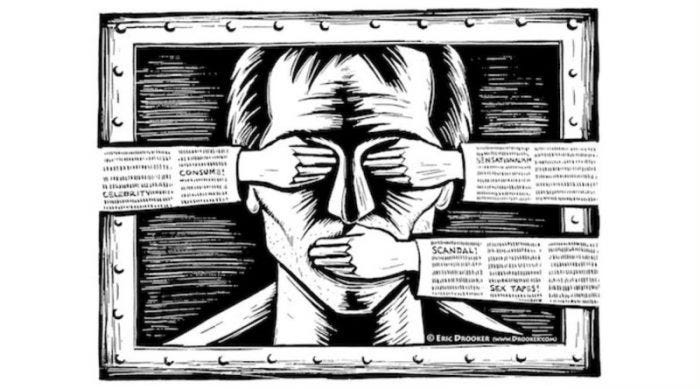
Sinn Féin has said that it would ask for a review of the national broadcaster RTE’s biased coverage of Palestine and other international conflicts. They were criticised by almost all and sundry for doing so. They were accused of censorship and their own use of lawsuits to silence critics was raised once again.[1] The National Union of Journalists (NUJ) came out with guns blazing, claiming it would be in breach:

of the principles of the European Media Freedom Act and would set a dangerous precedent in terms of direct and indirect State interference in the remit of the existing regulatory body.[2]

The NUJ has rarely challenged what it sees as state or private interference in the media before and less still at RTE. RTE’s board is made up of cronies and business interests, people whose interest is served by limited coverage of financial and other issues. Many of them come from the financial sector. Six of the eleven board members are appointed by the Minister for Communications, so there is already government interference in RTE.

The NUJ itself would not come out well of such a review, if the review was honest. For decades it implemented Section 31 of the Broadcasting Act, censoring Sinn Féin, even when the party was standing in elections. When a brave RTE journalist Jenny McGeever was sacked because she broadcast one sentence from Martin McGuinness, “If that is ok with the Police, that is ok with us”, in reference to arrangements for the transport of three IRA volunteers’ bodies back to Belfast.[3] It was an innocuous statement. The NUJ did next to nothing to defend her. They did not defend her just as they meekly accepted the sacking of the RTE authority in 1972. Colum Kenny commenting on his time at RTE remarked that:

During my years at RTÉ, I became for a period what is known as ‘The Father’, or chairman, of the Programmes Chapel of the National Union of Journalists. I found no great appetite among its members, or indeed among the membership of another union representing many producers, for industrial action aimed at drawing public attention to the existence of the gagging Order known as Section 31.[4]

In other words, neither the union nor the members did anything about it. They either agreed with it or decided the truth was not that important, not as important as their careers. The union will not look well, if coverage on Palestine is looked at, nor will it come out shining if coverage of Ukraine is also included, as on this issue, the union itself intervened directly in helping to shape a narrative at odds with reality.

It is as clear as day that on Palestine, Irish coverage has been very biased, in terms of who it gave interviews to, the issues it refers to and the kid gloves that apologists for genocide such as the Israeli Ambassador have been treated with. It is clear even in the language used. The word genocide is never used in reporting, unless quoting someone and even then, sparingly. It is referred to as the war, the conflict etc. It has mainly used the term when reporting on the case taken to the International Court of Justice and gave a succinct but incorrectly limited definition of what genocide is. It stated “In short, genocide is the intentional destruction of a people in whole or in part.”[5] The definition is actually a lot broader than that and Gaza fits the bill on various counts.[6]

When reporting on the murder of civilians in Palestine, it never uses such terms. It says killed and the casualty figures are always referred to as “According to the Hamas run Ministry of Health”. The message is clear, that these figures come from an organisation that is considered to be a terrorist group and therefore the figures are not reliable. But it is actually the elected government. The last time there was an election in Palestine, Hamas won, both in Gaza and in the West Bank, though it only assumed power in Gaza with the Vichy Palestine Authority appointed by Mahmoud Abbas undemocratically taking control of the West Bank. So, of course the Ministry of Health is run by the elected government. This language is never used in relation to Israel, we are never told “according to the Likud run Ministry of Defence”. In fact, such caveats are almost never used, not even when quoting the most vile dictatorships in the world. At best, they state “according to an official government communiqué”, which is technically correct and does not have the same moral laden judgement contained within it.

In Lebanon, they engage in a similar sleight of hand, referring to attacks on “Hezbollah strongholds”, which is the type of language they hope will give some justification to the bombings. But what are Hezbollah strongholds? They are areas in which the organisation has mass support. You would be hard pressed to find in the media, in general, and RTE in particular any significant explanation of what Hezbollah is. Many viewers hearing about strongholds being bombed would not know and are never informed that what this means is areas in which the organisation has a support base, which is also electoral. We know which areas are Hezbollah strongholds because they are the areas where people voted for them. It is an electoral and military force, increasing its number of parliamentary seats in the 2022 elections from 13 to 15, though its allies in parliament lost seats. But the point is, it is a force with a huge popular base.

Likewise, when Israel told Irish UN soldiers to leave, the President of Ireland, described it as a threat, but the media was more hesitant. When Israel then used UN compounds as shields in their attacks, the resulting damage was described as damage caused by the exchange of fire between the two. You would never guess that one of the sides deliberately used them as protective shields.

In terms of RTE bias and coverage, whilst it has reported on Palestine over the years, once October 7th happened, the official discourse emanating from RTE and most other media outlets was that history began on October 7th. No attempt was made to look at the history of the region, nor the context of Israeli aggression and crimes against humanity prior to October 7th. Previous Israeli attacks and crimes were rarely if ever mentioned. It made one attempt at explaining what Hezbollah was in an article published on its site.[7] The article recognises that it has political support, but constantly refers to the fact that it is designated as a terrorist organisation by the US and that other bastion of democracy, Saudi Arabia, whose leaders have never been elected. Saudi Arabia, despite having a nominal parliament is led by a bunch of royal head chopping kleptocrats. Though RTE quotes them favourably as a source of analysis on the nature of Hezbollah. The organisation is according to RTE nothing more than a group that:

…has risen from a shadowy faction to a heavily armed force with major sway over the Lebanese state. The United States, some Western governments and others deem it a terrorist organisation.

The headline on the piece reduces Hezbollah to just being a group that supports Hamas. And that was about it from RTE on the nature of the organisation.

Likewise in Ukraine, though RTE had reported on the country previously, once again history started on a particular date, this time February 22nd 2022. They ignored the 2014 Maidan Coup, the breaking of the Minsk Accords by Ukraine, the repression of non-Ukrainian cultures, which included not just Russians but also gypsies and others. The promotion of WWII fascist Stepan Bandera, the fascist nature of the Azov Battalion were all ignored to favour a simplistic account. Previous acts such as the burning to death of trade unionists in Odessa by fascists in 2014 were never mentioned again. RTE presenters even questioned why NATO wasn’t pushing for all-out war with Russia, and they included in that the possibility of going to the brink of nuclear war. The Irish Times has recently doubled down on this, basically resurrecting the “Russia will invade and attack everyone scenario” so common when the war began and arguing in a piece written by Kier Gillespie from the right wing think tank Chatham House that Ireland should abandon its “neutrality” and Europe should get ready for all-out war with Russia.[8] Incidentally, a sentiment echoed to some degree by the “pro NATO left” in the Irish parliament.

The NUJ for its part, whose members push the narrative on Palestine and Ukraine were not content with the complicity of its members in a particular narrative but organised a protest to skew the debate altogether. Shortly after the war started the NUJ organised a protest at the Russian Embassy to protest the lack of press freedom and attacks on journalists by the Russian state. The Russian state has a dreadful record on the matter, but so does Ukraine. Moreover, in its attempt to portray the Russians as the only threat to freedom of the press the NUJ invited ambassadors from other countries to join in with it at the protest. Fine, except with one exception, those ambassadors represented countries with a poor record in the matter, such as Georgia, Poland and Ukraine coming in 89th, 66th and 106th respectively in Reporters Without Borders Press Freedom Index for the year 2022. By doing this the NUJ set a narrative that the only threat to press freedom was Putin and whitewashed a number of regimes with dubious records themselves. Whilst it has condemned the deaths of journalists in Gaza it did not protest at the Israeli Embassy but held a vigil instead at an art gallery.[9] You couldn’t make such cowardice up.

So, an investigation of bias in the coverage of conflicts would be welcome. Neither Sinn Féin, RTE, nor the NUJ would come out of it well. But the problem is political. The reason why RTE does that, is that it gets away with it because there is no challenge to its bias. Sinn Féin and the Irish left represented by such stalwarts of mediocrity like People Before Profit, applauded and egged on the push for war and bias about Ukraine and now finds the media supporting those same reactionary forces (NATO, US, EU) in their assault on Palestine. The penny has almost dropped for them, but not quite. RTE was biased on Ukraine and they agreed with it, now it is biased on Palestine and it is too late. But RTE and the Irish media in general represent the interests of the Irish state and so it should come as no surprise that it is biased. This does not mean we should accept it lying down, but you can’t call for bias on one issue in favour of a NATO proxy (Ukraine) and against bias in favour of another proxy, Israel. The two are linked.

In the case of Palestine, the NUJ is passive, passing resolutions and issuing communiqués. As with the Irish censorship law Section 31, the union is content to not take any industrial action on the issue and let its members lie, downplay the seriousness of it all, treat the Israelis with kid gloves and use language that deliberately distorts what is happening. Their role in echoing Their Master’s Voice should be exposed, though Sinn Féin is not the best placed organisation to do so, given its prioritising of its relations with Washington and its own attempts to censor Palestinians in Ireland who did not follow the Palestine Authority line.

References.

[1] Irish Examiner (19/11/2024) LIVE: Election 2024 — Sinn Féin promises 'peer review' of RTÉ's Gaza coverage if elected. Paul Hosford and Cianan Brennan. 

[2] RTE (20/11/2024) McDonald defends Sinn Féin plan to review RTÉ's Gaza coverage. Tommy Meskill. 

[3] Sunday Business Post (20/04/2003) How RTE censored its censorship. Niall Meehan. Archived at CAIN 

[4] Colum Kenny (2005 ) Chapter 5 Censorship, Not ‘Self-Censorship.’ 

[5] RTE (11/01/2024) Explained: Ireland's position on the genocide case against Israel. Juliette Gash. 

[6] See Genocide Convention.

[7] RTE (31/10/2023) What is Hezbollah, the group backing Hamas against Israel? 

[8] Irish Times (23/11/2024) If Russia is indeed planning an attack against a Nato state, distance and neutrality will provide no defence. Keir Gillespie.

[9] NUJ (30/04/2024) Dublin vigil for slain journalists. 

⏩ Gearóid Ó Loingsigh is a political and human rights activist with extensive experience in Latin America.

RTE’s Biased Coverage Of Palestine And Sinn Féin’s Call For A Review

RTE 📺Written by Vincent Kearney. Recommended by Christy Walsh.

19-June-2024

A lawyer representing families of 18 victims of the Dublin and Monaghan bombings has warned the Irish Government that they will take legal action if gardaí do not cooperate fully with an inquiry into allegations of collusion by RUC officers.

The Police Ombudsman for Northern Ireland (PONI) is examining the activities of a notorious loyalist group, known as the Glenanne Gang, which has been linked to more than 120 murders during the 1970s.

Based in south Armagh, it consisted of members of the Ulster Volunteer Force, RUC and the Ulster Defence Regiment.

In addition to the Dublin and Monaghan bombings in 1974 its members have been implicated in the Miami Showband massacre in 1975, as well as bombings in Belturbet, Dundalk and Castleblayney, and dozens of murders in Northern Ireland.

Police Ombudsman Marie Anderson has confirmed that An Garda Síochána has not responded to requests for access to intelligence material about the attacks in Dublin and Monaghan in which 34 people died, including an unborn child.

No one has been charged in connection with the bombings.

Relatives of the victims, and many others, believe the killers were assisted and protected by members of the British security forces.

Continue reading @ RTE.

Government Faces Legal Action Over Response To RUC Collusion Inquiry

Matt Treacy ✒ On Tuesday, France became the latest country to scrap its television licence.


Following on an election promise from President Macron, the Senate approved the proposal to scrap the tax by 170 votes to 57. This means that it will also be certain to pass through the National Assembly.

Macron had basically stolen the idea from Marine Le Pen’s National Rally manifesto, and it proved to be a popular one, and comes as part of a series of measures designed to address the cost of living crisis that is impacting on households across all of Europe.

The French fee was €138 per year, a revenue of €3.2 billion in 2022. The state now proposes to fund public service broadcasting through VAT. Not surprisingly our own state broadcaster RTÉ seems to have missed this story.

Irish contributors to RTÉ will also probably not realise that the legal requirement to have a TV licensc is in very much the exception among the nations of the world. A mere 15 Europe states have such a thing, and beyond that only seven other countries on the planet require that you have a piece of paper in order to own a television.

Not only that, but the trend has been for countries that did force its citizens on pain of fines and imprisonment to have a TV licence to scrap it. Since 2000, that has included Belgium, Cyprus, Finland, Hungary, Iceland, Malta, Netherlands, Norway, Romania and Sweden.

Poland, where evasion rates are around 65%, is currently considering doing away with it, as are the British where the current Minister for Culture Nadine Dorries supports a two-year freeze, with possible abolition in 2027.

The political divide on TV licences is interesting. The British Tories clearly have an issue with the BBC which is regarded as biased towards the left. Likewise in France, where National Rally and the more conservative Republicans support not only scrapping the license but privatisation. In Le Pen’s case this is clearly not anything to do with opposition to public services whose protection is a key part of National Rally policies, but a dislike of the fact that public broadcasting has clearly constituted another battle decisively won by the French left in its “march through the institutions.” Indeed, Mélenchon’s far left alliance NUPES and the Communist Party are the most vociferous opponents of abolition.

The main opposition party here, Sinn Féin, has had its own issues with RTÉ having been banned in the past under Section 31 and is still claiming a certain bias when it comes to coverage. It has never, however, made abolition an election promise and in general it’s overall left liberal stance on issues such as abortion which they share with the other establishment parties are clearly favoured by RTÉ.

This was evident in RTÉ’s coverage of the referendum on the 8th amendment and is reflected in its daily content on a whole range of issues. The public broadcasting service claim – as in providing any sort of meaningful cultural content – is moot when you look at their schedule which is pretty much wall to wall imported soap operas and American talk shows. There is certainly an argument for supporting Irish language media but TG4, apart from a few exceptions, differs little from the two RTÉs in its overall standard of content.

The fact that the Irish state was considering broadening their take from what people watch was signalled by the Fine Gael/Labour proposal to introduce a charge that would allow them to basically tax people for watching stuff online on their phones and laptops. That seems not to be completely dead in the water and would be a true return to the days when the state taxed people for having windows and fireplaces.

The current evasion rate here was estimated at 12.8% in 2018. I, for one, am not apologising for being one of that band. I do admit to having some lingering reservations with regard to what I believe is an onus on the state to set some sort of cultural level, but that is perhaps nothing more than intellectual snobbery on my part and a quick glance at the TV and even radio schedules indicate that that ship has by and large sailed.

In any event, my willingness to pay a few euro for TG4 is outweighed by the knowledge that it is mostly going to support ideologically motivated overpaid broadcasters who represent most of the things I disagree with, and broadcast content that I would not watch nor listen to unless you were to tie me to a chair and staple my eyelids to my forehead.

Matt Treacy has published a number of books including histories of 
the Republican Movement and of the Communist Party of Ireland. 

France Latest Country To Scrap TV Licence

Matt Treacy ✒ A striking image of 140,000 people scrambling to change the channel on their wireless to avoid the dulcet tones of Ray D’Arcy was conjured up by the latest radio statistics published by the Joint National Listenership Research.


All of RTÉ Radio flagship shows have taken a battering in the last 12 months according to the latest listenership figures, along with sister station of 2fm.

Morning Ireland (sometimes dubbed Mourning Ireland for the relentless gloom) is down 41,000 to 450,000, while Claire Byrne is down 29,000 listeners to 340,000,

Joe Duffy’s Liveline has lost almost 60,000 listeners down to 346,000 from last year’s high of 404,000.

Then there’s the Ray D’Arcy’s slot – trailing at 210,000 after a drop of 32,000. That means almost 140,000 listeners tune out at 3pm when the D’Arcy show begins, despite the presenter earning a whopping €450,000.

Personally, I have not voluntarily tuned into Ray since he was the warmup act for the talented extra-terrestrials Zig and Zag back in the day, but I was led to believe that lots of people do, and that justified his enormous salary. That seems to be less and less the case.

The main reason being proposed for the fall in listeners – which ranged from around 10% for Morning Ireland to 15% in D’Arcy’s case – is that listenership was unusually high in 2020 due to the “Nation” (we had one once apparently) being glued to the set to be told whether it was safe to put the bin out or walk the bowler.

There is some substance to that if you look at the 2019 average figures, although poor old Ray’s slide down the firmament seems to be long-term rather than connected to the pandemic.

I do not know whether that is the case, as I would prefer to watch a recording of the Dublin Kerry semi-final from 2009 in preference, and I left Croke Park before the second half of that humiliating event.

It is of course entirely possible that more people reverted to the radio during the height of the panic. Or rather what we naively believed was the height of the panic which has now become a bit like Orwell’s wars between Oceania, Eurasia and Eastasia. Just when it seems that peace has been declared with Delta, along comes the Omi lad – conveniently skipping over the Xi one because let’s face it, no one wants to drag the Chinese Communist Party nomenklatura into the whole Covid alphabet nomenclature thing. No one minds othering the poor Greeks of course.

There is some suggestion that listeners are not actually giving up on the wireless for good, but that they are moving the dial, as young people say, to some FM things, many of them pitching their appeal on a more local basis. I am not going to test that one, but if its true of national newspapers, it is possibly also true of radio stations.

Of course, the one reason for the fall off in punters that is generally unacknowledged may be that many people are just fed up of the constant hectoring from RTÉ in particular, (although Newstalk and TV Three have their shoulders to the mast as well), on a whole range of stuff from promoting the lockdown, successfully lobbying for the vaccination of young children, climate change, how great Joe Biden is, why white people and especially Irish people are devils, and so on and so forth.

Perhaps a discerning minority of those who were devotees of the talking heads – although perhaps that is not the correct term, disembodied voices perhaps? – have just had enough. You just want to pass your time in the kitchen making your dinner or drinking gin in the morning in bed or driving, while listening to the Beatles or Frankie Vaughan and not be bothered by someone who thinks that having a communications degree and a nice voice and a not repulsive physiognomy means that they are Laois’s or Kildare’s or Gonzaga’s version of Marcus Aurelius.

Enough already they may be thinking. My own brief return to the airwaves ended sometime late in 2020 when relaxing evenings with the earphones listening to Lyric or Radio na Gaeltachta or some of the excellent music programmes RTÉ had were not even safe from the party line. I think the final straw was when someone introduced a Billy Holiday recording from the 1930s with an incoherent ramble on why Donald Trump was, like, worse than fookin’ Herman Goering.

Matt Treacy has published a number of books including histories of 
the Republican Movement and of the Communist Party of Ireland. 

Almost 140,000 Switch Off When Ray D’arcy Comes On ➖ RTE Listenership Tumbles

Michael Nugent ✒ In the 1960s Catholic Bishops in Ireland complained about a light-hearted quiz on the Late Late Show, when a woman said that she might not have worn anything on her wedding night.

In the 1970s RTE axed the television drama the Spike, after prudes complained that a scene of an art class briefly showed a nude model.

Not only has Irish society moved on since then, but we have removed the offence of blasphemy from our Constitution and laws. The Waterford Whispers News sketch on RTE is the first high profile consequence of the blasphemy referendum, and the Catholic Bishops are again flexing their political muscles.

Ireland has moved on from the days of the Bishop and Nightie and the Spike. We will continue to move on, regardless of how RTE responds to these complaints. I hope RTE defends itself.

But if RTE capitulates to the complaints, it will open a large can of worms regarding other programmes that are available on the RTE website as well as future programmes.

This article addresses:
  1. Why the complaints about this particular joke?
  2. Is there a right to not be offended?
  3. Would RTE ever show jokes about Islam?
  4. Can you ever make jokes about rape?
  5. Was this joke an ethically good joke?
  6. Summary

1. Why the complaints about this particular joke?

I believe that the complaints are primarily motivated by the target being a god about which RTE can now broadcast jokes. I believe that other arguments against the joke have been tagged on to that concern, and they would not have arisen (certainly to the same extent) if the target had not been a god.

Independently of the god sketch, the same show also included jokes about xenophobia, death, underage sex, sex trafficking, shootouts with police, drug addiction, and alcoholism. There has been no similar public outcry about these jokes.

The Young Offenders, a popular award-winning RTE sitcom, has jokes about violent crime, alcoholism, parents abusing children, underage pregnancy, and school bullying. There was no similar public outcry about those jokes.

RTE shows featuring Tommy Tiernan, David McSavage, and the puppets Podge and Rodge, have also made jokes about many controversial and sensitive topics. But it is jokes about gods that generate the high profile complaints.

As the blasphemy arguments against this joke ran out of steam, three other related arguments arose: that it was offensive, that RTE would never broadcast jokes about Islam, and that you should never joke about rape. Let’s look at these arguments.

2. Is there a right to not be offended?

The second related argument to arise was that the joke was offensive. As RTE said in its first response to the complaints:

Matters which can cause offence naturally differ from person to person, within comedy and satire in particular.

2.1 The BAI Code of Programme Standards includes:

From the Foreword — Not only is there no right not to be offended, it will be unavoidable that a programme service that captures the full richness of life and that seeks to address the entire range of topics of concern to the audience will contain material which will be a source of offence to some. There is an obligation on broadcasters to be provocative and to contribute to the awareness that a society has of itself, of its dynamic and changing character and of its place in the modern world.
From the Objectives — To acknowledge the diversity of tastes and interests that exist in contemporary Irish society and to encourage and facilitate broadcasting that caters for this diversity.

Page 10 — This may sometimes involve making programmes that may cause offence to viewers and listeners but are justified for creative, editorial or other reasons. This principle acknowledges the importance of editorial independence and freedom and the entitlement of audiences to a diverse range of programming.

Page 16 — Show due respect for religious views, images, practices and beliefs in programme material. This is not intended to prevent the critical scrutiny of religion by means of information, drama or other programming.

2.2 RTE’s Content Guidelines include:

9.2 Tolerance of the Diversity of Belief — Diverse religious voices should be part of the national conversation reflected in RTÉ’s content, including those of people who are agnostic or atheistic.

9.3 It is, of course, acceptable (and indeed, on occasions, in the public interest) to examine critically religious beliefs, institutions and individuals, whether in factual programmes, dramas, news and other genres of output.

9.4 A balance has to be struck between avoiding giving offence and freedom of expression, and undue offence should be avoided at all times.

12.1 No one has a right not to be offended. When providing diverse content to a diverse audience, offence may be caused to some people. Offence is largely subjective and varies from person to person. The key issue is ‘undue offence’ – content that crosses a line resulting in a person being unduly offended.

I suggest that the bar for undue offence with regard to religion should be high, given that the people of Ireland have recently voted after a lengthy national debate to remove the offence of blasphemy from the Constitution.

2.3 Council of Europe’s Venice Commission

The Council of Europe’s Venice Commission has said that it must be possible to criticise religious ideas, even if such criticism may be perceived by some as hurting their religious feelings.

The Council of Europe in its Handbook of Freedom of expression stated that:

Satirical expression has also been granted special protection by the Court. Satire is a form of artistic expression and social commentary and, due to its inherent features of exaggeration and distortion of reality, naturally aims to provoke and agitate. Any interference with an artist’s right to such expression must be examined with particular care.

There are over 150 different religions in Ireland. This means that RTE will have a lot of apologising to do to when members of any of these religions find something offensive. RTE can’t have a policy of just apologising to the religious majority.

The only reasons that RTE should refuse to broadcast satire are the quality and editorial relevance of the content, if it is defamatory to identifiable individuals, or if it incites violence or another crime.

This joke was broadcast after the watershed time for adult content. However, there is a decent editorial argument that, on a New Year’s Eve countdown, RTE should show only ethically good jokes, and should show them even if they are offensive to some people.

3. Would RTE ever show jokes about Islam?

The second related argument to arise was that RTE would never broadcast jokes about Islam. This is not correct. Even on the show that people are complaining about, the Islamic Allah is theologically the same character as the God that is the target of the sketch.

Here are two other examples of RTE sketches making jokes about Islam.

Tommy Tiernan starts this interview by mock-worshipping Imam Umar Al-Qadri, then asks him to explain his hat, then later when Umar says he will recite something from the Quran, Tommy says “You’re not going to blow up now after this, are you?”


Here’s a sketch from the Savage Eye mocking Islam for the cruelty of Halal meat, not eating ham, and doing a ventriloquist act while wearing a niqab.


There are many other things to discuss about these sketches, but that is for another day. I present them here only to show that it is not correct to say that RTE would never broadcast jokes about Islam.

4. Can you ever make jokes about rape?

The third related argument to arise was that you can never make jokes about rape, and by extension about other serious injustices and tragedies. This argument does not stand up to scrutiny either.

Firstly, jokes do not have to be ethical. They can just be funny. Also, you can make ethically good jokes about any topic, including controversial and sensitive ones.

A joke that refers to something bad is not condoning that bad thing. Indeed it can be targeting and satirising people who do condone the bad thing.

The phrase dark humour was coined by French theorist Andre Breton, who credited Irish cleric and writer Jonathan Swift as the originator of the genre.

Even among victims, dark humour about serious crimes and personal tragedies can be a positive cathartic response to injustice and suffering. Some examples:

  • When I campaigned against IRA and loyalist terrorism, peace campaigners shared dark jokes about terrorist atrocities that would have offended other people.
  • When my wife Anne was dying of cancer, she encouraged people to joke about her illness as a way of breaking through awkwardness in talking about her coming death.
  • A few years ago, the satirical feminist website Reductress devoted its home page to articles joking about rape such as ‘I Anonymously Reported My Rape for the Anonymous Attention.’

It is of course reasonable to complain about aspects of specific jokes about any topic. But it is not reasonable to argue for any topic that you can never make a joke about it.

5. Was this joke an ethically good joke?

Although this joke was broadcast after the watershed time for adult content, there is a decent editorial argument that, on a New Year’s Eve countdown, RTE should show only ethically good jokes, and should show them even if they are offensive to some people.

So was this an ethically good joke?

In America, the Amy Schumer Show had a very funny sketch in which a new high school football coach introduces a controversial rule that his players cannot rape girls. The boys try and fail to find unethical loopholes in this new rule, and some adults from the local community take the side of the boys, because they are local heroes.

This is clearly a joke that challenges rape by mocking lenient attitudes to rape. It is an ethically good joke.


The Waterford Whispers News sketch is similar. In the Bible story, a stranger comes into a child’s bedroom and tells her she is to become pregnant, and the child agrees despite being afraid, confused, and not understanding the situation. In the comedy sketch, the person who impregnates the child is arrested, but he goes free after his court case.

This is clearly also a joke that challenges rape by mocking lenient attitudes to rape. It is an ethically good joke.

6. Summary

This was an ethically good joke, despite it offending people who were not similarly offended by the jokes on the same show about xenophobia, death, underage sex, sex trafficking, shootouts with police,

drug addiction, and alcoholism.

Ireland has moved on from the days of the Bishop and Nightie and the Spike. We will continue to move on, regardless of how RTE responds to these complaints. I hope that RTE defends itself. But if RTE capitulates to the complaints, it will open a large can of worms regarding other programmes that are available on the RTE website as well as future programmes.

Michael Nugent is Chair of Atheist Ireland

Why RTE’s ‘Blasphemous’ Comedy Sketch Was Ethical