Showing posts with label Network Case. Show all posts
People And NatureIlya Shakurskyan antifascist political prisoner in Russia, appeals to you in this interview to write to him, and to others imprisoned in the infamous “Network” case. Please see a note at the end about where to send messages.

18-January-2021

Tomorrow, Tuesday 19 January, is the anniversary of the assassination of antifascists Anastasia Baburova and Stanislav Markelov, who were shot dead in broad daylight in central Moscow in 2009. People will gather – in Moscow, to lay flowers at the place where they were killed, elsewhere on line – and we publish this article on several web sites simultaneously, to express solidarity.

The “Network” case began in Penza and St Petersburg in October 2017, when the Federal Security Service (FSB) started detaining young anarchists and antifascists, who had supposedly participated in a terrorist group. The security services claimed that the young detainees were preparing terrorist acts, aimed at the presidential elections and the football World Cup in 2018 [which was staged in Russia].
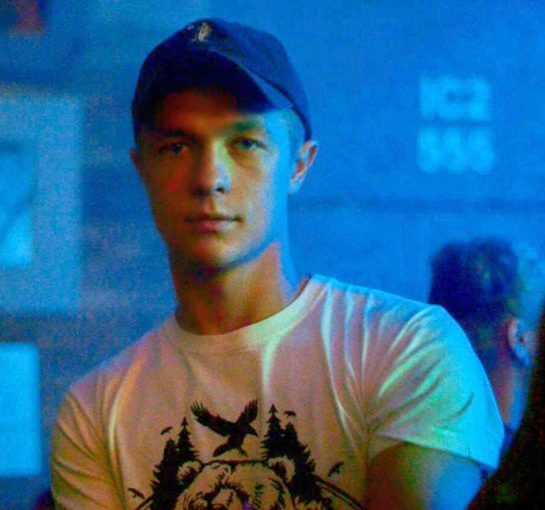
Ilya Shakursky

It soon became clear that this “Network” organisation had been dreamed up by the FSB, and the confessions extracted from the alleged participants with the use of the most barbaric tortures. Details of the methods used, including electric shock batons, were published widely before the defendants were tried.

Nevertheless, the defendants were found guilty and sentenced – in January 2019 in St Petersburg, Igor Shishkin to three-and-a-half years’ detention; in February 2020, seven defendants in Penza, including Ilya Shakursky, to between six and 18 years; and in June 2020 in St Petersburg, Viktor Filinkov to seven years and Yulii Boyarshinov to five-and-a-half years.

In October 2020 an appeal by the Penza defendants was heard and rejected. An appeal by Viktor Filinkov is in progress.

All ten defendants are included in a list of 61 political prisoners compiled by Memorial, Russia’s largest human rights defence group.

This interview with Ilya Shakursky, who is serving a 16 year sentence, is by Dmitry Semenov. It was published by Free Russia House, an “alternative embassy for Russian civil society” based in Kyiv, Ukraine, and by the Rupression collective that supports the “Network” case prisoners. (The questions were sent via Yelena Shakurskaya, Ilya’s mother, and answers received, via Yelena, in written form.)

Question: Do you feel the support from outside the prison system, and how important is it? Could you say something briefly to our readers and to people who support you?

Ilya Shakursky: It feels good to realise, every morning when they call out my surname and hand over letters I have received, that people remember me and continue to support me. At those moments, the grey monotony of imprisonment is broken up by different colours. It doesn’t matter whether the letter is a couple of lines or goes on like a whole essay. Just getting some news gives me strength and happiness. When I see photos of solidarity actions all over the world; when I read interviews with well-known people who speak about the absurdity of the criminal case against us; when I hear the drums and voices of friends [demonstrating] on the other side of the [prison] wall; when I think of the concert, at which the whole hall sang “It Will All Pass” [“Vse proidet”] (a song by the Russian punk group, Pornofilms, about the “Network” case), or of the rap-battle, where verses were read in support of our case, or of the street artist who used graffiti to speak out about repression in Russia today – I feel like it wasn’t all in vain.

If this means that people start paying attention to things that were previously out of their reach, or unclear, or that they didn’t need to think about – then this could become a way in which everyone can contribute to the struggle against the absurdity, the violence and the injustice. Now and then the flame dies down, but solidarity is a stream of sparks, that stops them from putting the fire out all together, that stops us losing heart – or, to put it another way, stops us from bowing our heads and submitting to evil.

If any of you suddenly thinks of writing to a political prisoner, don’t abandon that thought. Don’t hide it in your “to do” list among your other worries. Do it, right at that moment. Write about your dreams, about what you love, share some memories that make you laugh, or your impressions from a book you have read. Please be assured that your letter is more important than it can seem to you. It can save a political prisoner from the awful monotony of another day behind bars and walls. And that really is very important.

I am very grateful to each and every person who supports political prisoners, who fights for their release, and for justice, and who conveys those sparks that light the fire, that prevent evil from consuming our lives.

Q: After you heard the verdict, and the long, severe sentences, at the court of first instance, how did you react? What has helped you not to give up, not to be overcome by depression, to hold on?

ISh: When I heard the sentences being read out, I took them as final confirmation that this was nothing more than punishment for recalcitrance. It’s difficult to believe what’s happened, and even now I try not to dwell on it. Such thoughts can gnaw away at you and drive you out of your mind.

We live in a world where the life of any one of us can be destroyed, on the whim of those who have power in their hands. What’s most terrifying of all is that people get used to this – to everything that is happening now: demonstrators and young politicians being beaten up; criminal cases under terrorism laws being opened against underaged children; the poisoning of undesirables, absurd sentences, and much, much more that is unjust, cruel and brutal, that could become the norm, if society just accepts it as the new reality. I fear that, above all. Really, that would be totalitarianism with the silent acquiescence of the majority. And then it might be too late to start saying that that was not what we wanted.

Ilya Shakursky (waving) in court at his trial

I admit, honestly, that holding on, not getting depressed, gets harder. Especially in the context of what is happening in the country. But I am still alive, I have friends and family waiting for me outside these walls, they believe in me and sincerely love me – and so I have to hold on. I must not give up, for the sake of those people who are dear to me, for my own sake, for the sake of the stars in the sky and the fresh air, for the sake of freedom and love.

With smiles they were breaking my wings,

My scream sometimes was like a wail.

And I was numb from pain and helplessness,

And could just whisper: thanks to be alive! (Vladimir Vysotsky.)

Q: You practically all received exactly the sentences that the prosecution asked for – evidently, in large part because you refused to admit guilt and you publicly denounced the torture. With the benefit of hindsight, do you now regret that?

ISh: To regret the course we have taken would render worthless all that we have lived through, and are living through now. The very worst time for me was when I gave up to weakness and fear, and betrayed myself by doing so. I felt that I had just stopped being human; hatred for myself overshadowed all my thoughts. But today, although I am in prison, actually behind four walls, I now remain the person that I really am. If I had [approached the trial] differently, my life would have been mere existence. Why talk about freedom, equality and fraternity, and then betray all of that? What would these words mean for people, if each one of us could just turn our backs on them when the executioners demand it?

The more that people betray themselves and others, the more often they carry out criminal orders in spite of their conscience, the sooner we will all become slaves, deprived of our free will, whose lives are mere existence.

Maybe I am guilty for silence,

Guilty for unnecessary words.

At moments of fear and desperation

My guilt can be hidden.

I constantly expect reproach

Even from those who are indifferent.

I, like everyone, am not free of defects,

But I am constrained by my conscience.

That’s what calls on me at times

Not to shut my eyes to evil

And to stand by those who suffer.

Otherwise, the burden of guilt will suffocate us.

Q: If you could make time go backwards, and return to some point before your arrest, would you change anything cardinal in your life?

ISh: I already look at my past from a different, probably more grown-up and aware, viewpoint. So of course there are things in the past I would like to change. For example, I would value more highly the people around me, not make mistakes or take wrong turnings, be less bitter, less naive – and much else, maybe some completely personal stuff. But I take my fate as it is – although of course there’s much I could regret, as there is for many people.

My behaviour, my mistakes, my action and my views and aims made me what I am now. That’s what makes our lives interesting, full as they are of happiness and pain, of light and dark. All the more often now, I realise that I took the road leading in the necessary direction. When I see those who hate me – Nazis, propagandists, Chekists [i.e. those in the Russian security services], thugs – and those who support me – the defenders of Shiyes, musicians, artists, political prisoners, teachers, people from my town, comrades all over the world, family and loved ones – I understand that I am on the right side, the bright side. And that understanding justifies, in many ways, the road I have taken, which is short but from which I have drawn definite conclusions and ideas.

What’s there to say about life? That it turned out to be long.

Only with grief do I feel solidarity.

But whilst my mouth is not yet packed with clay,

It’ll only resound with gratitude

(Iosif Brodsky.)

Q: Finally, I would ask you to formulate some sort of phrase or slogan that in the current situation helps you to overcome all the difficulties and to believe that justice will soon be achieved.

ISh: When I write that good will prevail, I don’t have in mind worldwide peace, however much I would like that. The point is that good prevails every day, thanks to sincere, good people. Good prevails when doctors save people’s lives, when people adopt a child from an orphanage, when a taxi-driver saves a demonstrator from sadists with truncheons, when eco-activists defend forests from destruction, when political prisoners are released in court, when human rights defenders protect prisoners from torture, when solidarity and love make us smile, and make us believe that we are not alone, that we are together and that we will win. Good will prevail!

PS [from Dmitry Semenov, freerussiahouse. At the end of his letter Ilya Shakursky sent a message to the interviewer, not for publication. At the end of that message he again expressed thanks for the interest shown in the case, and best wishes. From my side I would like to send Ilya and his friends rays of support, for their freedom. “For sure, this will all pass.”

■ Note. Please send messages to Ilya Shakursky and the other prisoners in English to peoplenature[at]yahoo[dot]com, and I will see that they get translated and passed along. Our friends in Russia say that there is no point in sending letters written in English (or other languages except Russian) to prisoners in Russia, as they will not receive them.

■ Also on People & Nature today: Moscow remembers Anastasia Baburova and Stanislav Markelov; and a statement from Rupression collective

A video call with Dmitry Pchelintsev, another of the “Network” case political prisoners, is reported here.

■ A list, in English, of the “Network” case defendants is here, and other information from the Rupression collective is here.

■ Russian speakers will find a list of the defendants here, and information on their whereabouts here.

■ The English translation of Interrupted Flight, the song by the Soviet-era Russian bard Vladimir Vysotsky, is from an article by Elena Dimov on the Contemporary Russian Literature site. The translation of the last lines of “I, Instead of a Wild Beast, Entered the Cage” by Iosif Brodsky is by Valentina Polukhina and Chris Jones, from: L. Loseff and V. Polukhina (eds.), Joseph Brodsky (Palgrave Macmillan, London: 1999).

⏭ Keep up with People And Nature.  Follow People & Nature on twitter … instagram … telegram … or whatsapp. Or email peoplenature[at]yahoo.com, and you will be sent updates. 

“Now And Then The Flame Dies Down, But Solidarity Is A Stream Of Sparks”

People And Nature ✒ Statement by the Rupression collective about ceasing financial support for two of the “network” case prisoners, 1 November 2020 [Original here.]


Dear readers of Rupression, and all those, who support political prisoners and express solidarity with the defendants in the “Network” case:

We have been compelled to take very difficult and complex decisions, and to formulate our position on supporting the defendants [in the case], due to their conduct with respect to the criminal case or separately from it.

First of all, the Rupression group is not a fund or an organisation, but a collective that came together spontaneously. People join, and leave, get burned out and then find new strength, and, sometimes, operate at the limits of what they are capable of. This is a collective of very different people without leaders or coordinators; it is guided, above all, by solidarity and sympathy for people who are suffering repression. There are very often times when we can not rapidly take important decisions that require discussion and consensus. And furthermore, like any of you [readers], we consider it our right to give support to those who correspond with our understanding of good and evil, of morality and respect.

For a long time after the publication by Meduza [on 21 February 2020] about the disappearance and murder of [the antifascist activists] Artem Dorofeev and Yekaterina Levchenko, we sought a way to formulate our position. In our statement [of 23 February 2020] we explained why we had not published anything about this earlier, although we had suspected that some of the [“Network” case] defendants had been involved in the murders. We had tried to find proof that they had not been involved, including by sending our questions to them, in order to find out their version of events. Sad to say, we could not allay our suspicions.

We are convinced that the case of the formation of a terrorist group is founded on fabrications and on tortures; that Dmitry [Pchelintsev] and Maksim [Ivankin] have been tried unjustly; and that they are political prisoners who must be released. Moreover, Dmitry Pchelintsev was subject repeatedly to brutal torture. If you wish to support Dmitry and Maksim, information about how you can do so will be made available on the rupression.com web site.

We have stopped sending financial support to Maksim Ivankin and Dmitry Pchelintsev from September [2020]. Before this we had sent in their support 50,000 rubles each – a sum which, by our reckoning, is sufficient for the first visit of a lawyer to them in prison.

Years of imprisonment lie ahead for the defendants in the “Network” case. During the time that they are undergoing this punishment in prison colonies, support is very important. Prisoners convicted on terrorism charges, as particularly dangerous “criminals”, are always subject to especially strict “observation” by the guards, and face the constant threat of moral and physical pressure.

Funds for the other “Network” case defendants can be sent using the details on the Rupression site. [Note. Please do not send funds from outside the Russian federation.]

We will continue to communicate information about events surrounding all the “Network” case defendants.

The position of the [Rupression] group may change, if we are made aware of new factors.

A video call by human rights activists with Dmitry Pchelintsev is reported here.

⏭ Keep up with People And Nature.  Follow People & Nature on twitter … instagram … telegram … or whatsapp. Or email peoplenature[at]yahoo.com, and you will be sent updates. 

A Statement By The Rupression Collective

People And NatureWhile Black Lives Matter demonstrators fill the streets of cities around the world, opening a new chapter in the history of anti-racist and anti-fascist struggle, the Russian anti-fascists Viktor Filinkov and Yuli Boyarshinov are starting long jail sentences.


A St Petersburg court sentenced Filinkov to seven years, and Boyarshinov to five-and-a-half, on 22 June, on trumped-up charges of involvement in a “terrorist grouping” – the “Network”. In February, seven other defendants were jailed by a court in Penza for between six and 18 years, and last year another in St Petersburg for three-and-a-half years.

Detailed evidence that the “network” case defendants were subjected to horrific tortures after their arrest has been published and submitted to state bodies. President Vladimir Putin last year cynically promised to look into it. Nevertheless, the defendants have been railroaded to penal colonies.

Viktor Filinkov in court. Photo by David Frenkel, Mediazona
This portrait of Viktor Filinkov – who refused to admit guilt and received one of the heaviest sentences – is by Yevgeny Antonov. It was first published in Russian by the Petersburg news outlet Bumaga.
***
On Monday 22 June, the 2nd Western District Military Court [in St Petersburg] announced the sentences on the Petersburg defendants in the “Network” case, Viktor Filinkov and Yuli Boyarshinov. They were found guilty of involvement in a terrorist grouping (article 205.4, part 2 of the criminal code). Filinkov was sentenced to seven years in a penal colony (standard regime). Boyarshinov got five and a half years (Yuli was also convicted of the illegal possession of explosive materials (article 222.1, part 1)).

Four days before the sentencing, Filinkov addressed the court. The 25-year old computer programmer set out the inconsistencies in the prosecutor’s case, and used diagrams to show why the PGP [Pretty Good Privacy encryption] programme would not be used by a conspiratorial terrorist group, as the prosecution had claimed.

In his closing statement, Filinkov stated that the internal affairs ministry, the prosecutor, the federal prison service, the Investigative Committee, the federal security service [FSB], the court and the legislature had worked in bad faith. He accused them of obeying orders unquestioningly and of being unwilling to investigate the case.

“The nine-year sentence that the prosecutor has asked for seems like some sort of indication of respect for everything that I have done”, Filinkov said. “All of them have disgraced themselves. I don’t know what the solution to this situation is.”

Viktor Filinkov was born in Petropavlovsk, in Kazakhstan. His mother worked in a jeweller’s shop; his father, who worked installing medical equipment, died when Viktor was 11; and his elder sister lived away from home.

“We waited so long for Viktor. And when he was born, he grew up loved and cared for, by grandparents, by his aunts and uncles, and by us”, Natalia Filinkova, Viktor’s mother, told Bumaga. 

He hardly knew the word ‘no’. He was a good, kind child, very honest, strong-willed. Right from when he went to nursery, if he didn’t like something, he would say so straight out. He would tell anyone, to their face, what he thought. I used to ask him, ‘why so direct?’ and he would answer ‘because it’s true!’.

According to Natalia, electronics caught her son’s imagination when he was still a child. At six, he used his sister’s computer to read up about it. At ten, he would put together robots. As a teenager, he learned programming and won computer competitions. In court, Filinkov’s colleagues from the IT company where he worked confirmed his remarkable skills as a programmer.

“He hadn’t yet started going to school, when he told me, when I grow up I’ll be professor, earn lots and lots of money and buy KAMAZ [the truck construction company], so that it can make lots of money too. He obviously thought professors are high earners”, Natalia joked.

After Viktor’s father’s death, the family had to spend less, and moved to a smaller flat, but was still free of serious financial problems. Viktor’s wife, Aleksandra Aksenova, said that he described his childhood as difficult. “He saw how his mum and his sister kept their noses to the grindstone. But still, they had no money for meal time treats. I well remember how Viktor said that, when he was a child, butter was a real treat. It was not starvation, but it was definitely poverty.”

Viktor is described as a sociable person, with dozens of friends, who loves social gatherings. According to his mother, he was a voracious reader as a teenager – of technical books from school in particular. And he would sit on the internet and play computer games.

Aleksandra Aksenova says that Viktor mentioned to her his dislike of the education system in Kazakhstan, and his frequent arguments with his school teachers. “One thing that’s striking about Viktor is that he loves a good argument. Once he has worked out his position, he is very good at defending it. But also, if it turns out he is wrong, he’s not afraid to say so.

Although he didn’t like the way the school system worked, he was anything but stupid. With STEM subjects he was in his element. And he argued with his teachers, often because he knew more than they did.

Viktor himself says that, as he got older, he wore his hair long, on account of which the school management “tried to put pressure on him”. Around this time, Filinkov’s anti-fascist and anarchist views took shape.

“At some point when Vitya was in the 9th year [i.e. at 15], he said that he had become keen on anarchism”, Natalia Filinkova remembers. “Surely he read about it on the internet, there was plenty written there. This was shortly after [the lawyer, Stanislav] Markelov and [the journalist Anastasia] Baburova were killed [in Moscow]. This had a real effect on Viktor; he wanted justice.”

Viktor Filinkov (third from left) as a school pupil. Photo: zona.media
Viktor’s mother says, however, that they did not talk about politics. In court, she said: “He was a good example to others. At no time did he suggest that he was against the government.”

In 2013 Viktor finished school and moved to Omsk, [in western Siberia, in Russia,] where he started studying in the faculty of information and communications technology at Omsk state university.

Viktor never graduated. After two-and-a-half years he abandoned his studies, because his mum became “seriously ill”. (Natalia asked that the diagnosis remain confidential). Filinkov started work, earning 30,000 rubles [400 euros at 2016 exchange rate] per month.

Viktor was happy to quit university, a friend from that time told Bumaga; he complained that classes were boring. This source said that Filinkov soon understood that he had hit the pay ceiling in Omsk, and thought about moving on.

Viktor’s wife recalls that at that time he began to participate in anti-fascist actions and to support human rights campaigns. In 2014-16 he stood on picket lines opposing redundancies among health workers, supported trade unions and attended demonstrations in memory of Markelov and Baburova.

By 2015 Viktor was a committed anti-fascist, an acquaintance from Omsk told Bumaga. According to them, Viktor came to these beliefs himself, without reading “ideological literature” such as the work of [Pyotr] Kropotkin or [Mikhail] Bakunin.

“We first met in 2015, when he was hanging around the university with his friends”, this source recalls. 

We had interests in common – in computer technology, and sport – and became friends. There was a small circle there [in Omsk] of people who were anti-authoritarian: a milieu of young leftists, who shared a clear understanding: racism – no way, capitalism – no way.


A demonstrator being detained outside the Petersburg court hearing. Photo by David Frenkel, Mediazona

This friend of Filinkov’s said they were “not the sort who build communes and prepare revolution”: their main aim was to create horizontal cooperation, within which people could live side-by-side comfortably and help each other. This way of living was seen as an alternative to the state’s.

Aleksandra Aksenova, with whom Filinkov often discussed his time in Omsk, said: 

He grew up in conditions of great social injustice. He also saw people’s attitudes to him, due to the fact he was a citizen of another country [Kazakhstan]. How could he not become an anti-fascist?

Viktor himself has said that in 2016, because of the views he held, he was several times attacked by nationalists.

Both Aksenova and Filinkov’s friend from Omsk said that Viktor had come to know Aleksei Poltavets, who would later confess to the murder of an associate of the “Network” defendants in Penza. Of the other future defendants Viktor knew little, but he had heard their names, says the source in Omsk.

“It wasn’t so much about going to demonstrations or getting together in groups”, Filinkov’s Omsk friend said.

It was that we tried to live by the principles of anti-authoritarianism, anarchism, anti-fascism. And of course we spent time together: cycling, skating, playing around with Linux, trying to write [computer] programmes, listening to music, hanging out, climbing on roofs.

Viktor met his future wife in the summer of 2015 at an anti-fascist concert in Moscow. Aleksandra then lived in Moscow, Filinkov was just visiting. They kept in touch on line, then began talking on the phone and in mid 2016 decided to meet in Penza, midway between Omsk and St Petersburg, where Aleksandra then lived.

Aleksandra had by then got to know many anti-fascists and anarchists, including future defendants in the “network” case: she was friends with Dmitry Pchelintsev, knew Arman Sagynbaev, Igor Shishkin, Andrei Chernov and Yuli Boyarshinov, and had communicated with Ilya Shakursky. Filinkov himself said that, even by the time of the court case, he had only known some of the other defendants indirectly, or met them just once.

“My comrades got to know Vitya”, Aksenova remembers:

They grew pretty fond of him, because he knew so much about so many things. They would endlessly come to see him. ‘Vitek, help with this, help with that, my computer is broken, I need to find something, how can this be done safely?’ And he would sit and explain everything.

Aksenova says that Filinkov grew to like Dmitry Pchelintsev, the shooting instructor and anti-fascist, who the FSB would later name as the founder of the “network” terrorist organisation. “It’s no secret to anybody that one of most well-read guys in Penza was Dmitry Pchelintsev”, Aksenova says. “He could explain his reasoning, sometimes very romanticised and sometimes loudly, but it was always interesting to talk with him.”

In court, Filinkov’s lawyer, Vitaly Cherkasov, insisted that in Penza Viktor hardly spent time with any of the others, since he was “so enchanted with his lover”.

In September 2016, Filinkov found work at a Petersburg start-up. He and Aleksandra began to live together, and then got married – partly so that Viktor could become a Russian citizen.

At the same time, Filinkov got to know Sagynbaev, and began to attend lectures on first aid. In 2017 Aksenova applied for permission to acquire a firearm: the couple then kept it in a safe in their flat.

In the same year Filinkov, along with other anti-fascists, began to visit a flat at Bogatyrsky prospekt 22. Aksenova says:

These were meetings of friends. They discussed community projects, and how they could cooperate with each other. As was stated in court, they talked about, among other things, sociological methods of study, and how to develop a culture of discussion.


When, at the end of 2017, Pchelintsev and other activists in Penza disappeared, Filinkov and Aleksandra tried to find out what had happened to them. Aksenova decided to travel to Kiev, and in January 2018, when it became known that the Petersburg anti-fascist Yuli Boyarshinov had been arrested, Viktor decided to fly out to join her.

Filinkov had a ticket for a Kiev flight two days after Boyarshinov was detained. He told his wife that he was leaving for the airport, but never made it to the Ukrainian capital. Aleksandra searched for her husband for two days. Later on it became clear that he had been detained by FSB officers. Filinkov said that in those days the officers tortured him with an electric shocker, in order to obtain a confession.

Filinkov spent two-and-a-half years in an Investigative Detention Centre (SIZO). During that time he reported injuries he had sustained as a result of the torture. He was diagnosed with a ruptured spinal disc, and prescribed medicine for psychological problems that he suffered.

According to the FSB, Viktor Filinkov, together with other members of the “Network”, in 2016-18 acquired firearms and learned how to use them, and “acquired the practical means to seize a building”, with the aim of making violent change to the constitutional order. The FSB claimed that the group, in which Filinkov allegedly took part, aimed at the “armed overthrow of the state power”. In the prosecution case, Viktor was named as the signals operative.

Viktor Filinkov and Yuli Boyarshinov at a court hearing in 2018
The prosecutors argued that Filinkov spoke about being tortured in order to discredit Russia’s law enforcement agencies. As evidence, they adduced the fact that Viktor did not officially inform anyone about the torture before he met with Vitaly Cherkasov, his lawyer, on 26 January [2018]. Cherkasov asserts that his client was in a state of shock, and says that he himself saw the marks [on Filinkov] that resulted from him being beaten.

Members of the Public Monitoring Commission [a civic organisation empowered to monitor conditions in places of detention] also confirmed that there were signs of torture. But no independent medical examination was conducted. Viktor’s mother met with him only several months after his arrest: according to her, it was cold and her son wore a coat: all she saw was a scar on his chin.

When the court hearings began in Petersburg, Filinkov at practically every opportunity spoke of his innocence and rejected the prosecution’s claims. In open court he said:

All that I can say is: no, it’s not true. The burden of proof lies with the prosecution. But for two-and-a-half years, the authorities have shown their bias. They have wagged their fingers at me and said that I have to prove that I am not a camel.

Filinkov’s work colleagues said in court that he had spoken openly with several of them about his wife’s legal possession of a firearm. He had introduced her to them as “Olga” – which the FSB claimed was a conspiratorial pseudonym. The prosecution also claimed that Filinkov’s “code name” was Gena. Viktor himself insists that people started to call him by that nickname in Omsk, because sometimes he laughed “like a hyena” [“giyena” in Russian].

People who know Viktor well have told Bumaga that they understand why he refused to confess, which theoretically could have reduced his sentence. (According to Vitaly Cherkasov, after arrest Filinkov was offered a three-year term [if he confessed].)

“That’s just his character. He won’t confess to something that he didn’t do”, Viktor’s mother Natalia said. 

I know what he is thinking: if a person is right, why should he incriminate himself? Knowing him, I wouldn’t even dare to ask if he would think about making a deal. I couldn’t have brought myself to say it to him. Just impossible.

Aleksandra explains her husband’s decision in terms of the “prisoner’s dilemma” in game theory. There is a choice for two sides: betray each other, or cooperate. Betrayal brings greater gains for each side, and for this reason it is assumed that rational players will choose betrayal. But if both sides turn traitor, the total winnings will be less than if they cooperate.

“When all the defendants in a fabricated trial refuse to admit their guilt, and insist on what they see as the truth, then the mathematical chance that they will all be given the maximum sentence is reduced”, Aleksandra says.

In such a case there’s a possibility that the whole case will just collapse. Because everyone will say what really happened. But in our case, things were complicated because there were only three defendants in Petersburg.

Officially, the other Petersburg “network” defendants – Igor Shishkin and Yuli Boyarshinov – made no statements that they had been tortured. But after they were first detained, members of the Public Monitoring Commission learned that Shishkin had been diagnosed with a large number of bruises and instances of localised internal bleeding, and that the bone around his eye [the lower orbital wall] had been broken. Boyarshinov stated that FSB officers came to see him in the detention centre, and that other detainees had threatened to rape him.

In his final statement to the court, Filinkov said that he understood both Yuli Boyarshinov, who had confessed to his guilt, and Igor Shishkin, who had cooperated with the investigation (and already in 2019 been sentenced to three-and-a-half years). Viktor considers that they saw no other way out.

Aksenova concludes: 

He is an idealist. An idealist who sees the need to take his place in history, who takes upon himself responsibility for the big picture. If there were no such idealists, then we would never have an example to follow, of how a person should act in such circumstances. Maybe it will seem to some people that Viktor’s words and actions were rash, and doomed to fail from the outset. I would not argue. But these words and actions are a necessity, for us to stand up for our ideals.

■ Please visit the Rupression web site, to see how you can support the “Network” case prisoners.

■ For more coverage of Filinkov and Boyarshinov’s trial, and of the case, see the Russian Reader, Open Democracy Russia, and Freedom News. People & Nature has written about the case too, e.g. here, and about international solidarity events.

Viktor Filinkov, Political Prisoner ➖ “An Idealist Who Takes On Responsibility For The Big Picture”

From People And Nature a report on the withdrawal of support from one defendant in the Network Case trials.

The campaign group in Russia supporting the “network case” defendants – antifascists arrested and tortured by the security services, some of whom are now on trial – has withdrawn some forms of support from one of the defendants, Arman Sagynbaev.

The “network case” defendants are, and will continue to be, supported by an international campaign that has been featured on this blog e.g. here, here and here.

A statement on the Rupression web site said that campaigners in Russia would not collect money for Sagynbaev, or correspond with him, after the publication of a series of statements by women raped and/or violently attacked by him.

The Rupression site says that “we don’t have any reason not to believe” Sagynbaev’s victims; that he had always had “an unclear reputation”; and that campaigners thought their silence on this up to now had been a mistake. The statement added that Sagynbaev had “continued to deceive those with whom he corresponds, and to manipulate people” from jail.

It continued:

All persons involved in the [network] case are political prisoners and we have no doubts that Arman suffered from cruel FSB torture, the same way as the others. All accused without exception should be free, and those who are responsible for torture should take their places.

The trial of the “network case” defendants in Penza is underway. On 18 November, a local news web site reported that three of them – Dmitry Pchelintsev, Maksim Ivankin and Sagynbaev – had been on hunger strike for eight days, demanding that the judge in the case made a full investigation of their allegations of torture.

On 14 November, the Media Zona, a human rights information site, reported that Viktor Filinkov, who was arrested in St Petersburg but whose case is being heard in Penza, had ended a hunger strike in hospital, to which he had been moved when his condition deteriorated.

Throughout the case, the defendants have published detailed accounts of torture by officers of the Federal Security Services, e.g. here.

Report of a London demonstration in support of the “network case” defendants, January 2019

⏭ Keep up with People And Nature.


“Network Case” Update ➤ Arman Sagynbaev