Reading it back now is like opening a time capsule from a country on the cusp of a major change. In the decade since then, Ireland has liberalised dramatically as a society, but more slowly as a State.
We have made great progress on social issues. The constitutional bans on blasphemy, abortion, and same-sex marriage have been removed by referendum, and the laws have been changed to reflect that. Church-led restrictions on contraception and prejudice against same-sex relationships were already crumbling, and both are now widely accepted as ordinary parts of life.
But two institutional issues remain unresolved. The Catholic Church still runs 90% of our primary schools, with exemptions in our equality laws that allow them to discriminate on the ground of religion. There has been no real progress towards providing an objective, critical, and pluralistic education, and Atheist Ireland is preparing a court challenge on this issue.
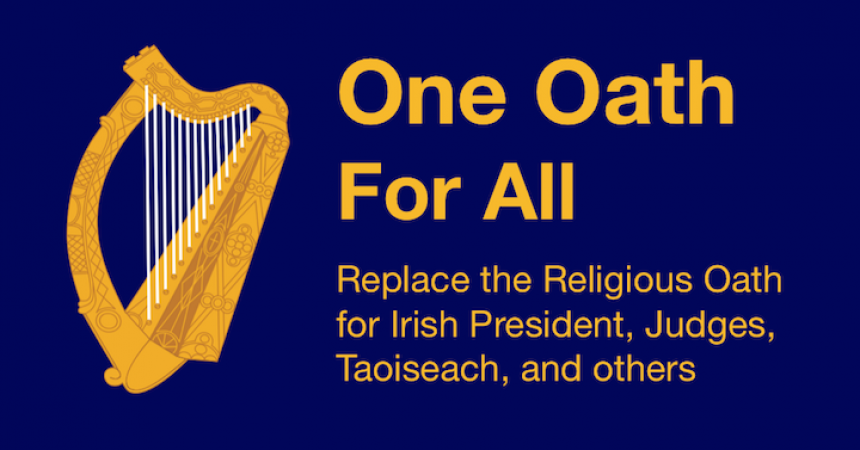
Also, the president, judges, and members of the Council of State (including the Taoiseach) must swear a religious oath, meaning conscientious atheists cannot hold these offices. This breaches the human right to freedom of religion and belief. It would simply not be tolerated if religious office-holders had to swear there is no God.
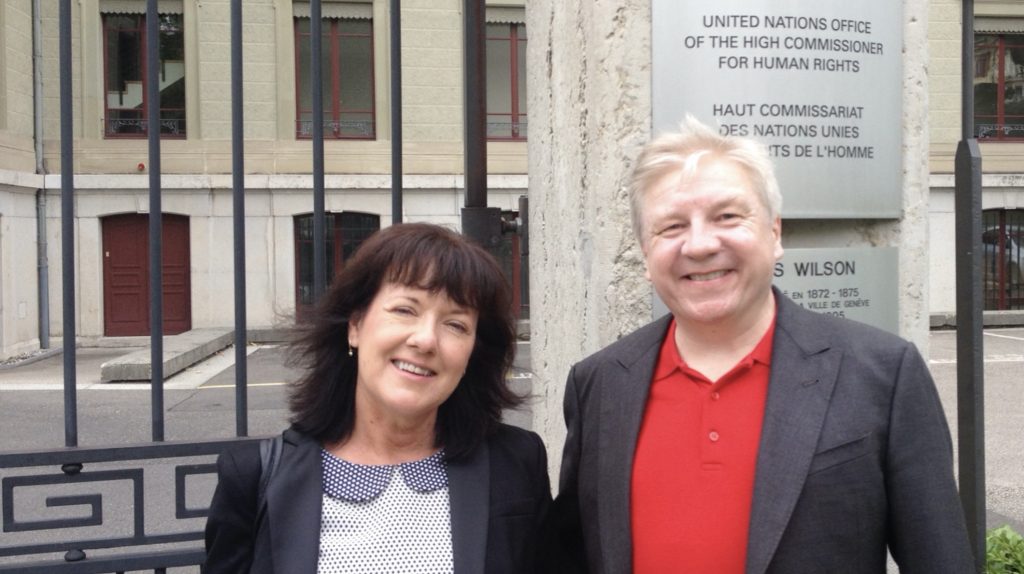
Here’s what Michael told Charlie Hebdo in June 2016, along with updates on what has changed since. Forgive the clumsiness of some of the phrases: it’s Michael’s English translated to French for the magazine, then translated back to English for this article.
We have made great progress on social issues. The constitutional bans on blasphemy, abortion, and same-sex marriage have been removed by referendum, and the laws have been changed to reflect that. Church-led restrictions on contraception and prejudice against same-sex relationships were already crumbling, and both are now widely accepted as ordinary parts of life.
But two institutional issues remain unresolved. The Catholic Church still runs 90% of our primary schools, with exemptions in our equality laws that allow them to discriminate on the ground of religion. There has been no real progress towards providing an objective, critical, and pluralistic education, and Atheist Ireland is preparing a court challenge on this issue.
Also, the president, judges, and members of the Council of State (including the Taoiseach) must swear a religious oath, meaning conscientious atheists cannot hold these offices. This breaches the human right to freedom of religion and belief. It would simply not be tolerated if religious office-holders had to swear there is no God.
Here’s what Michael told Charlie Hebdo in June 2016, along with updates on what has changed since. Forgive the clumsiness of some of the phrases: it’s Michael’s English translated to French for the magazine, then translated back to English for this article.
CH 2016: Is the Catholic Church still as influential in Ireland?
MN 2016: Ireland is a country of Catholic tradition in which the Church has long controlled the population. Today, mentalities have changed, and the Church no longer has the same influence. However, the laws put in place at that time are still there and it retains practical power. It still governs 90% of schools and teaching colleges, we have an offence against blasphemy written into the Constitution, and our president, our judges and the prime minister take an oath on the Bible.”
Today: This trend continues. We’re definitely no longer a Catholic country. We’re now a pluralist country that is gradually removing the legacy of Catholic laws. But some of those legacy laws remain significant. Atheist Ireland continues to campaign for an ethical, secular State that gives no privilege to either religion or atheism.
Progress on blasphemy, abortion, marriage equality, and condoms
CH 2016: The Irish government adopted a law against blasphemy in 2009?
MN 2016: A new government was elected after the adoption of this law and, until now, it has not been applied. But it is still on the books. That raises two questions. The first concerns self-censorship, which affects the media. Although no one has yet been prosecuted for blasphemy, they refuse to publish material that could put them in conflict with the law. Often, before a radio or TV programme, I am asked to watch what I am going to say.
The other problem comes from the fact that this law, passed in a modern, liberal Western democracy, is being used as an example by Muslim countries within the United Nations, which use it to support the argument for a ban on any criticism of Islam. When Pakistan cites you as an example of best practice on blasphemy laws, you know you are doing something wrong.”
Today: This is one of the biggest advances we have made. After a decade of campaigning by Atheist Ireland at home and at the UN, a referendum in 2018 removed the ban on blasphemy from the Constitution. The law against blasphemy was subsequently removed. There are still dangers of so-called ‘hate speech’ laws becoming blasphemy laws by the back door.
The WRC recently ruled against a man who was banned from a yoga class for criticising Christmas. That was not a blasphemy case, but it shows the continuing risk that criticism of religious ideas can be treated in the same way. Atheist Ireland continues to campaign for laws that protect people from harm and not ideas from criticism.
CH 2016: Abortion is a sensitive issue?
MN 2016: Abortion is still unconstitutional, except in very specific cases, especially when the mother’s life is in danger. Not her health, but her life. A few years ago, a young woman died in hospital because a hospital refused her an abortion on the pretext that her life was not at stake. Women have to travel abroad for abortions, mostly in England or the Netherlands. This adds to their stress, and also forbids this operation to the poorest and to those who are too fragile, as well as to refugees, who fear that once they have left Ireland, they will not be able to return. It is estimated that about ten women leave the country every day for an abortion.”
Today: After thirty-five years of campaigning by many groups, a referendum in 2018 finally removed the ban on abortion from the Constitution. The law was subsequently changed to allow abortion in defined circumstances. The procedure is provided free of charge if you have a PPS number. Some outstanding issues include a mandatory 3-day waiting period, criminalisation of healthcare providers, and the need to expand access in cases of fatal foetal anomalies.
CH 2016: And homosexuality?
MN 2016: Homosexuality was illegal in Ireland until the 1990s. In 1982, a gay man was beaten to death in a Dublin park by a group of teenagers who were ‘gay-bashing’. Arrested and brought to justice, they were given a suspended sentence and celebrated this by a march back to the park. However, last year (2015), Ireland became the first country in the world to legalise marriage for all by referendum. The population no longer accepts that someone should suffer discrimination because of their sexual orientation, even though the Church continues to do so.”
Today: This is another area of major progress. In 2016, we had just passed the referendum that removed the ban on same-sex marriage. Ten years on, same-sex relationships are accepted as a normal part of adult life. Irish equality law explicitly outlaws discrimination in the workplace, housing, and access to services based on sexual orientation. There are still legal and bureaucratic problems with some issues, like reciprocal IVF and adoption rights.
CH 2016: What about the use of condoms, which the Church opposed?
MN 2016: People simply ignore the Church’s positions on this question, but that was not the case for past situations. In the 1970s, for example, the IRA use condoms to protect the mechanisms of their bombs, but some refused to use condoms for moral reasons. At the beginning of the 1990s, the Virgin Megastore in Dublin was condemned by the courts for selling condoms, and at the time you could get them only by medical prescription, and if you were married.”
Today: Thankfully, we’ve moved beyond this silliness. Condoms are now accepted as a normal part of adult life. Also, women and girls aged between 17 and 35 can get free contraception including doctor consultations. It is extraordinary to think that, in our lifetime, church and State combined to restrict access to contraceptives as strongly and effectively as they did.
Limited progress on secular education and none on religious oaths
CH 2016: What is the situation in schools?
MN 2016: When you want to enrol a child in school, the only option you have is usually the Catholic school around the corner. If there are too many applications, priority will be given to baptised children. Then, religion will interfere in all school subjects, even if you decide to exempt your child from religious education classes. In science, they will be told that God created the trees and animals; in music, they will sing hymns; and during art classes, they will draw portraits of Jesus. The government claims to be remedying this situation by creating non-denominational schools, but we are talking about only a handful of institutions among about 3,400 denominational schools.”
Today: There has been some fine-tuning of the way schools can legally discriminate on the ground of religion, but no substantive change. State-funded primary schools can no longer prioritise children of Catholic parents, but second level schools still can. Religion still permeates the entire school curriculum, and it is often impossible for parents to exercise their constitutional right for their child to not attend religious instruction. Typically, such children are left sitting in the religion class anyway, instead of being given an alternative subject.
Also, the government has dropped even its nominal claim to want non-denominational schools. It is now only considering denominational, interdenominational, and multi-denominational schools. All of these are variations of a religious ethos. Atheism is not a denomination. Atheist Ireland continues to campaign for an objective, critical, and pluralistic education system that treats everyone equally.
CH 2016: You also talk about officials having to swear a religious oath?
MN: The president, judges and members of the Council of State (including prime minister, presidents of the Dáil and Senate, and attorney general) must swear an oath on the Bible. It is in the Constitution. It begins, in the preamble, with recognition of the authority of the Holy Trinity, and then states that ‘the State acknowledges that the homage of public worship is due to Almighty God.’ That is not merely to say that Catholics have the right to pray to their God, but that the God must be worshipped. God’s rights are therefore written into the Constitution, as if the Creator needed the protection of the Irish Parliament.”
Today: There has been no change in any of this. These religious oaths remain a breach of the human right to freedom of conscience and belief. In 2021, five Irish citizens took a European Court challenge to these religious oaths. They lost, not because of the substance of the arguments, but because they could not show that they were directly affected by the law because they were not taking up any of the offices.
Barry Ward TD currently has a private members bill seeking to remove the religious oath for judges, but it is unlikely to succeed. Atheist Ireland continues to campaign for one oath for all high offices, that reveals nothing of the religious or nonreligious beliefs of the office-holder, and to remove other constitutional articles that privilege religion.
Conclusion
CH 2016: How does society react to all this?
MN 2016: Most people have come out of that era of bigotry, when the Church controlled people’s thoughts and, very particularly, the youngest, who do not live like that at all anymore. A study carried out in 2012 showed that 75% of Irish Catholics do not believe in transubstantiation, that 50% doubt the existence of hell, 15% don’t think that Jesus is the son of God, and 8% of Catholics say they do not believe in God. Before, Ireland was a Catholic country for a Catholic population; today, it is still a country of Catholic laws, but for people who no longer are.”
Today: Ireland is an increasingly pluralist and secular society. In the most recent census, in 2022, one in five Irish people either said they have no religion (14%) or declined to answer (7%). That’s double the number from a decade ago, when the 2016 census showed one in ten people not identifying with any religion. Also, people aged 25 to 29 now have the highest no religion figure (26%) and are most likely to become parents in the next 5 to 10 years.
There has also been a culture shift in Irish marriages. A third of Irish marriages are now secular, only three in ten are Christian, and a quarter are some variation of spiritualist. A decade ago in 2016, those figures were just over half Christian, about a third secular, and about one in ten other religious including spiritualist. Back at the start of the century, 85% of marriages were Christian, the vast majority Catholic.
This is yet more evidence that Ireland is no longer a Catholic country in any meaningful social sense. We are now a pluralist country, gradually removing Catholic laws, but still living with many Catholic-influenced structures. Atheist Ireland will continue to play our part in reinforcing this trend, and bringing closer an ethical, secular State that does not privilege either religion or atheism.
MN 2016: Ireland is a country of Catholic tradition in which the Church has long controlled the population. Today, mentalities have changed, and the Church no longer has the same influence. However, the laws put in place at that time are still there and it retains practical power. It still governs 90% of schools and teaching colleges, we have an offence against blasphemy written into the Constitution, and our president, our judges and the prime minister take an oath on the Bible.”
Today: This trend continues. We’re definitely no longer a Catholic country. We’re now a pluralist country that is gradually removing the legacy of Catholic laws. But some of those legacy laws remain significant. Atheist Ireland continues to campaign for an ethical, secular State that gives no privilege to either religion or atheism.
Progress on blasphemy, abortion, marriage equality, and condoms
CH 2016: The Irish government adopted a law against blasphemy in 2009?
MN 2016: A new government was elected after the adoption of this law and, until now, it has not been applied. But it is still on the books. That raises two questions. The first concerns self-censorship, which affects the media. Although no one has yet been prosecuted for blasphemy, they refuse to publish material that could put them in conflict with the law. Often, before a radio or TV programme, I am asked to watch what I am going to say.
The other problem comes from the fact that this law, passed in a modern, liberal Western democracy, is being used as an example by Muslim countries within the United Nations, which use it to support the argument for a ban on any criticism of Islam. When Pakistan cites you as an example of best practice on blasphemy laws, you know you are doing something wrong.”
Today: This is one of the biggest advances we have made. After a decade of campaigning by Atheist Ireland at home and at the UN, a referendum in 2018 removed the ban on blasphemy from the Constitution. The law against blasphemy was subsequently removed. There are still dangers of so-called ‘hate speech’ laws becoming blasphemy laws by the back door.
The WRC recently ruled against a man who was banned from a yoga class for criticising Christmas. That was not a blasphemy case, but it shows the continuing risk that criticism of religious ideas can be treated in the same way. Atheist Ireland continues to campaign for laws that protect people from harm and not ideas from criticism.
CH 2016: Abortion is a sensitive issue?
MN 2016: Abortion is still unconstitutional, except in very specific cases, especially when the mother’s life is in danger. Not her health, but her life. A few years ago, a young woman died in hospital because a hospital refused her an abortion on the pretext that her life was not at stake. Women have to travel abroad for abortions, mostly in England or the Netherlands. This adds to their stress, and also forbids this operation to the poorest and to those who are too fragile, as well as to refugees, who fear that once they have left Ireland, they will not be able to return. It is estimated that about ten women leave the country every day for an abortion.”
Today: After thirty-five years of campaigning by many groups, a referendum in 2018 finally removed the ban on abortion from the Constitution. The law was subsequently changed to allow abortion in defined circumstances. The procedure is provided free of charge if you have a PPS number. Some outstanding issues include a mandatory 3-day waiting period, criminalisation of healthcare providers, and the need to expand access in cases of fatal foetal anomalies.
CH 2016: And homosexuality?
MN 2016: Homosexuality was illegal in Ireland until the 1990s. In 1982, a gay man was beaten to death in a Dublin park by a group of teenagers who were ‘gay-bashing’. Arrested and brought to justice, they were given a suspended sentence and celebrated this by a march back to the park. However, last year (2015), Ireland became the first country in the world to legalise marriage for all by referendum. The population no longer accepts that someone should suffer discrimination because of their sexual orientation, even though the Church continues to do so.”
Today: This is another area of major progress. In 2016, we had just passed the referendum that removed the ban on same-sex marriage. Ten years on, same-sex relationships are accepted as a normal part of adult life. Irish equality law explicitly outlaws discrimination in the workplace, housing, and access to services based on sexual orientation. There are still legal and bureaucratic problems with some issues, like reciprocal IVF and adoption rights.
CH 2016: What about the use of condoms, which the Church opposed?
MN 2016: People simply ignore the Church’s positions on this question, but that was not the case for past situations. In the 1970s, for example, the IRA use condoms to protect the mechanisms of their bombs, but some refused to use condoms for moral reasons. At the beginning of the 1990s, the Virgin Megastore in Dublin was condemned by the courts for selling condoms, and at the time you could get them only by medical prescription, and if you were married.”
Today: Thankfully, we’ve moved beyond this silliness. Condoms are now accepted as a normal part of adult life. Also, women and girls aged between 17 and 35 can get free contraception including doctor consultations. It is extraordinary to think that, in our lifetime, church and State combined to restrict access to contraceptives as strongly and effectively as they did.
Limited progress on secular education and none on religious oaths
CH 2016: What is the situation in schools?
MN 2016: When you want to enrol a child in school, the only option you have is usually the Catholic school around the corner. If there are too many applications, priority will be given to baptised children. Then, religion will interfere in all school subjects, even if you decide to exempt your child from religious education classes. In science, they will be told that God created the trees and animals; in music, they will sing hymns; and during art classes, they will draw portraits of Jesus. The government claims to be remedying this situation by creating non-denominational schools, but we are talking about only a handful of institutions among about 3,400 denominational schools.”
Today: There has been some fine-tuning of the way schools can legally discriminate on the ground of religion, but no substantive change. State-funded primary schools can no longer prioritise children of Catholic parents, but second level schools still can. Religion still permeates the entire school curriculum, and it is often impossible for parents to exercise their constitutional right for their child to not attend religious instruction. Typically, such children are left sitting in the religion class anyway, instead of being given an alternative subject.
Also, the government has dropped even its nominal claim to want non-denominational schools. It is now only considering denominational, interdenominational, and multi-denominational schools. All of these are variations of a religious ethos. Atheism is not a denomination. Atheist Ireland continues to campaign for an objective, critical, and pluralistic education system that treats everyone equally.
CH 2016: You also talk about officials having to swear a religious oath?
MN: The president, judges and members of the Council of State (including prime minister, presidents of the Dáil and Senate, and attorney general) must swear an oath on the Bible. It is in the Constitution. It begins, in the preamble, with recognition of the authority of the Holy Trinity, and then states that ‘the State acknowledges that the homage of public worship is due to Almighty God.’ That is not merely to say that Catholics have the right to pray to their God, but that the God must be worshipped. God’s rights are therefore written into the Constitution, as if the Creator needed the protection of the Irish Parliament.”
Today: There has been no change in any of this. These religious oaths remain a breach of the human right to freedom of conscience and belief. In 2021, five Irish citizens took a European Court challenge to these religious oaths. They lost, not because of the substance of the arguments, but because they could not show that they were directly affected by the law because they were not taking up any of the offices.
Barry Ward TD currently has a private members bill seeking to remove the religious oath for judges, but it is unlikely to succeed. Atheist Ireland continues to campaign for one oath for all high offices, that reveals nothing of the religious or nonreligious beliefs of the office-holder, and to remove other constitutional articles that privilege religion.
Conclusion
CH 2016: How does society react to all this?
MN 2016: Most people have come out of that era of bigotry, when the Church controlled people’s thoughts and, very particularly, the youngest, who do not live like that at all anymore. A study carried out in 2012 showed that 75% of Irish Catholics do not believe in transubstantiation, that 50% doubt the existence of hell, 15% don’t think that Jesus is the son of God, and 8% of Catholics say they do not believe in God. Before, Ireland was a Catholic country for a Catholic population; today, it is still a country of Catholic laws, but for people who no longer are.”
Today: Ireland is an increasingly pluralist and secular society. In the most recent census, in 2022, one in five Irish people either said they have no religion (14%) or declined to answer (7%). That’s double the number from a decade ago, when the 2016 census showed one in ten people not identifying with any religion. Also, people aged 25 to 29 now have the highest no religion figure (26%) and are most likely to become parents in the next 5 to 10 years.
There has also been a culture shift in Irish marriages. A third of Irish marriages are now secular, only three in ten are Christian, and a quarter are some variation of spiritualist. A decade ago in 2016, those figures were just over half Christian, about a third secular, and about one in ten other religious including spiritualist. Back at the start of the century, 85% of marriages were Christian, the vast majority Catholic.
This is yet more evidence that Ireland is no longer a Catholic country in any meaningful social sense. We are now a pluralist country, gradually removing Catholic laws, but still living with many Catholic-influenced structures. Atheist Ireland will continue to play our part in reinforcing this trend, and bringing closer an ethical, secular State that does not privilege either religion or atheism.
⏩ Follow Atheist Ireland on Twitter @atheistie