Currently the Garda Representative Association is in a public struggle with the body’s most senior officer and nearly 99% in a high-participation poll of GRA members voted as having no confidence in Drew Harris, the Commissioner.1
The real issue for the GRA (Garda Representative Association) is that they enjoyed the rosters adopted by the Garda Síochána during the Covid pandemic and don’t want to abandon them. Of course not. Four days off after four days on shift must be nice and would we all had that.
But for that, the Gardaí would be required to work 12-hour shifts on their four days on and they are not complaining about that all – they are clamouring to do it. The workers’ movement fought hard for the 8-hours day and in in 1886 Anarchists in Chicago were martyred in that struggle.2
Not so long ago in the West, 12-hours was a usual shift for a worker though for six days (“seventy hours was his weekly chore”).3 There is a well-known close association of fatigue with harmful incidents (as remarked upon by James Connolly)4 — and also with shoddy work.
Most Gardaí working 12-hour shifts will adapt themselves to the long hours by taking care to stretch themselves as little as possible but always being available for short energetic work, i.e evictions, intimidating industrial pickets, batoning protest marches and conducting raids.5
Justice Minister Helen McEntee says that she will not interfere in the dispute though at the same time expressed support for Harris and mildly criticised the threatened strike action by the GRA. Naturally the ruling class does not want to alienate their first line of physical defence.
But Sinn Fein TD Pearse Doherty last Thursday attacked the Government and Fine Gael in particular over what he called a “hands off” approach to the dispute by the Justice Minister. According to SF the Gardaí are a service valued and needed by communities.
This benevolent SF attitude to the Gardaí even extends to “specialist groups”.
Doherty and his party leaders now choose to forget that Irish Republicans, including thousands of their own supporters when it was a Republican party, have been spied upon, harassed, threatened, raided, beaten up, framed and perjured against in order to see them jailed.
Sinn Féin’s attitude to the Gardaí is a clear illustration of its change from revolutionary opposition to accommodation with the Gombeen capitalist system — and when in government they will use the Gardaí against any resistance to the system as currently they are using the PSNI.
GARDAI – A LONG REACTIONARY HISTORY
The Gardaí, as the first line of physical defence of the Irish Gombeen class has a long anti-working class, anti-Republican and anti-Left history. The intelligence branch CID worked with the National (sic) Army in identifying Republicans to kidnap, torture and murder.6
Anti-Republican
After the defeat of the Irish Republican Movement by the State forces armed and equipped by British imperialism, the Irish neo-colonial state used the Gardaí to harass Republicans.
O’Duffy and his Blueshirts attempted to prepare a coup against the De Valera government of Fianna Fáil and after partial suppression by the government, went on to combine with another two reactionary political organisations to form the Fine Gael Party in 1933.8
Ned Broy, appointed third Garda Commissioner (1933-1938) created the Special Branch9 (nicknamed “Broy’s Harriers”10 after a Bray dog hunting pack) to repress the fascist movement. However, he filled the unit with ex-military who had been anti-Republican during the Civil War.
Subsequently, “Broy’s Harriers” also carried out repression against the Republican movement opposed to De Valera and Fianna Fáil.
In the long line of Garda Commissioners that followed, all have presided over repression of the Irish Republican and Left movements, as well as against Travellers and LGBT11 people and even in persecution of people providing contraception prevention.
Some Commissioners have resigned or retired in controversy: Patrick McLaughlin (1978-1983), retired in the wire-tapping scandal and Patrick Callinan (2010-2014`), over the phone-tapping GSOC and penalty points corruption scandal.
Republican prisoner solidarity pickets are frequently harassed and subject to attempted intimidation and individual activists are followed, stopped and questioned etc.
The no-jury political Special Criminal Court regularly jails Republicans on charges of “membership of an illegal organisation”, sending people to jail largely on the word of a Garda officer at the rank of Superintendent and above, who never reveal their alleged sources.
In 1976, the Irish State tried to smash the Irish Republican Socialist Party by pinning the Sallins Mail Train Robbery on them, though they knew the robbery wasn’t theirs. Forty homes were raided and false confessions beaten out of victims by the special Garda “Heavy Gang” unit.12
Three innocent activists were sentenced to 12 years in jail as a result and some of the special unit went on to frame others with false confessions also, including Joanna Hayes and family in the “Kerry Babies” case, as outlined in the Crimes and Confessions RTÉ series.
The last time the Gardai took unofficial industrial action by phoning in ‘sick’ was during the “blue flu” of 1998, when however their Special Branch remained very active indeed.
Foiling an attempted robbery by a Real IRA unit, the Special Branch Gardaí shot and killed Volunteer Ronan McLoughlin in the back while he was driving away from them. Despite the victim posing no threat to anyone when he was killed, the Gardaí were judged ‘innocent’.13
Anti-Progressive, Anti-Working Class
The long-overdue second inquest into the fatalities of the 1981 Stardust Fire is underway as this piece is being written and in 1983, Garda Special Branch raided the launch of Christy Moore’s vinyl LP An Ordinary Man to seize the record after Stardust owners objected to a song in it.14
Over the years of the State the Gardaí have attacked protests and demonstrations, including with particular infamy those of the 1981 Hunger Strikes solidarity march15 and Regain the Streets in 200216 in Dublin and the Corrib Pipeline protests17 against British Petroleum in Mayo.
Gardaí also harassed and assaulted some of the since-famous Dunne’s Stores anti-apartheid strikers and again the more recent Debenhams sacked workers’ pickets.18

Video online of Gardaí using Covid restrictions to harass picketing sacked Debenhams workers. Later they used violence to remove picketers so Debenhams, defaulting on redundancy payments owed to workers, could remove stock from their closed stores.
The Gardaí have on numerous occasions displayed their tolerance of fascists, even to the extent of tolerating abuse from them and flagrant violation of Covid19 regulations.19 Conversely Gardaí have threatened and attacked antifascist counter demonstrators on many occasions.
On a number of occasions outside the GPO, Gardaí witnessed fascist assaults on opponents without even taking names of perpetrators but on 22nd August 2020 they went much further in showing their true colours as armed fascist thugs attacked a counter protest on Custom House Quay.
The Gardaí briefly separated the combatants and then the Public Order Unit attacked the unarmed antifascists, threatening them with raised batons and pushing and shoving them away on to Butt Bridge. Later they lied to the media, pretending that no serious violence had occurred.20
Three weeks later, on 12th September, an LGBT activist and a couple of friends were observing a rally of the fascist National Party when they were mobbed, threatened and shoved and one was struck on the head with a wooden club which had a Tricolour wrapped around it.
It took the victim to swear out a formal complaint and a month’s delay before the specific wooden club assailant was charged. Last year he pleaded guilty and was sentenced to three years prison.21
In the face of criticisms about their failure to prevent random violent assaults in Dublin’s city centre this year, the Gardaí claimed that they did not have enough personnel to prevent them. However it seems they can always find huge numbers to repress people’s resistance.
Although Gardaí were nearly invisible on the huge anti-extra-water-tax demonstrations, they were present and active on many of the smaller and more local anti-water-privatisation protests opposing the water meter installations for Denis O’Brien’s Uisce Éireann, assaulting and arresting people.
During the long decades of church sexual predation and other abuse by members of (mostly) Catholic Church institutions, complaints to the Gardaí were routinely ignored. Indeed, the Gardaí often seized escaped victims in order to return them to the institutions.26
It is old news that the Gardaí have abused their power against members of the public but less known is that members have done so for sexual advantage or in the course of their personal domestic relationships. Of course this is not surprising since abuse of power reaches everywhere.27
Terence Wheelock’s28 relatives and their supporters are not the only ones accusing the Gardaí of having killed someone in their custody and Vicky Conway (recently deceased) quoted the figure of an annual average of 15 deaths around Garda custody from 2017 to 2021.29
Corruption in the Gardaí has come to light a number of times, including most recently the false reporting of drink-driving checks and the failure to charge a number of people who were actually found to be driving “under the influence”.
In the course of the above a number of whistleblowers within the Gardaí were intimidated, harassed and in one case an attempt was made to frame a prominent one for abuse of a child.30
Current Struggles Between The GRA And The Commissioner
Irish Republicans have long held a particular enmity towards Drew Harris, given his previous employment as Assistant Commissioner of the colonial gendarmerie in the Six Counties.31 They regularly refer to him as of MI5, the British Intelligence department operating in the UK.
This is understandable and, in fact, it is less natural that other sections of the Irish polity seem to have had no issue with Harris’ provenance. But in fact, the State’s own senior Gardaí have long been in service, and not always indirectly, to British imperialism, witness Edmund Garvey.32

The revolutionary Left, socialist republican or just socialist, have no reason to side with the Garda Representative Association in their campaign for a different roster or against Drew Harris. Nor of course do we owe Harris any support either.
Unlike Sinn Féin, our position should be opposition to all of the State’s repressive institutions.
Chief among those institutions and regularly confronting us in repression or exercising its power against working class communities is the Gardaí Síochána, with its long anti-working class, anti-democratic, anti-Republican and anti-Socialist reactionary history.
Footnotes
1 https://www.irishtimes.com/crime-law/2023/09/13/huge-majority-of-rank-and-file-gardai-vote-no-confidence-in-garda-commissioner/
2 And in that struggle, as is usually the case, the police defended the established capitalist authority and attacked the workers https://en.wikipedia.org/wiki/Haymarket_affair
3 The Larkin Ballad about the 1913 Lockout.
4 Competent investigators, for instance, have found that the greatest number of accidents occur at two specific periods of the working day – viz., in the early morning and just before stopping work at evening. In the early morning when the worker is still drowsy from being aroused too early from his slumbers, and has not had time to settle down properly to his routine of watchfulness and alertness, or, as the homely saying has it, “whilst the sleep is still in his bones”, the toll of accidents is always a heavy one.
After 9 a.m. they become less frequent and continue so until an hour after dinner. Then they commence again and go on increasing in frequency as the workers get tired and exhausted, until they rise to the highest number in the hour or half-hour immediately before ceasing work. How often do we hear the exclamation apropos of some accident involving the death of a worker: “He had only just started”, or “he had only ten minutes to go before stopping for the day”? And yet the significance of the fact is lost on most.
https://www.marxists.org/archive/connolly/1915/rcoi/index.htm (Chapter V – Belfast and its Problems)
5 Especially on Irish Republican homes
6 Their centre of operations during the Civil War and for some time afterwards was Oriel House, in Dublin.
7 In 1936 the Blueshirts also recruited volunteers for Franco’s fascist-military coup against the elected Popular Front government in Spain.
8 https://en.wikipedia.org/wiki/Fine_Gael#:~:text=Fine%20Gael%20was%20founded%20on,the%20legacy%20of%20Michael%20Collins.
9 Now known as the Special Detective Unit; however the “Special Branch” name had a history in Britain, where Scotland Yard formed its Special Irish Branch in 1833 to spy on the Fenian movement among the huge Irish diaspora in the cities of Victorian Britain – and several of its members were Irish. Police services in a number of British present and ex-colonies have also carried on the “Special Branch” name, as far apart as the Six Counties colony and the British Bahamas.
10 https://en.wikipedia.org/wiki/Eamon_Broy
11The latter until homosexuality was de-criminalised.
12 https://sallinsinquirynow.ie/
13 And McLoughlin’s inquest was delayed for decades.
14 The LP included Moore’s They Never Came Home which alleged that fire exits were chained shut, a matter with which the current inquest is dealing and about which I do not wish to say more at this point. The following account discussing the banning does not mention the Branch raid but I know of it from people who were present: https://theblackpoolsentinel.com/2021/01/11/christy-moore-and-the-stardust-tragedy/
15 The marchers were frustrated that they were being prevented from even reaching the British Embassy in Merrion Road, attempted to push through and a battle ensued. Many were injured on both sides but the police baton-charged the whole crowd and even threatened journalists, though most subsequent media reports were either supportive of the Gardaí or blaming both sides; this brief report and photo being the exception: https://www.reportdigital.co.uk/reportage-photo-garda-baton-charging-national-h-blocks-committee-protest—18-jul-image00138214.html
16 https://www.rte.ie/archives/category/society/2017/0425/870082-reclaim-the-streets-protest/
17 https://www.theguardian.com/world/2013/aug/10/shell-pipeline-protests-county-mayo
https://www.irishexaminer.com/news/arid-30317773.html
18 Indeed in one afternoon, uniformed Gardaí hassled the Dunne Stores picketers in Henry Street under Covid19 pandemic regulations, although all were masked and maintaining social distancing, while around the corner the far-Right were demonstrating mask-less and packed together, without the least interference from the Gardaí. A 100 yards or so down the road, the plain-clothes Special Branch (SDU), the political police, were harassing an anti-internment and political prisoner solidarity picket.
19 Occasionally Garda patience snapped and one can see the incredulity in the reaction of the Far-Rightists on those occasions, as they had become so used to doing nearly anything they wanted.
20 https://rebelbreeze.com/2020/08/31/there-will-be-another-day/
21 https://the-beacon.ie/2021/06/21/national-party-member-pleads-guilty-to-assault-on-lgbtqia-activist-izzy-kamikaze/
22 https://rebelbreeze.com/2023/07/14/helicopter-and-massive-gardai-numbers-for-what/
23 https://www.dublinlive.ie/news/dublin-news/four-arrested-after-building-occupied-27305837
24 https://www.irishlegal.com/articles/watchdog-raises-concerns-over-garda-conduct-at-eviction
25 https://www.dublinlive.ie/news/dublin-news/garda-chief-under-pressure-after-15145154
26 https://en.wikipedia.org/wiki/Garda_whistleblower_scandal
27 https://www.newstalk.com/news/domestic-and-sexual-violent-complaints-against-gardai-on-the-rise-gsoc-1473416#:~
28 https://rebelbreeze.com/2023/08/26/protesting-death-of-youth-at-hands-of-garda/
29 https://www.irishtimes.com/crime-law/2022/07/15/at-least-228-fatalities-in-or-following-garda-custody-over-past-15-years-figures-show/
30 https://www.irishexaminer.com/news/arid-30799234.html
31 Previously the Royal Ulster Constabulary (and RIC before that), the PSNI is the armed colonial (and sectarian) police force of the UK State.
32 Ned Garvey was ‘outed’ as a British Intelligence ‘asset’ (code name ‘Badger’) by disaffected MI6 handler Fred Holroyd. Garvey denied he was an agent for the British but the Barron Report found that that Holroyd had visited Garvey in his office in 1975 and that he had not made his superiors aware of this. The incoming FF government in 1978 sacked Garvey as having no confidence in him but as a result of not following disciplinary procedures Garvey was able to sue the State and retain his pension. While Garvey was Assistant to Patrick Malone, Garda Commissioner during the British Intelligence/ Loyalist Dublin and Monaghan Bombing in 1974 bomb remains were sent to the Six Counties for forensic analysis. No-one was ever even arrested for the bombing, never mind convicted and the widely-suspected British proxy Glennane Gang went on to murder many more, mostly civilians (see Cadwaller, Lethal Allies).
Sources
https://www.irishtimes.com/crime-law/2023/09/13/huge-majority-of-rank-and-file-gardai-vote-no-confidence-in-garda-commissioner/#:~
Helen McEntee and GRA: https://www.breakingnews.ie/ireland/mcentee-will-not-direct-gardai-on-when-to-work-amid-roster-dispute-1533439.html
Sinn Féin want McEntee proactive on Garda dispute: https://www.breakingnews.ie/ireland/sinn-fein-condemns-governments-hands-off-approach-on-policing-1532379.html
https://www.breakingnews.ie/ireland/six-gardai-suspended-from-the-force-for-over-four-years-1533424.html
https://www.garda.ie/en/about-us/our-history/garda-commissioners-since-1922/
Garda Commissioners
Eoin O’Duffy: https://en.wikipedia.org/wiki/Eoin_O%27Duffy
Ned Broy and “Broy’s Harriers”: https://en.wikipedia.org/wiki/Eamon_Broy
Home
https://en.wikipedia.org/wiki/Garda_whistleblower_scandal
https://www.newstalk.com/news/domestic-and-sexual-violent-complaints-against-gardai-on-the-rise-gsoc-1473416#:~
Gardaí and the Far-Right and Fascists: https://rebelbreeze.com/2020/08/31/there-will-be-another-day/
https://the-beacon.ie/2021/06/21/national-party-member-pleads-guilty-to-assault-on-lgbtqia-activist-izzy-kamikaze/
Gardaí supporting evictions, attacking housing activists: https://www.irishlegal.com/articles/watchdog-raises-concerns-over-garda-conduct-at-eviction
https://www.dublinlive.ie/news/dublin-news/garda-chief-under-pressure-after-15145154
https://www.irishlegal.com/articles/watchdog-raises-concerns-over-garda-conduct-at-eviction
https://rebelbreeze.com/2023/07/14/helicopter-and-massive-gardai-numbers-for-what/
Garda violence at Reclaim the Streets protest:
The real issue for the GRA (Garda Representative Association) is that they enjoyed the rosters adopted by the Garda Síochána during the Covid pandemic and don’t want to abandon them. Of course not. Four days off after four days on shift must be nice and would we all had that.
But for that, the Gardaí would be required to work 12-hour shifts on their four days on and they are not complaining about that all – they are clamouring to do it. The workers’ movement fought hard for the 8-hours day and in in 1886 Anarchists in Chicago were martyred in that struggle.2
Not so long ago in the West, 12-hours was a usual shift for a worker though for six days (“seventy hours was his weekly chore”).3 There is a well-known close association of fatigue with harmful incidents (as remarked upon by James Connolly)4 — and also with shoddy work.
Most Gardaí working 12-hour shifts will adapt themselves to the long hours by taking care to stretch themselves as little as possible but always being available for short energetic work, i.e evictions, intimidating industrial pickets, batoning protest marches and conducting raids.5
 |
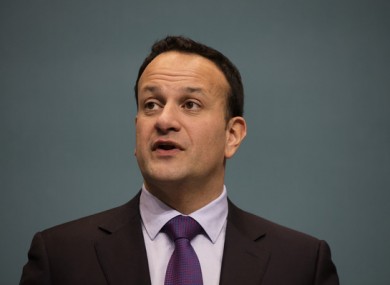
| Minister McEntee & Commissioner Drew Harris speaking recently (Photo cred: Niall Carson/ PA) |
Justice Minister Helen McEntee says that she will not interfere in the dispute though at the same time expressed support for Harris and mildly criticised the threatened strike action by the GRA. Naturally the ruling class does not want to alienate their first line of physical defence.
But Sinn Fein TD Pearse Doherty last Thursday attacked the Government and Fine Gael in particular over what he called a “hands off” approach to the dispute by the Justice Minister. According to SF the Gardaí are a service valued and needed by communities.
This benevolent SF attitude to the Gardaí even extends to “specialist groups”.
Doherty and his party leaders now choose to forget that Irish Republicans, including thousands of their own supporters when it was a Republican party, have been spied upon, harassed, threatened, raided, beaten up, framed and perjured against in order to see them jailed.
Sinn Féin’s attitude to the Gardaí is a clear illustration of its change from revolutionary opposition to accommodation with the Gombeen capitalist system — and when in government they will use the Gardaí against any resistance to the system as currently they are using the PSNI.
GARDAI – A LONG REACTIONARY HISTORY
The Gardaí, as the first line of physical defence of the Irish Gombeen class has a long anti-working class, anti-Republican and anti-Left history. The intelligence branch CID worked with the National (sic) Army in identifying Republicans to kidnap, torture and murder.6
Anti-Republican
After the defeat of the Irish Republican Movement by the State forces armed and equipped by British imperialism, the Irish neo-colonial state used the Gardaí to harass Republicans.
Eoin O’Duffy, the second Garda Commissioner (1922-1933) of the Irish State, hounded Irish Republicans and socialists during the Civil War and after, one of the causes of political emigration from Ireland and in 1932 (still in his post) founded the Irish fascist Blueshirt organisation.7
 |
| Eoin O’Duffy reviewing his fascist “Blueshirts” in the 1930s – he founded them while still the second Garda Commissioner of the Irish State (1922-1933). (Photo sourced: Internet) |
O’Duffy and his Blueshirts attempted to prepare a coup against the De Valera government of Fianna Fáil and after partial suppression by the government, went on to combine with another two reactionary political organisations to form the Fine Gael Party in 1933.8
Ned Broy, appointed third Garda Commissioner (1933-1938) created the Special Branch9 (nicknamed “Broy’s Harriers”10 after a Bray dog hunting pack) to repress the fascist movement. However, he filled the unit with ex-military who had been anti-Republican during the Civil War.
Subsequently, “Broy’s Harriers” also carried out repression against the Republican movement opposed to De Valera and Fianna Fáil.
In the long line of Garda Commissioners that followed, all have presided over repression of the Irish Republican and Left movements, as well as against Travellers and LGBT11 people and even in persecution of people providing contraception prevention.
Some Commissioners have resigned or retired in controversy: Patrick McLaughlin (1978-1983), retired in the wire-tapping scandal and Patrick Callinan (2010-2014`), over the phone-tapping GSOC and penalty points corruption scandal.
Noirin O’Sullivan (2014-’17) during the breath-testing corruption and persecution of Garda whistleblower controversy, resigned the post and disturbingly, walked into a job as Director of Strategic Partnerships for Europe at the International Association of Chiefs of Police.
 |
| Then Garda Commissioner Martin Callinan speaks privately to then Deputy Commissioner Noirin O’Sullivan; she succeed him when he resigned in controversy, herself resigning in a separate controversy not long afterwards (Photo cred: Eamonn Farrell in The Journal) |
Republican prisoner solidarity pickets are frequently harassed and subject to attempted intimidation and individual activists are followed, stopped and questioned etc.
The no-jury political Special Criminal Court regularly jails Republicans on charges of “membership of an illegal organisation”, sending people to jail largely on the word of a Garda officer at the rank of Superintendent and above, who never reveal their alleged sources.
In 1976, the Irish State tried to smash the Irish Republican Socialist Party by pinning the Sallins Mail Train Robbery on them, though they knew the robbery wasn’t theirs. Forty homes were raided and false confessions beaten out of victims by the special Garda “Heavy Gang” unit.12
Three innocent activists were sentenced to 12 years in jail as a result and some of the special unit went on to frame others with false confessions also, including Joanna Hayes and family in the “Kerry Babies” case, as outlined in the Crimes and Confessions RTÉ series.
The last time the Gardai took unofficial industrial action by phoning in ‘sick’ was during the “blue flu” of 1998, when however their Special Branch remained very active indeed.
Foiling an attempted robbery by a Real IRA unit, the Special Branch Gardaí shot and killed Volunteer Ronan McLoughlin in the back while he was driving away from them. Despite the victim posing no threat to anyone when he was killed, the Gardaí were judged ‘innocent’.13
Anti-Progressive, Anti-Working Class
The long-overdue second inquest into the fatalities of the 1981 Stardust Fire is underway as this piece is being written and in 1983, Garda Special Branch raided the launch of Christy Moore’s vinyl LP An Ordinary Man to seize the record after Stardust owners objected to a song in it.14
Over the years of the State the Gardaí have attacked protests and demonstrations, including with particular infamy those of the 1981 Hunger Strikes solidarity march15 and Regain the Streets in 200216 in Dublin and the Corrib Pipeline protests17 against British Petroleum in Mayo.
Gardaí also harassed and assaulted some of the since-famous Dunne’s Stores anti-apartheid strikers and again the more recent Debenhams sacked workers’ pickets.18
Also from todays Debenhams protest, with permission from the worker involved, police harassment of workers fighting for their rights.
The Gardaí have on numerous occasions displayed their tolerance of fascists, even to the extent of tolerating abuse from them and flagrant violation of Covid19 regulations.19 Conversely Gardaí have threatened and attacked antifascist counter demonstrators on many occasions.
In February 2016 a mass mobilisation of anti-fascists and anti-racists prevented the fascist islamophobic organisation Pegida from launching itself in Dublin. Gardaí attacked the antifascists and batoned an RTÉ cameraman in the face.
 |
| Gardaí threatening antifascists after the latter had been attacked by armed fascists on Custom House Quay and Gardaí had then attacked the antifascists, pushing and shoving them on to Butt Bridge. (Photo: Rebel Breeze) |
On a number of occasions outside the GPO, Gardaí witnessed fascist assaults on opponents without even taking names of perpetrators but on 22nd August 2020 they went much further in showing their true colours as armed fascist thugs attacked a counter protest on Custom House Quay.
The Gardaí briefly separated the combatants and then the Public Order Unit attacked the unarmed antifascists, threatening them with raised batons and pushing and shoving them away on to Butt Bridge. Later they lied to the media, pretending that no serious violence had occurred.20
Three weeks later, on 12th September, an LGBT activist and a couple of friends were observing a rally of the fascist National Party when they were mobbed, threatened and shoved and one was struck on the head with a wooden club which had a Tricolour wrapped around it.
The Gardaí again lied to the media and said there had been no violent incidents. However video of the attack and of a Garda confronting the victim with blood streaming from her head and waving her away, circulated widely and the Gardaí had to change their story.
 |
| Ms Izzy Kamikaze being pushed by Gardaí down Kildare Street after being struck on the head with a club by a fascist (Photo sourced: Internet) |
It took the victim to swear out a formal complaint and a month’s delay before the specific wooden club assailant was charged. Last year he pleaded guilty and was sentenced to three years prison.21
In the face of criticisms about their failure to prevent random violent assaults in Dublin’s city centre this year, the Gardaí claimed that they did not have enough personnel to prevent them. However it seems they can always find huge numbers to repress people’s resistance.
Early in June 2022, 100 Gardaí, including an armed unit and a helicopter, took part in the eviction of two activists of the Revolutionary Housing League, who had taken over for the homeless a large empty property on Eden Quay, Dublin. (That building remains empty at the time of writing).22
 |
| Garda vehicles in their eviction operation against a building occupied by the Revolutionary Housing League in Berkely Road 11 July this year (Source: RHL) |
In early July this year, a similarly large number of Gardaí with a helicopter in attendance blocked two ends of Berkely Road in Dublin in order to evict four RHA activists holding a three-storey empty building in which they had recently housed some homeless people.23
Gardaí have acted against a number of housing campaign actions, in one documented case sending an armed response unit. While acting against housing activists, they have at the same time permitted illegal evictions without intervening (except against protesting housing activists).24
Gardaí have acted against a number of housing campaign actions, in one documented case sending an armed response unit. While acting against housing activists, they have at the same time permitted illegal evictions without intervening (except against protesting housing activists).24
On yet others, masked Gardaí have colluded with masked thugs to evict housing activists.25
 |
| Masked Gardaí working with masked private thugs in carrying out an eviction in Dublin 2018. (Photo sourced: Internet) |
Although Gardaí were nearly invisible on the huge anti-extra-water-tax demonstrations, they were present and active on many of the smaller and more local anti-water-privatisation protests opposing the water meter installations for Denis O’Brien’s Uisce Éireann, assaulting and arresting people.
During the long decades of church sexual predation and other abuse by members of (mostly) Catholic Church institutions, complaints to the Gardaí were routinely ignored. Indeed, the Gardaí often seized escaped victims in order to return them to the institutions.26
It is old news that the Gardaí have abused their power against members of the public but less known is that members have done so for sexual advantage or in the course of their personal domestic relationships. Of course this is not surprising since abuse of power reaches everywhere.27
Terence Wheelock’s28 relatives and their supporters are not the only ones accusing the Gardaí of having killed someone in their custody and Vicky Conway (recently deceased) quoted the figure of an annual average of 15 deaths around Garda custody from 2017 to 2021.29
Corruption in the Gardaí has come to light a number of times, including most recently the false reporting of drink-driving checks and the failure to charge a number of people who were actually found to be driving “under the influence”.
In the course of the above a number of whistleblowers within the Gardaí were intimidated, harassed and in one case an attempt was made to frame a prominent one for abuse of a child.30
Current Struggles Between The GRA And The Commissioner
Irish Republicans have long held a particular enmity towards Drew Harris, given his previous employment as Assistant Commissioner of the colonial gendarmerie in the Six Counties.31 They regularly refer to him as of MI5, the British Intelligence department operating in the UK.
This is understandable and, in fact, it is less natural that other sections of the Irish polity seem to have had no issue with Harris’ provenance. But in fact, the State’s own senior Gardaí have long been in service, and not always indirectly, to British imperialism, witness Edmund Garvey.32

 |
| Former Garda Commissioner Edmund Garvey outside the Four Courts 11/10/1978. (Part of the Independent Newspapers Ireland/NLI Collection). (Photo by Independent News and Media/Getty Images) |
Unlike Sinn Féin, our position should be opposition to all of the State’s repressive institutions.
Chief among those institutions and regularly confronting us in repression or exercising its power against working class communities is the Gardaí Síochána, with its long anti-working class, anti-democratic, anti-Republican and anti-Socialist reactionary history.
Footnotes
1 https://www.irishtimes.com/crime-law/2023/09/13/huge-majority-of-rank-and-file-gardai-vote-no-confidence-in-garda-commissioner/
2 And in that struggle, as is usually the case, the police defended the established capitalist authority and attacked the workers https://en.wikipedia.org/wiki/Haymarket_affair
3 The Larkin Ballad about the 1913 Lockout.
4 Competent investigators, for instance, have found that the greatest number of accidents occur at two specific periods of the working day – viz., in the early morning and just before stopping work at evening. In the early morning when the worker is still drowsy from being aroused too early from his slumbers, and has not had time to settle down properly to his routine of watchfulness and alertness, or, as the homely saying has it, “whilst the sleep is still in his bones”, the toll of accidents is always a heavy one.
After 9 a.m. they become less frequent and continue so until an hour after dinner. Then they commence again and go on increasing in frequency as the workers get tired and exhausted, until they rise to the highest number in the hour or half-hour immediately before ceasing work. How often do we hear the exclamation apropos of some accident involving the death of a worker: “He had only just started”, or “he had only ten minutes to go before stopping for the day”? And yet the significance of the fact is lost on most.
https://www.marxists.org/archive/connolly/1915/rcoi/index.htm (Chapter V – Belfast and its Problems)
5 Especially on Irish Republican homes
6 Their centre of operations during the Civil War and for some time afterwards was Oriel House, in Dublin.
7 In 1936 the Blueshirts also recruited volunteers for Franco’s fascist-military coup against the elected Popular Front government in Spain.
8 https://en.wikipedia.org/wiki/Fine_Gael#:~:text=Fine%20Gael%20was%20founded%20on,the%20legacy%20of%20Michael%20Collins.
9 Now known as the Special Detective Unit; however the “Special Branch” name had a history in Britain, where Scotland Yard formed its Special Irish Branch in 1833 to spy on the Fenian movement among the huge Irish diaspora in the cities of Victorian Britain – and several of its members were Irish. Police services in a number of British present and ex-colonies have also carried on the “Special Branch” name, as far apart as the Six Counties colony and the British Bahamas.
10 https://en.wikipedia.org/wiki/Eamon_Broy
11The latter until homosexuality was de-criminalised.
12 https://sallinsinquirynow.ie/
13 And McLoughlin’s inquest was delayed for decades.
14 The LP included Moore’s They Never Came Home which alleged that fire exits were chained shut, a matter with which the current inquest is dealing and about which I do not wish to say more at this point. The following account discussing the banning does not mention the Branch raid but I know of it from people who were present: https://theblackpoolsentinel.com/2021/01/11/christy-moore-and-the-stardust-tragedy/
15 The marchers were frustrated that they were being prevented from even reaching the British Embassy in Merrion Road, attempted to push through and a battle ensued. Many were injured on both sides but the police baton-charged the whole crowd and even threatened journalists, though most subsequent media reports were either supportive of the Gardaí or blaming both sides; this brief report and photo being the exception: https://www.reportdigital.co.uk/reportage-photo-garda-baton-charging-national-h-blocks-committee-protest—18-jul-image00138214.html
16 https://www.rte.ie/archives/category/society/2017/0425/870082-reclaim-the-streets-protest/
17 https://www.theguardian.com/world/2013/aug/10/shell-pipeline-protests-county-mayo
https://www.irishexaminer.com/news/arid-30317773.html
18 Indeed in one afternoon, uniformed Gardaí hassled the Dunne Stores picketers in Henry Street under Covid19 pandemic regulations, although all were masked and maintaining social distancing, while around the corner the far-Right were demonstrating mask-less and packed together, without the least interference from the Gardaí. A 100 yards or so down the road, the plain-clothes Special Branch (SDU), the political police, were harassing an anti-internment and political prisoner solidarity picket.
19 Occasionally Garda patience snapped and one can see the incredulity in the reaction of the Far-Rightists on those occasions, as they had become so used to doing nearly anything they wanted.
20 https://rebelbreeze.com/2020/08/31/there-will-be-another-day/
21 https://the-beacon.ie/2021/06/21/national-party-member-pleads-guilty-to-assault-on-lgbtqia-activist-izzy-kamikaze/
22 https://rebelbreeze.com/2023/07/14/helicopter-and-massive-gardai-numbers-for-what/
23 https://www.dublinlive.ie/news/dublin-news/four-arrested-after-building-occupied-27305837
24 https://www.irishlegal.com/articles/watchdog-raises-concerns-over-garda-conduct-at-eviction
25 https://www.dublinlive.ie/news/dublin-news/garda-chief-under-pressure-after-15145154
26 https://en.wikipedia.org/wiki/Garda_whistleblower_scandal
27 https://www.newstalk.com/news/domestic-and-sexual-violent-complaints-against-gardai-on-the-rise-gsoc-1473416#:~
28 https://rebelbreeze.com/2023/08/26/protesting-death-of-youth-at-hands-of-garda/
29 https://www.irishtimes.com/crime-law/2022/07/15/at-least-228-fatalities-in-or-following-garda-custody-over-past-15-years-figures-show/
30 https://www.irishexaminer.com/news/arid-30799234.html
31 Previously the Royal Ulster Constabulary (and RIC before that), the PSNI is the armed colonial (and sectarian) police force of the UK State.
32 Ned Garvey was ‘outed’ as a British Intelligence ‘asset’ (code name ‘Badger’) by disaffected MI6 handler Fred Holroyd. Garvey denied he was an agent for the British but the Barron Report found that that Holroyd had visited Garvey in his office in 1975 and that he had not made his superiors aware of this. The incoming FF government in 1978 sacked Garvey as having no confidence in him but as a result of not following disciplinary procedures Garvey was able to sue the State and retain his pension. While Garvey was Assistant to Patrick Malone, Garda Commissioner during the British Intelligence/ Loyalist Dublin and Monaghan Bombing in 1974 bomb remains were sent to the Six Counties for forensic analysis. No-one was ever even arrested for the bombing, never mind convicted and the widely-suspected British proxy Glennane Gang went on to murder many more, mostly civilians (see Cadwaller, Lethal Allies).
Sources
https://www.irishtimes.com/crime-law/2023/09/13/huge-majority-of-rank-and-file-gardai-vote-no-confidence-in-garda-commissioner/#:~
Helen McEntee and GRA: https://www.breakingnews.ie/ireland/mcentee-will-not-direct-gardai-on-when-to-work-amid-roster-dispute-1533439.html
Sinn Féin want McEntee proactive on Garda dispute: https://www.breakingnews.ie/ireland/sinn-fein-condemns-governments-hands-off-approach-on-policing-1532379.html
https://www.breakingnews.ie/ireland/six-gardai-suspended-from-the-force-for-over-four-years-1533424.html
https://www.garda.ie/en/about-us/our-history/garda-commissioners-since-1922/
Garda Commissioners
Eoin O’Duffy: https://en.wikipedia.org/wiki/Eoin_O%27Duffy
Ned Broy and “Broy’s Harriers”: https://en.wikipedia.org/wiki/Eamon_Broy
Home
https://en.wikipedia.org/wiki/Garda_whistleblower_scandal
https://www.newstalk.com/news/domestic-and-sexual-violent-complaints-against-gardai-on-the-rise-gsoc-1473416#:~
Gardaí and the Far-Right and Fascists: https://rebelbreeze.com/2020/08/31/there-will-be-another-day/
https://the-beacon.ie/2021/06/21/national-party-member-pleads-guilty-to-assault-on-lgbtqia-activist-izzy-kamikaze/
Gardaí supporting evictions, attacking housing activists: https://www.irishlegal.com/articles/watchdog-raises-concerns-over-garda-conduct-at-eviction
https://www.dublinlive.ie/news/dublin-news/garda-chief-under-pressure-after-15145154
https://www.irishlegal.com/articles/watchdog-raises-concerns-over-garda-conduct-at-eviction
https://rebelbreeze.com/2023/07/14/helicopter-and-massive-gardai-numbers-for-what/
Garda violence at Reclaim the Streets protest:
https://www.rte.ie/archives/category/society/2017/0425/870082-reclaim-the-streets-protest/
Garda violence and corruption at Corrib Pipeline struggle: https://www.irishexaminer.com/news/arid-30317773.html
Garda violence and corruption at Corrib Pipeline struggle: https://www.irishexaminer.com/news/arid-30317773.html