The publication of the Operation Kenova report into a British spy network inside the IRA has left one trail to run cold: Collusion in the murder of Loyalists.
It all started with a meeting I held with a source in a flat in Portadown.
It was the summer of 2015 and I was in the town to interview people who were close to the former mid-Ulster UVF commander, Billy Wright.
These interviews would form a key component of my book, UVF: Behind the Mask.
It was an eventful trip.
I met one person who had been part of Wright’s ‘team’.
I also met a former loyalist prisoner who had been friends with Wright. He made a quip about hardline loyalists “always meeting the same fate.”
He then told me the story of the prominent Belfast UVF commander, John Dowey Bingham.
Bingham had been assassinated by a Provisional IRA death squad on 14 September 1986 at his home in Ballysillan, north Belfast.
The former prisoner said he believed Bingham would have survived the attack if he had received the medical attention he required after he was shot.
He further alleged how the police, who promptly arrived on the scene minutes after the shooting, “let John bleed out.”
Apparently local people believed the IRA hit team had been permitted to enter the area “under the watchful eye of the RUC.”
I said I’d look into the case, if only to satisfy my own curiosity.
I assumed such claims were more likely to be fiction, rather than fact.
When I got back to Belfast I asked a contact if he knew anyone in John Bingham’s family who would speak to me about his murder.
My contact made arrangements for us to meet a relative of Bingham’s: John’s daughter, Elizabeth Bingham.
We met in mid-November 2016 and talked at length about her father’s murder.
I shared with her the allegations I’d heard in Portadown.
She asked me if I could help her find out more about what really happened.
I agreed.
And thus began one of the most detailed open-source investigations I’ve ever been involved in.
I didn’t know it at the time but it would take us into the heart of allegations of collusion between the British state, the Provisional IRA and, perhaps most damningly of all, the complicity of so-called loyalists in the deaths of their own comrades.
The Life and Death of John Bingham
John Dowey Bingham was a life-long loyalist and a senior UVF commander from Ballysillan.
It has been widely reported that Bingham was responsible for directing terrorist activities in the 1970s and 1980s.
In an interview with one of Bingham’s associates in Belfast for Behind the Mask, he told me, “John was the quintessential terrorist but I would have followed him to the gates of hell.”
Bingham was arrested and charged on the evidence of UVF supergrass Joe Bennett.
The supergrass trials subsequently collapsed and those detained were released.
Bingham promptly returned to UVF activities.
In the words of his close friend George Seawright, he would become a “legend in his own lifetime.”
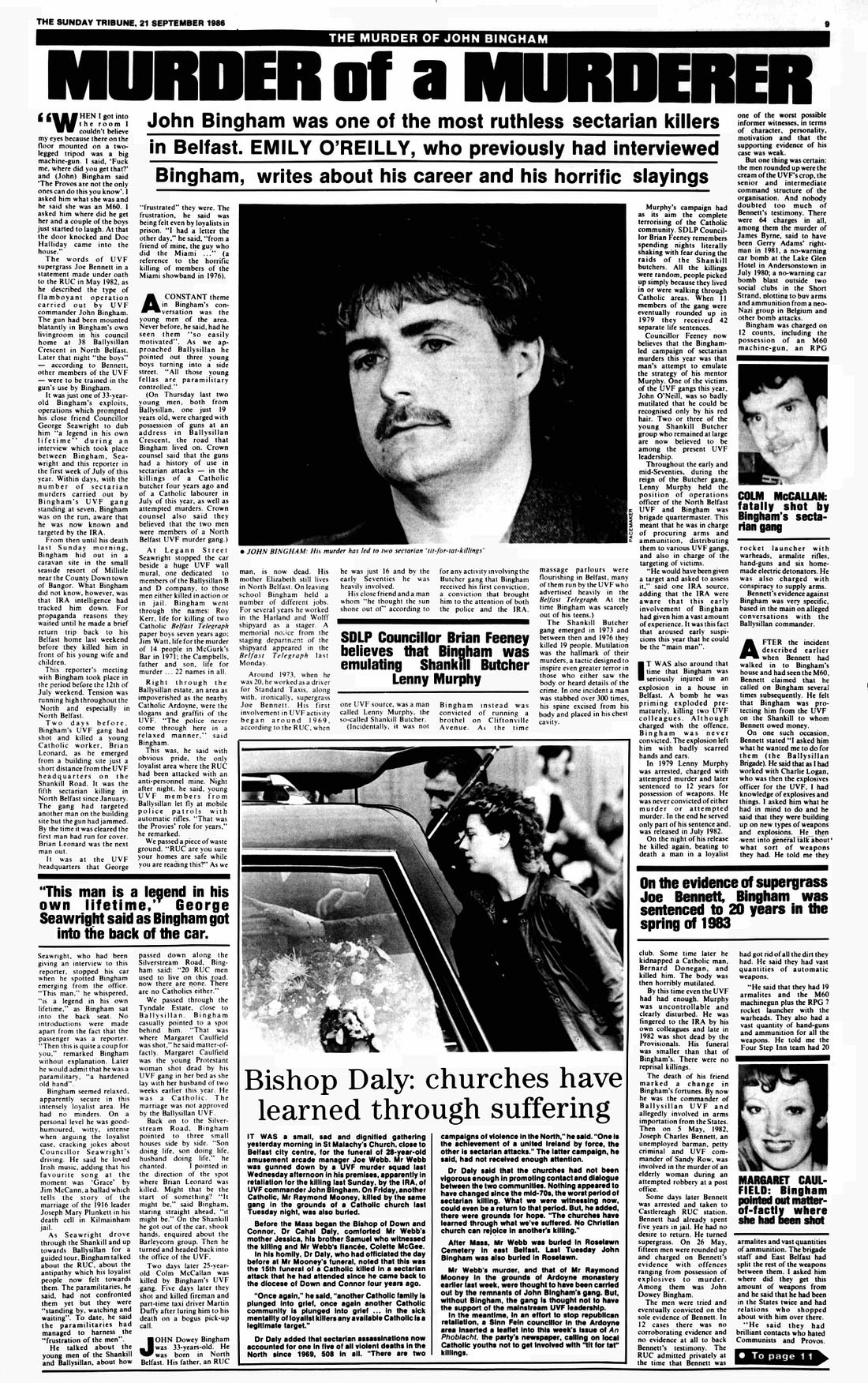
Emily O’Reilly of the Sunday Tribune met Bingham in the summer of 1986 and described in detail what led Seawright to make this claim. Her dispatch makes for fascinating, albeit grim, reading.
After Bingham’s death he became the subject of wild allegations, particularly from the veteran Guardian journalist Nicholas Davies, some of which now seem preposterous.
In death Bingham’s reputation grew in the telling, with Davies and others accusing him of collusion with the British state.
Little did anyone know how the collusion they alleged did actually exist but not in the way they alleged. Rather, it existed between the British agents inside the Provisional IRA and their handlers.
In fact, it would later transpire how it was the main reason for John Bingham’s murder.
Reopening A Cold Case
For decades the public knew very little of the facts relating to John Bingham’s violent death.
They knew Bingham had UVF connections.
They knew he had been implicated in the supergrass trials.
They also knew he had been assassinated by the IRA in 1986.
And that was it.
All the rest was speculation.
My first task was to establish the basic facts of his murder.
I knew the best way to do this was to request the release of the inquest file on John Bingham.
This had been under lock and key since the Coroner’s Court returned an open verdict in the late 1980s.
Under the Freedom of Information Act, I managed to force the release of the file in 2016. I received a copy in the post.
Oddly, perhaps even intentionally, the file was never listed as open on the PRONI catalogue.
In order to share it with Liz, I enlisted the help of seasoned researcher and campaigner Clifford Peeples to help walk her through the process of obtaining a copy of the file.
After he consulted on the Bingham file with Liz, Clifford found serious discrepancies in the legal documentation.
Very simply this took two forms.
First, there was evidence of the getaway vehicle used by the IRA having been tampered with.
The white Renault used in the murder had been found a short time later in Jamaica Court in Ardoyne.
Back then it was standard protocol for the RUC to call in the local Army Ammunition Technical Officer (ATO) to clear suspect vehicles of any potential dangers such as booby trap devices.
Crucially, the ATO from nearby Girdwood Barracks reported in his deposition how the car keys were still in the ignition.
The Getaway Vehicle with Keys in the Ignition - Now You See Them . . .
However, after a stint in the RUC impound the ignition of the car was tampered to make it look like it had been “hot wired”.
NowYou Don't!
The second discrepancy was potentially the most serious.
It involved the murder weapons.
In the The Bingham Report, Peeples linked the weapons used to other killings carried out by the Provost.
In a rudimentary link analysis of the firearms and ballistics, he was able to conclude the high possibility these weapons were part of the same dump used by the IRA in killing their own people.
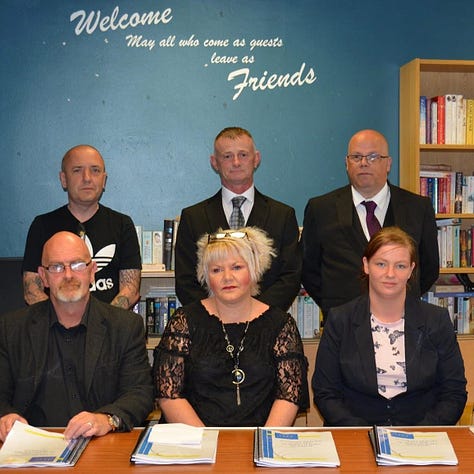
Elizabeth Bingham (centre) at the launch of the report into the murder of John Bingham, June 2017.
These revelations were explosive.
Under normal circumstances though they might have been ignored.
Clifford’s report formally made the claim of collusion between the British state and its agents.
Fortunately, there was now a mechanism available for Liz and her family to have these assertions tested.
In 2016 the PSNI launched Operation Kenova to investigate the involvement of a British agent inside the IRA, codenamed “Stakeknife”, in the murder of up to 40 people.
Most of these killings related to the IRA’s Internal Security Unit known as the “Nutting Squad,” of which Stakeknife had risen to become second-in-command.
It was enough circumstantial evidence to persuade the newly appointed investigation lead, John Boutcher, to ask for the Bingham case be taken on by Op Kenova. This was formally agreed with the PSNI Chief Constable.
In assisting Liz with her search for justice, we helped her compile evidence, which she then presented to the Kenova team.
Liz was also ably assisted by her solicitor, John Greer, of Reavey and Company on the Shankill Road.
Yet, the path engaging with Kenova was fraught with difficulties.
Liz faced serious obstacles in her search for justice.
The time taken by Kenova to complete their work was one such obstacle. The passage of time, as we all know, made securing evidence and testimony more challenging.
Another obstacle was resources. On this point the dedicated family liaison process put in place by the Kenova really paid off. It gave Liz a point of contact to assist her through the criminal investigation process.
Ironically, these constraints paled into insignificance when it became clear the main obstacle was from the opposition of certain members of Liz’s own community to her search for justice.
“Stay away from those people”
One of those people who sought to deter us from investigating John Bingham’s murder was the late PUP spokesman Ken Wilkinson.
Ken was one of those curious individuals who joined the UVF later in life after a short stint in the part-time C Company of 1/9 UDR in Antrim.
Ken was renowned for having been involved in an incident in the mid-1990s in which an off-duty RUC officer was assaulted.
He was subsequently handed a two-year suspended sentence for doling out a nasty beating to the officer at Antrim’s British Legion Club in November 1995. After kicking and head-butting the policeman, Wilkinson told him, “You fucking speak or mention this to anyone and I’ll have you shot!”
Judge James Brady recommended Wilkinson “stop getting drunk and stop assaulting people.”
Coincidentally, another loyalist, Billy Wright, was jailed around the same time for 8 years for similar threats to kill.
Ken had a reputation for throwing his weight around.
He was known for acting as an unofficial envoy for the UVF Brigade Staff, a role which frequently brought him into conflict with others.
He could be blunt, abrasive and, at times, overly aggressive.
I was reminded of it first-hand when I took a phonecall from him in late June 2017.
After giving me a dressing down - I assumed for something he had heard and not read in my latest book, UVF: Behind the Mask - Ken became increasingly agitated.
He ranted about “some of those people” who I was “associating with” who, he said, I needed to know weren’t to be trusted.”
“Stay away from those people,” he repeated. “Billy Mitchell would be turning in his grave if he knew who you were hanging around with now,” he said, losing his cool as he raised his voice at me down the phone.
I must confess, I wasn’t sure what Ken was getting at.
Then it clicked.
Liz had published her report into the murder of her father a few weeks earlier. Around the same time I launched my book on the UVF.
Still, I found it odd that a member of the PUP - who I’d known for years - would ring me out of the blue to give me “some friendly advice” regarding “this business about John Bingham. I’m handling it, right,” he said pointedly and hung up.
I’m still puzzled as to why loyalists would want to discourage other loyalists from investigating the death of a loyalist. I’ll return to this point in a later post.
The key point in all of this is what really mattered for Liz was finding out the truth.
And Kenova assured her they’d get to the bottom of her father’s murder, one way or another.
Where is the Justice for Loyalist Victims?
John Bingham’s death proves that a paradox exists in Northern Ireland.
That someone widely reported as having been a “perpetrator” can also be regarded as a “victim.”
This is, of course, a highly controversial statement, as the current Justice Minister Naomi Long has recently discovered.
But it is a point of view shared by the family members of IRA and INLA members killed during the Troubles.
These families have continued to lobby the British state for the truth about the unsolved murders of their loved ones.
Victims families are a powerful lobby group.
That much is certain.
What is also certain is they are divided.
Deeply divided.
Just like Northern Irish society, politics and culture more broadly.
Speak to loyalists who have been involved in supporting campaigns for truth around the murders of loyalists and they will tell you of a “two-tiered justice system” in play.
They point to the absence of legacy investigations into perennial atrocities like the Shankill bomb of October 1993 and a range of other cases. They also point to the way the PSNI and courts treat loyalists who find themselves caught up in the criminal justice system.
Their belief is they have no automatic right to expect justice.
Liz Bingham was one of those sceptics who believed the law, as my late grandfather, a lifelong loyalist himself, used to say was “crooked.”
But she never gave up on demanding justice for herself, her family or her community.
She worked constructively with the Kenova team.
Finally, it seemed to pay off.
On 27 August 2019, Liz sent me a WhatsApp message. She was quietly confident her father’s case was being expedited and moved to prosecution stage:
Subsequently Liz received the following WhatsApp message via one of the family liaison officers a few months later:
And after that the lines of communication seemed to run cold.
We now know why.
In the publication of the final Kenova report the following lines of inquiry were investigated by the team with respect to the Bingham case:
FRU handlers were aware of the identities of those involved in the murder shortly after it was carried out.
FRU handlers failed to pass the relevant intelligence to the RUC SB.
An intelligence report containing the names of the suspects was removed from the relevant Army file.
One of the suspects involved in the murder was a FRU agent.
One of the suspects involved had been observed on a number of occasions in the area near to the scene in the days leading up to the attack.
Despite these very serious allegations, the PPS decided no-one was to be held accountable for John Bingham’s murder.
No one.
Let that sink in.
After an exhausted investigation by Liz Bingham and the compilation of evidence of criminal culpability by the Kenova team, the state decided not to seek prosecutions of those individuals who may be responsible.
Liz Bingham died in May 2023 and did not live to see the outcome of the Kenova investigation with respect to her father.
John Bingham’s surviving family had duly notified on 1st April 2024 of the:
A Legacy of Spies
Today there are many families reeling at the news of how, after £47.5 million being spent on Op Kenova, nobody has been charged.
Well, to be exact, only Freddie Scappaticci, the second-in-command of the IRA’s infamous “Nutting Squad” had been charged. Ironically, his crime was not in relation to the murderous activities he was involved in but in relation to extreme animal pornography.
Incidentally, this is the kind of deviant activity enterprising spooks the world over utilise as leverage in their pitch to recruit agents.
As far as the Kenova report goes, we are led to believe Stakeknife became an agent because of the promise of money, his hatred for the IRA leadership and security for his family.
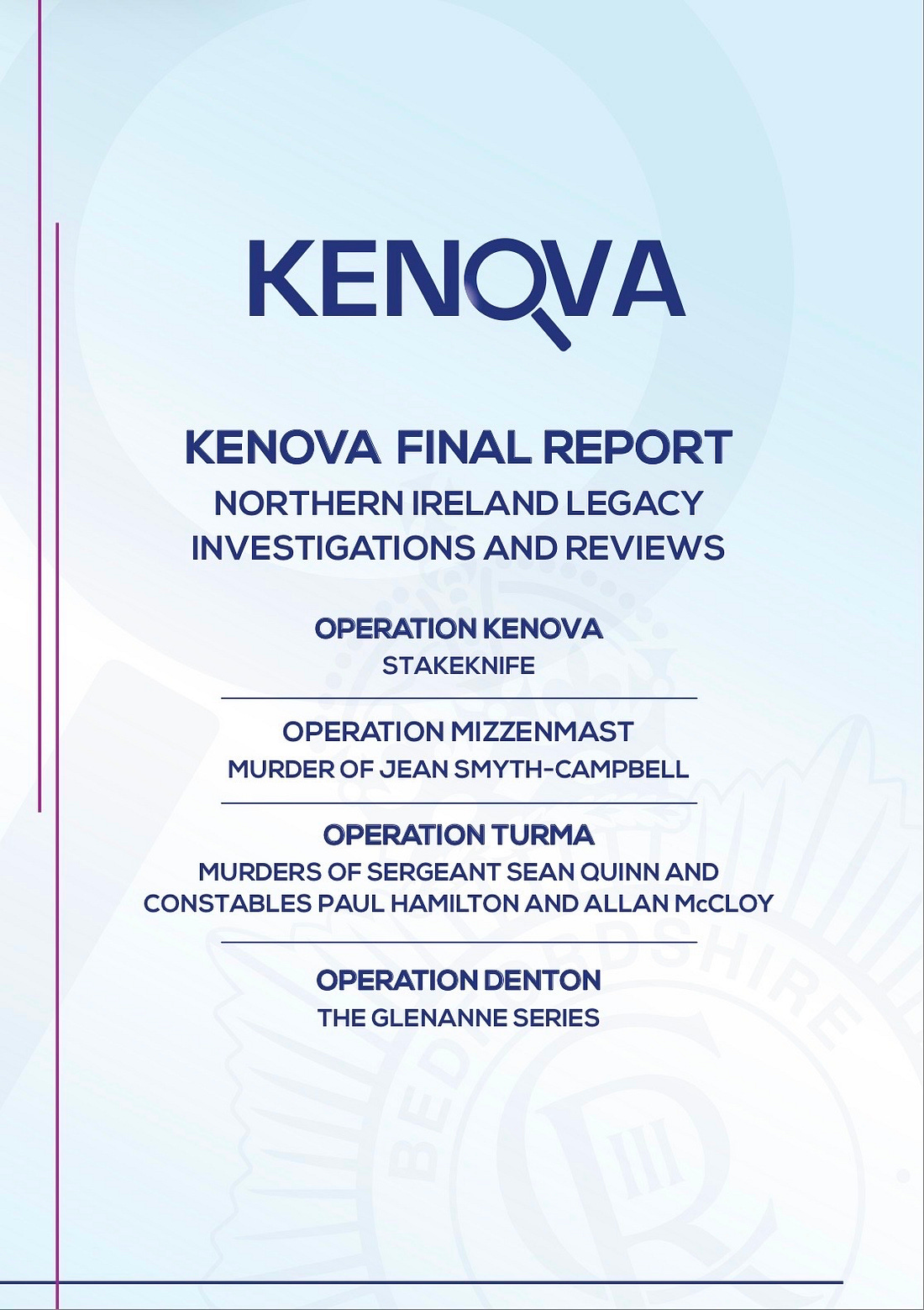
The former Military Intelligence Officer Ian Hurst and journalist Greg Harkin, who originally brought the Stakeknife case to public attention, have questioned the professional competence of the Kenova team.
Writing in the Irish News on the morning of the report’s release, they alleged it amounted to little more than “fairy tales.”
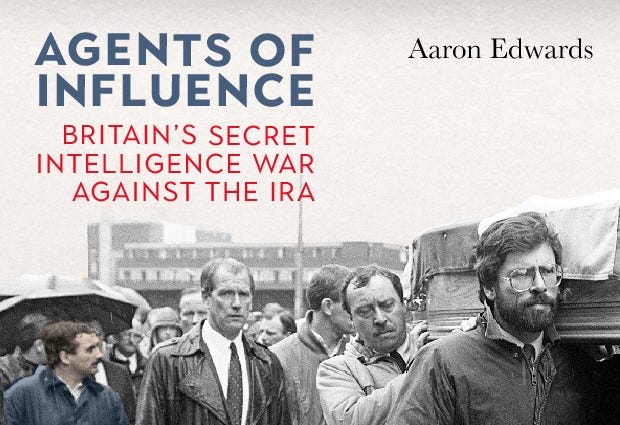
In fact, having written a book on intelligence matters involving the running of Agents of Influence inside the IRA, I would say the victim’s families likely have more questions today than when this major investigation started a decade ago.
One thing is certain though.
Whatever we now know about the British state’s complicity in the IRA’s killing of suspected informers, we still know a lot less about their killing of loyalists.
Crucially, we know next to nothing about the involvement of agents and informers inside loyalist paramilitary groups who acted with the same impunity as Stakeknife.
Will there be an ‘Op Kenova’ style investigation into these serious allegations?
I won’t hold my breath.
It all started with a meeting I held with a source in a flat in Portadown.
It was the summer of 2015 and I was in the town to interview people who were close to the former mid-Ulster UVF commander, Billy Wright.
These interviews would form a key component of my book, UVF: Behind the Mask.
It was an eventful trip.
I met one person who had been part of Wright’s ‘team’.
I also met a former loyalist prisoner who had been friends with Wright. He made a quip about hardline loyalists “always meeting the same fate.”
He then told me the story of the prominent Belfast UVF commander, John Dowey Bingham.
Bingham had been assassinated by a Provisional IRA death squad on 14 September 1986 at his home in Ballysillan, north Belfast.
The former prisoner said he believed Bingham would have survived the attack if he had received the medical attention he required after he was shot.
He further alleged how the police, who promptly arrived on the scene minutes after the shooting, “let John bleed out.”
Apparently local people believed the IRA hit team had been permitted to enter the area “under the watchful eye of the RUC.”
I said I’d look into the case, if only to satisfy my own curiosity.
I assumed such claims were more likely to be fiction, rather than fact.
When I got back to Belfast I asked a contact if he knew anyone in John Bingham’s family who would speak to me about his murder.
My contact made arrangements for us to meet a relative of Bingham’s: John’s daughter, Elizabeth Bingham.
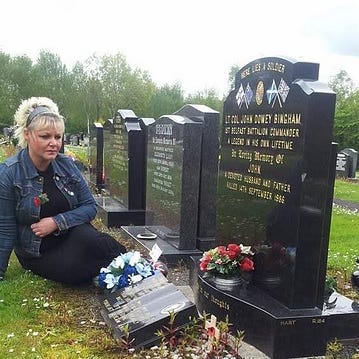 |
| Elizabeth Bingham at the graveside of her father, John Dowey Bingham. |
We met in mid-November 2016 and talked at length about her father’s murder.
I shared with her the allegations I’d heard in Portadown.
She asked me if I could help her find out more about what really happened.
I agreed.
And thus began one of the most detailed open-source investigations I’ve ever been involved in.
I didn’t know it at the time but it would take us into the heart of allegations of collusion between the British state, the Provisional IRA and, perhaps most damningly of all, the complicity of so-called loyalists in the deaths of their own comrades.
The Life and Death of John Bingham
John Dowey Bingham was a life-long loyalist and a senior UVF commander from Ballysillan.
It has been widely reported that Bingham was responsible for directing terrorist activities in the 1970s and 1980s.
In an interview with one of Bingham’s associates in Belfast for Behind the Mask, he told me, “John was the quintessential terrorist but I would have followed him to the gates of hell.”
Bingham was arrested and charged on the evidence of UVF supergrass Joe Bennett.
The supergrass trials subsequently collapsed and those detained were released.
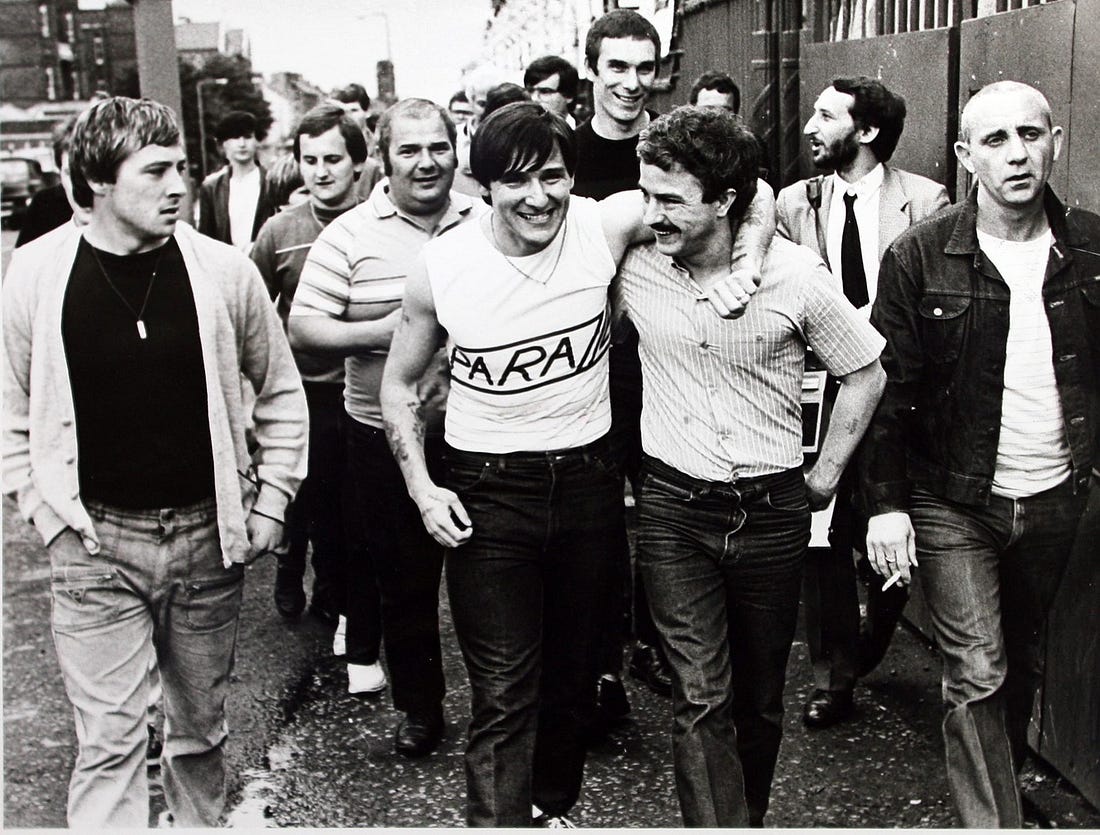 |
| Loyalists freed after the collapse of the supergrass trials in the 1980s. John Bingham (front in striped shirt and jeans) smiling. Centre left in polo shirt is Frenchie Marchant, also believed to have been murdered by British agents in the IRA. |
Bingham promptly returned to UVF activities.
In the words of his close friend George Seawright, he would become a “legend in his own lifetime.”
Emily O’Reilly of the Sunday Tribune met Bingham in the summer of 1986 and described in detail what led Seawright to make this claim. Her dispatch makes for fascinating, albeit grim, reading.
After Bingham’s death he became the subject of wild allegations, particularly from the veteran Guardian journalist Nicholas Davies, some of which now seem preposterous.
In death Bingham’s reputation grew in the telling, with Davies and others accusing him of collusion with the British state.
Little did anyone know how the collusion they alleged did actually exist but not in the way they alleged. Rather, it existed between the British agents inside the Provisional IRA and their handlers.
In fact, it would later transpire how it was the main reason for John Bingham’s murder.
Reopening A Cold Case
For decades the public knew very little of the facts relating to John Bingham’s violent death.
They knew Bingham had UVF connections.
They knew he had been implicated in the supergrass trials.
They also knew he had been assassinated by the IRA in 1986.
And that was it.
All the rest was speculation.
My first task was to establish the basic facts of his murder.
I knew the best way to do this was to request the release of the inquest file on John Bingham.
This had been under lock and key since the Coroner’s Court returned an open verdict in the late 1980s.
Under the Freedom of Information Act, I managed to force the release of the file in 2016. I received a copy in the post.
Oddly, perhaps even intentionally, the file was never listed as open on the PRONI catalogue.
In order to share it with Liz, I enlisted the help of seasoned researcher and campaigner Clifford Peeples to help walk her through the process of obtaining a copy of the file.
After he consulted on the Bingham file with Liz, Clifford found serious discrepancies in the legal documentation.
Very simply this took two forms.
First, there was evidence of the getaway vehicle used by the IRA having been tampered with.
The white Renault used in the murder had been found a short time later in Jamaica Court in Ardoyne.
Back then it was standard protocol for the RUC to call in the local Army Ammunition Technical Officer (ATO) to clear suspect vehicles of any potential dangers such as booby trap devices.
Crucially, the ATO from nearby Girdwood Barracks reported in his deposition how the car keys were still in the ignition.
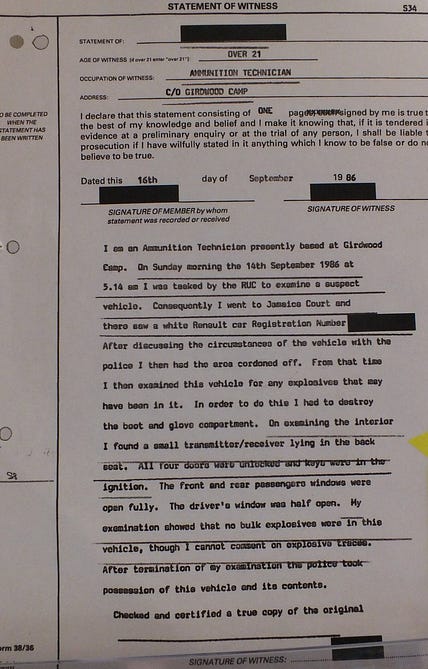 |
The Getaway Vehicle with Keys in the Ignition - Now You See Them . . .
However, after a stint in the RUC impound the ignition of the car was tampered to make it look like it had been “hot wired”.
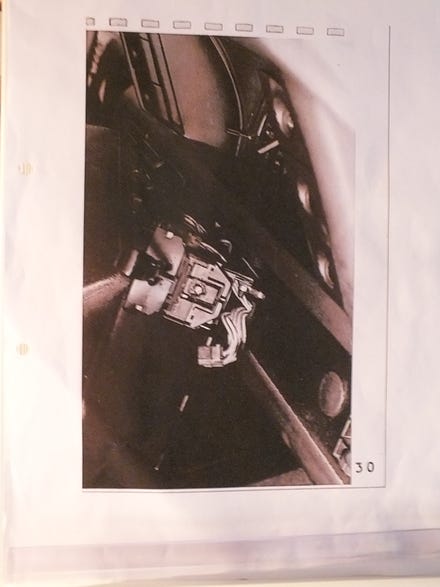 |
NowYou Don't!
The second discrepancy was potentially the most serious.
It involved the murder weapons.
In the The Bingham Report, Peeples linked the weapons used to other killings carried out by the Provost.
In a rudimentary link analysis of the firearms and ballistics, he was able to conclude the high possibility these weapons were part of the same dump used by the IRA in killing their own people.
Elizabeth Bingham (centre) at the launch of the report into the murder of John Bingham, June 2017.
These revelations were explosive.
Under normal circumstances though they might have been ignored.
Clifford’s report formally made the claim of collusion between the British state and its agents.
Fortunately, there was now a mechanism available for Liz and her family to have these assertions tested.
In 2016 the PSNI launched Operation Kenova to investigate the involvement of a British agent inside the IRA, codenamed “Stakeknife”, in the murder of up to 40 people.
Most of these killings related to the IRA’s Internal Security Unit known as the “Nutting Squad,” of which Stakeknife had risen to become second-in-command.
It was enough circumstantial evidence to persuade the newly appointed investigation lead, John Boutcher, to ask for the Bingham case be taken on by Op Kenova. This was formally agreed with the PSNI Chief Constable.
In assisting Liz with her search for justice, we helped her compile evidence, which she then presented to the Kenova team.
Liz was also ably assisted by her solicitor, John Greer, of Reavey and Company on the Shankill Road.
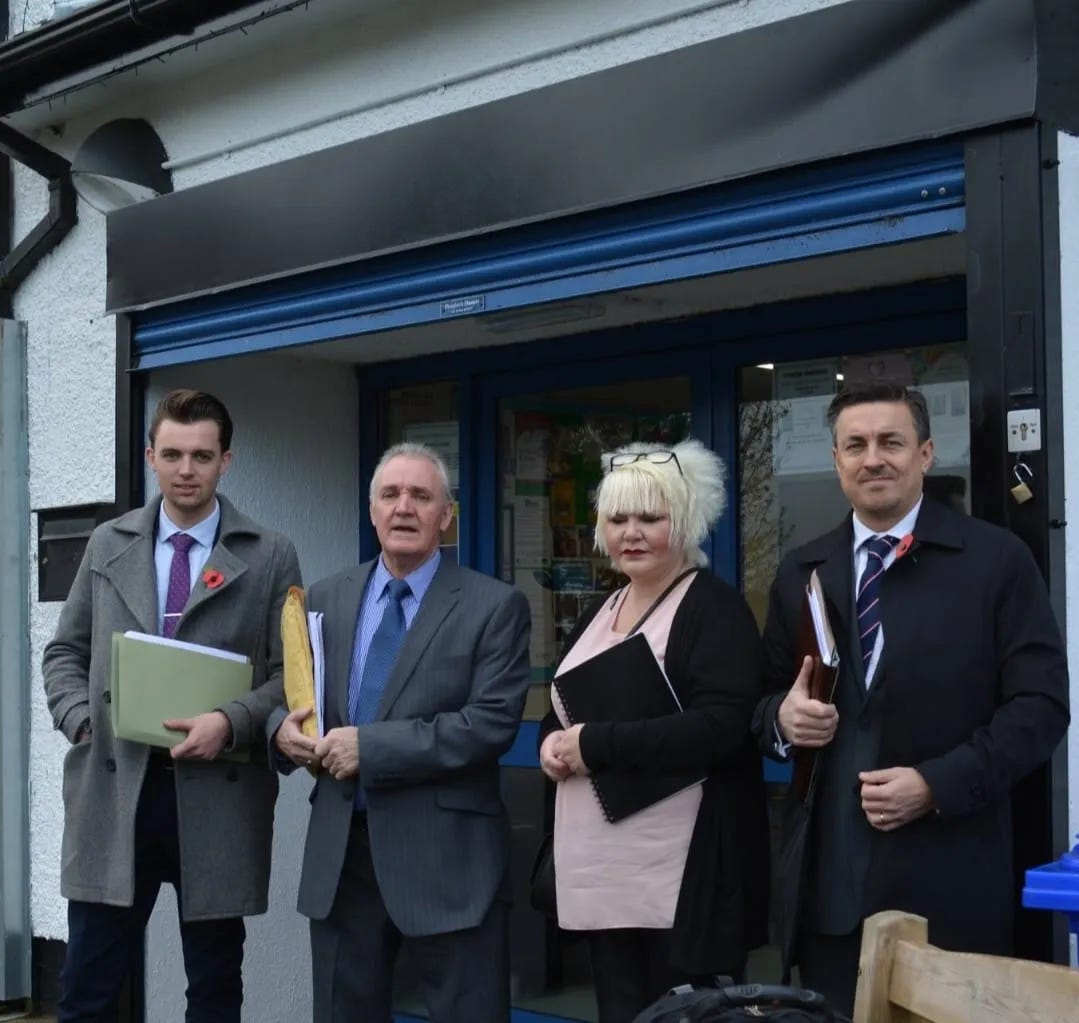 |
| Liz Bingham (centre) with a relative of another alleged Stakeknife murder victim and their respective legal representatives © Aaron Edwards |
Yet, the path engaging with Kenova was fraught with difficulties.
Liz faced serious obstacles in her search for justice.
The time taken by Kenova to complete their work was one such obstacle. The passage of time, as we all know, made securing evidence and testimony more challenging.
Another obstacle was resources. On this point the dedicated family liaison process put in place by the Kenova really paid off. It gave Liz a point of contact to assist her through the criminal investigation process.
Ironically, these constraints paled into insignificance when it became clear the main obstacle was from the opposition of certain members of Liz’s own community to her search for justice.
“Stay away from those people”
One of those people who sought to deter us from investigating John Bingham’s murder was the late PUP spokesman Ken Wilkinson.
Ken was one of those curious individuals who joined the UVF later in life after a short stint in the part-time C Company of 1/9 UDR in Antrim.
Ken was renowned for having been involved in an incident in the mid-1990s in which an off-duty RUC officer was assaulted.
He was subsequently handed a two-year suspended sentence for doling out a nasty beating to the officer at Antrim’s British Legion Club in November 1995. After kicking and head-butting the policeman, Wilkinson told him, “You fucking speak or mention this to anyone and I’ll have you shot!”
Judge James Brady recommended Wilkinson “stop getting drunk and stop assaulting people.”
Coincidentally, another loyalist, Billy Wright, was jailed around the same time for 8 years for similar threats to kill.
Ken had a reputation for throwing his weight around.
He was known for acting as an unofficial envoy for the UVF Brigade Staff, a role which frequently brought him into conflict with others.
He could be blunt, abrasive and, at times, overly aggressive.
I was reminded of it first-hand when I took a phonecall from him in late June 2017.
After giving me a dressing down - I assumed for something he had heard and not read in my latest book, UVF: Behind the Mask - Ken became increasingly agitated.
He ranted about “some of those people” who I was “associating with” who, he said, I needed to know weren’t to be trusted.”
“Stay away from those people,” he repeated. “Billy Mitchell would be turning in his grave if he knew who you were hanging around with now,” he said, losing his cool as he raised his voice at me down the phone.
I must confess, I wasn’t sure what Ken was getting at.
Then it clicked.
Liz had published her report into the murder of her father a few weeks earlier. Around the same time I launched my book on the UVF.
Still, I found it odd that a member of the PUP - who I’d known for years - would ring me out of the blue to give me “some friendly advice” regarding “this business about John Bingham. I’m handling it, right,” he said pointedly and hung up.
I’m still puzzled as to why loyalists would want to discourage other loyalists from investigating the death of a loyalist. I’ll return to this point in a later post.
The key point in all of this is what really mattered for Liz was finding out the truth.
And Kenova assured her they’d get to the bottom of her father’s murder, one way or another.
Where is the Justice for Loyalist Victims?
John Bingham’s death proves that a paradox exists in Northern Ireland.
That someone widely reported as having been a “perpetrator” can also be regarded as a “victim.”
This is, of course, a highly controversial statement, as the current Justice Minister Naomi Long has recently discovered.
But it is a point of view shared by the family members of IRA and INLA members killed during the Troubles.
These families have continued to lobby the British state for the truth about the unsolved murders of their loved ones.
Victims families are a powerful lobby group.
That much is certain.
What is also certain is they are divided.
Deeply divided.
Just like Northern Irish society, politics and culture more broadly.
Speak to loyalists who have been involved in supporting campaigns for truth around the murders of loyalists and they will tell you of a “two-tiered justice system” in play.
They point to the absence of legacy investigations into perennial atrocities like the Shankill bomb of October 1993 and a range of other cases. They also point to the way the PSNI and courts treat loyalists who find themselves caught up in the criminal justice system.
Their belief is they have no automatic right to expect justice.
Liz Bingham was one of those sceptics who believed the law, as my late grandfather, a lifelong loyalist himself, used to say was “crooked.”
But she never gave up on demanding justice for herself, her family or her community.
She worked constructively with the Kenova team.
Finally, it seemed to pay off.
On 27 August 2019, Liz sent me a WhatsApp message. She was quietly confident her father’s case was being expedited and moved to prosecution stage:
I’m waiting on the PPS making a decision. Boutcher seems to think it will be soon. He says if they don’t publish he will release a document to me and into the public detailing the whole truth about my dad’s murder so either way I will get the truth and so will the world. He says he knows from start to end every detail and who did what when, he says there is no unanswered question as he has it all. Just sitting waiting on the call. Patience isn’t my thing but I think I’m handling it well as can be expected.
Subsequently Liz received the following WhatsApp message via one of the family liaison officers a few months later:
Today 2/10/19 I delivered a series of case files to the Director of Public Prosecutions (NI) seeking charging decisions in relation to a number of Operation Kenova murder investigations and other related serious crimes.
Prior to this becoming a matter of public record I wanted to inform you personally Elizabeth that the case of John Bingham features as one of the files that has formed part of this submission. I recognise that as a result of this significant update you and your family may have a number of questions of me.
In the first instance your dedicated Family Liaison Officer XXX will endeavour to answer your questions.
Please be aware however, that due to the legal sub-judice he may not be able to answer specific questions relating to your loved one’s investigation.
In the coming weeks myself and Keith Surtees will be arranging appointments to meet with you personally where I hope we will be able to answer any remaining questions you may have.
We now know why.
In the publication of the final Kenova report the following lines of inquiry were investigated by the team with respect to the Bingham case:
FRU handlers were aware of the identities of those involved in the murder shortly after it was carried out.
FRU handlers failed to pass the relevant intelligence to the RUC SB.
An intelligence report containing the names of the suspects was removed from the relevant Army file.
One of the suspects involved in the murder was a FRU agent.
One of the suspects involved had been observed on a number of occasions in the area near to the scene in the days leading up to the attack.
Despite these very serious allegations, the PPS decided no-one was to be held accountable for John Bingham’s murder.
No one.
Let that sink in.
After an exhausted investigation by Liz Bingham and the compilation of evidence of criminal culpability by the Kenova team, the state decided not to seek prosecutions of those individuals who may be responsible.
Liz Bingham died in May 2023 and did not live to see the outcome of the Kenova investigation with respect to her father.
John Bingham’s surviving family had duly notified on 1st April 2024 of the:
‘no prosecution’ decision taken on the additional John Bingham murder file ‘which named three civilian suspects who were all alleged to have been members of PIRA, but which did not involve any alleged connections to the agent Stakeknife and was therefore dealt with separately by PPSNI. No public statement was made in respect of this decision, but the family of the victim were informed of the reasons for it by letter.
A Legacy of Spies
Today there are many families reeling at the news of how, after £47.5 million being spent on Op Kenova, nobody has been charged.
Well, to be exact, only Freddie Scappaticci, the second-in-command of the IRA’s infamous “Nutting Squad” had been charged. Ironically, his crime was not in relation to the murderous activities he was involved in but in relation to extreme animal pornography.
Incidentally, this is the kind of deviant activity enterprising spooks the world over utilise as leverage in their pitch to recruit agents.
As far as the Kenova report goes, we are led to believe Stakeknife became an agent because of the promise of money, his hatred for the IRA leadership and security for his family.
The former Military Intelligence Officer Ian Hurst and journalist Greg Harkin, who originally brought the Stakeknife case to public attention, have questioned the professional competence of the Kenova team.
Writing in the Irish News on the morning of the report’s release, they alleged it amounted to little more than “fairy tales.”
In fact, having written a book on intelligence matters involving the running of Agents of Influence inside the IRA, I would say the victim’s families likely have more questions today than when this major investigation started a decade ago.
One thing is certain though.
Whatever we now know about the British state’s complicity in the IRA’s killing of suspected informers, we still know a lot less about their killing of loyalists.
Crucially, we know next to nothing about the involvement of agents and informers inside loyalist paramilitary groups who acted with the same impunity as Stakeknife.
Will there be an ‘Op Kenova’ style investigation into these serious allegations?
I won’t hold my breath.
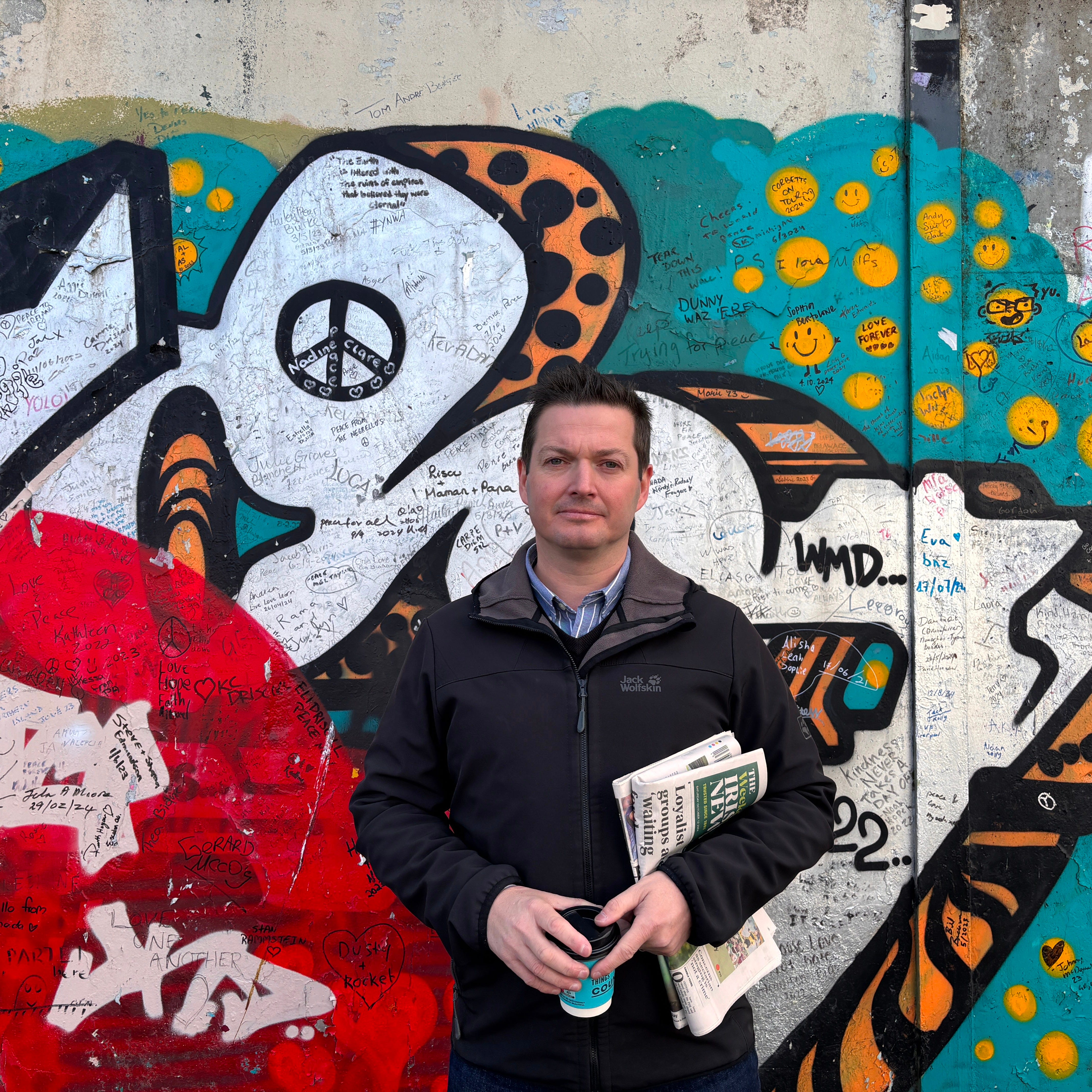 |
| Aaron Edwards is the author of critically acclaimed books, UVF: Behind the Mask and Agents of Influence: Britain’s Secret Intelligence War Against the IRA. His next book, Enemies Within, on the use of secret agents inside the UDA/UFF, will be published by Merrion Press in 2026. |