


I joined a panel of experts on BBC Radio Ulster's Talkback programme on 13 August to discuss a new report on loyalist paramilitary transformation. I was asked about the idea of a tougher policing response. Here’s what I said.
William Crawley: When people talk about an off ramp and suggest that if these paramilitary groups do not take the off ramp, we should move to a full policing response… Within that claim, is it implied that we haven’t had a full policing response yet? We haven’t actually done that job?
Aaron Edwards: I think it is. I think there is a full blown sort of nuclear option here. It’s provided for in the Terrorism Act 2000 and it has led to successful prosecutions in GB. I’m thinking of Anjem Choudary who was the director of an Islamist organisation, prosecuted under the Directing of Terrorism legislation, Section 56. That could be applied, I suppose, but given the sort of semi-detached nature of legislation in Northern Ireland, that’s something that obviously legal experts would need to consult. But the thing is that there are levers that can be pulled, coercive levers. You talk about sticks, I mean, that’s one - another would be as Duncan (Morrow) has mapped out.
One of the sticking points here is gatekeepers. We could simply just, as a society, and the governments could just decide that they’re going to work around those gatekeepers, because a lot of money has been channelled into the coffers of these groups, some of these groups have been aligned or associated with paramilitary groups. There needs to be a kind of option there to penalise, you know, not just to monitor, not just to sit back, you know, and wait for this thing to happen organically.
I think that they’re definitely are levers of the state, or both states can pull. You know, that’s just an example of a couple of them. But I think that in the report, one thing that hasn’t been mentioned is the suggestion that perhaps, the so-called good paramilitaries, the “peace leaderships”, could inform on those criminal elements within their ranks. I mean, that’s a non-starter, surely, because in some of those organisations, you have people all the way up, from the top to the bottom, who are involved in criminality.
What are they going to do, inform on themselves? And so there is complicity there, and I think that that this has to really rotate around the idea of the organisations being hierarchies but also networks. And what I mean by that is - the UDA is a good example - there are some of those groups that are targeted by the Paramilitary Crime Task Force in North Antrim and Londonderry/Derry, for instance, they haven’t been given any funding, so, but they sit, or they nominally sit, on the LCC. So, really, I think there needs to be a coordinated response.
I do agree with the report authors that there has to be a more structured and coordinated response to this. And I think that that’s something that people would welcome. Not continual funding, not a continual talking shop, but action.
William Crawley: So, you take the money question either altogether, say, we’re up for engagement with a deadline, but this is it. This is the last round of that.
Aaron Edwards: Yeah, because they’re only there (because of the money). I mean, I’ve talked to a lot of loyalists in the kind of middle management space as well, who, who say that, you know, within these groups - or associated with these groups - who say that they’re, that, you know, they’re not, they’re not, they would have done it by now.
William Crawley: How would that work, though? I mean, we’re taking the money out of it. We’re saying we’re up for engagement and then you say, our ambition is to make you go away. That’s our engagement and you don’t get a reward in terms of money for going away. Well, what’s the point? What’s the point of that from their point of view?
Aaron Edwards: Well, as Chris Hudson has said, they’re about papering rooms with these declarations of intent. Actually show them and work through them, you know, line by line. This is what you said in 2015. This is what you said in 2018. This is what you said last week.
William Crawley: I doubt they’re worried about logical inconsistency, these guys.
Aaron Edwards: Well, I mean, if you’re going to use, as the report authors suggest, the Declaration of Transformation from 2018 as a roadmap. Clearly, you need to do a kind of a bit of an exercise in taking stock of where things have been in the past, almost a decade. So they’re going to be held the account. They going to have to be held in account and they’re going to have to put themselves forward, even to their own membership. I’m not talking to the wider public because a lot of this is happening behind closed doors or… behind masks. So, clearly, you know, if they’re serious, I think they need to drive it through themselves as, as hierarchies, these (paramilitary) organisations.
My new book, Enemies Within: The Explosive True Story of Johnny ‘Mad Dog’ Adair, Northern Ireland’s Most Infamous Paramilitary, will be published on 10 September by Merrion Press. Click here for more details.
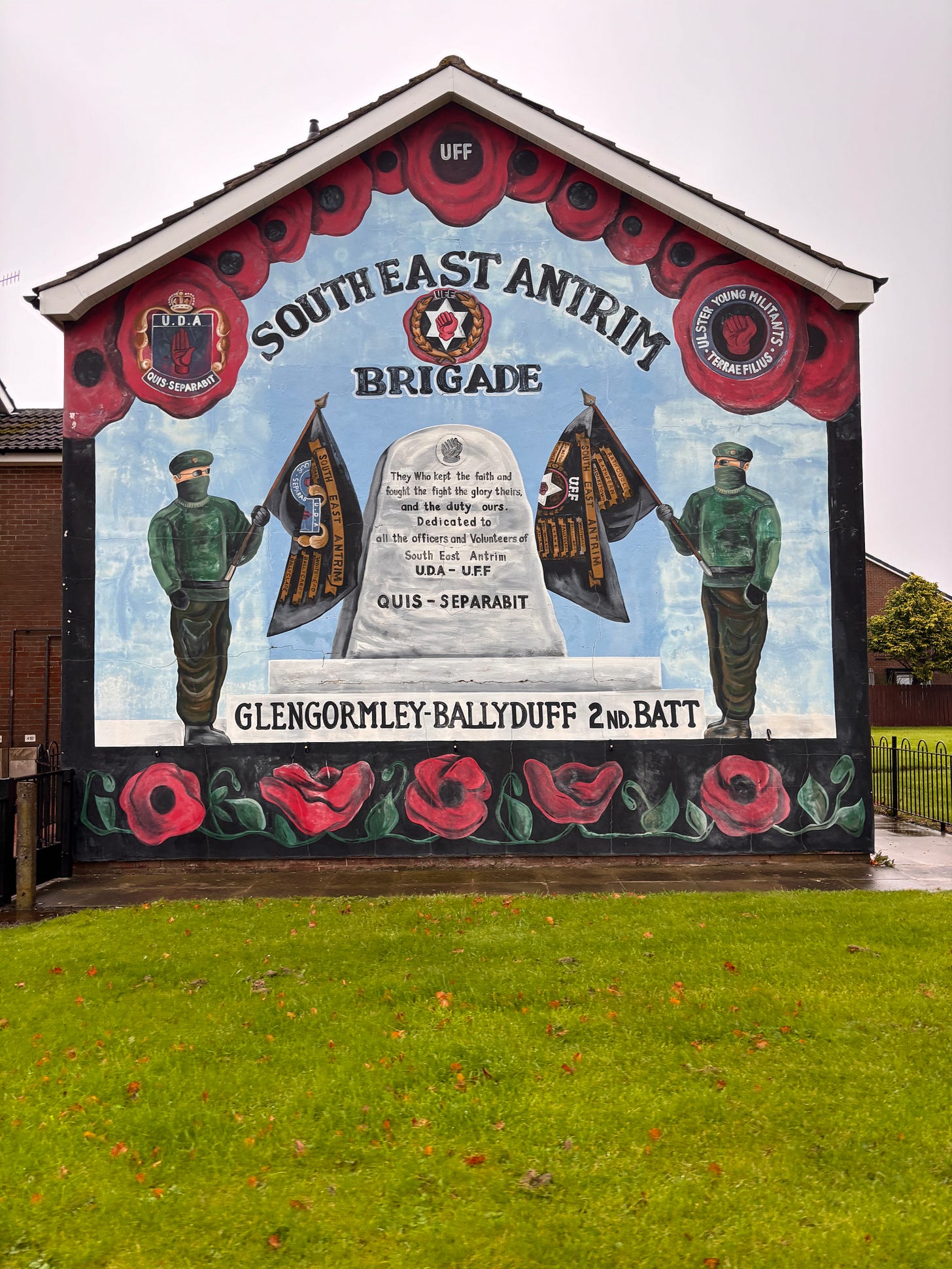 |
| They haven’t gone away you know - the murals near where I used to live remind me of the continual failure of paramilitary transition. That’s before I even think about the lived reality in estates like Ballyduff. |
William Crawley: When people talk about an off ramp and suggest that if these paramilitary groups do not take the off ramp, we should move to a full policing response… Within that claim, is it implied that we haven’t had a full policing response yet? We haven’t actually done that job?
Aaron Edwards: I think it is. I think there is a full blown sort of nuclear option here. It’s provided for in the Terrorism Act 2000 and it has led to successful prosecutions in GB. I’m thinking of Anjem Choudary who was the director of an Islamist organisation, prosecuted under the Directing of Terrorism legislation, Section 56. That could be applied, I suppose, but given the sort of semi-detached nature of legislation in Northern Ireland, that’s something that obviously legal experts would need to consult. But the thing is that there are levers that can be pulled, coercive levers. You talk about sticks, I mean, that’s one - another would be as Duncan (Morrow) has mapped out.
One of the sticking points here is gatekeepers. We could simply just, as a society, and the governments could just decide that they’re going to work around those gatekeepers, because a lot of money has been channelled into the coffers of these groups, some of these groups have been aligned or associated with paramilitary groups. There needs to be a kind of option there to penalise, you know, not just to monitor, not just to sit back, you know, and wait for this thing to happen organically.
I think that they’re definitely are levers of the state, or both states can pull. You know, that’s just an example of a couple of them. But I think that in the report, one thing that hasn’t been mentioned is the suggestion that perhaps, the so-called good paramilitaries, the “peace leaderships”, could inform on those criminal elements within their ranks. I mean, that’s a non-starter, surely, because in some of those organisations, you have people all the way up, from the top to the bottom, who are involved in criminality.
What are they going to do, inform on themselves? And so there is complicity there, and I think that that this has to really rotate around the idea of the organisations being hierarchies but also networks. And what I mean by that is - the UDA is a good example - there are some of those groups that are targeted by the Paramilitary Crime Task Force in North Antrim and Londonderry/Derry, for instance, they haven’t been given any funding, so, but they sit, or they nominally sit, on the LCC. So, really, I think there needs to be a coordinated response.
I do agree with the report authors that there has to be a more structured and coordinated response to this. And I think that that’s something that people would welcome. Not continual funding, not a continual talking shop, but action.
William Crawley: So, you take the money question either altogether, say, we’re up for engagement with a deadline, but this is it. This is the last round of that.
Aaron Edwards: Yeah, because they’re only there (because of the money). I mean, I’ve talked to a lot of loyalists in the kind of middle management space as well, who, who say that, you know, within these groups - or associated with these groups - who say that they’re, that, you know, they’re not, they’re not, they would have done it by now.
William Crawley: How would that work, though? I mean, we’re taking the money out of it. We’re saying we’re up for engagement and then you say, our ambition is to make you go away. That’s our engagement and you don’t get a reward in terms of money for going away. Well, what’s the point? What’s the point of that from their point of view?
Aaron Edwards: Well, as Chris Hudson has said, they’re about papering rooms with these declarations of intent. Actually show them and work through them, you know, line by line. This is what you said in 2015. This is what you said in 2018. This is what you said last week.
William Crawley: I doubt they’re worried about logical inconsistency, these guys.
Aaron Edwards: Well, I mean, if you’re going to use, as the report authors suggest, the Declaration of Transformation from 2018 as a roadmap. Clearly, you need to do a kind of a bit of an exercise in taking stock of where things have been in the past, almost a decade. So they’re going to be held the account. They going to have to be held in account and they’re going to have to put themselves forward, even to their own membership. I’m not talking to the wider public because a lot of this is happening behind closed doors or… behind masks. So, clearly, you know, if they’re serious, I think they need to drive it through themselves as, as hierarchies, these (paramilitary) organisations.
My new book, Enemies Within: The Explosive True Story of Johnny ‘Mad Dog’ Adair, Northern Ireland’s Most Infamous Paramilitary, will be published on 10 September by Merrion Press. Click here for more details.
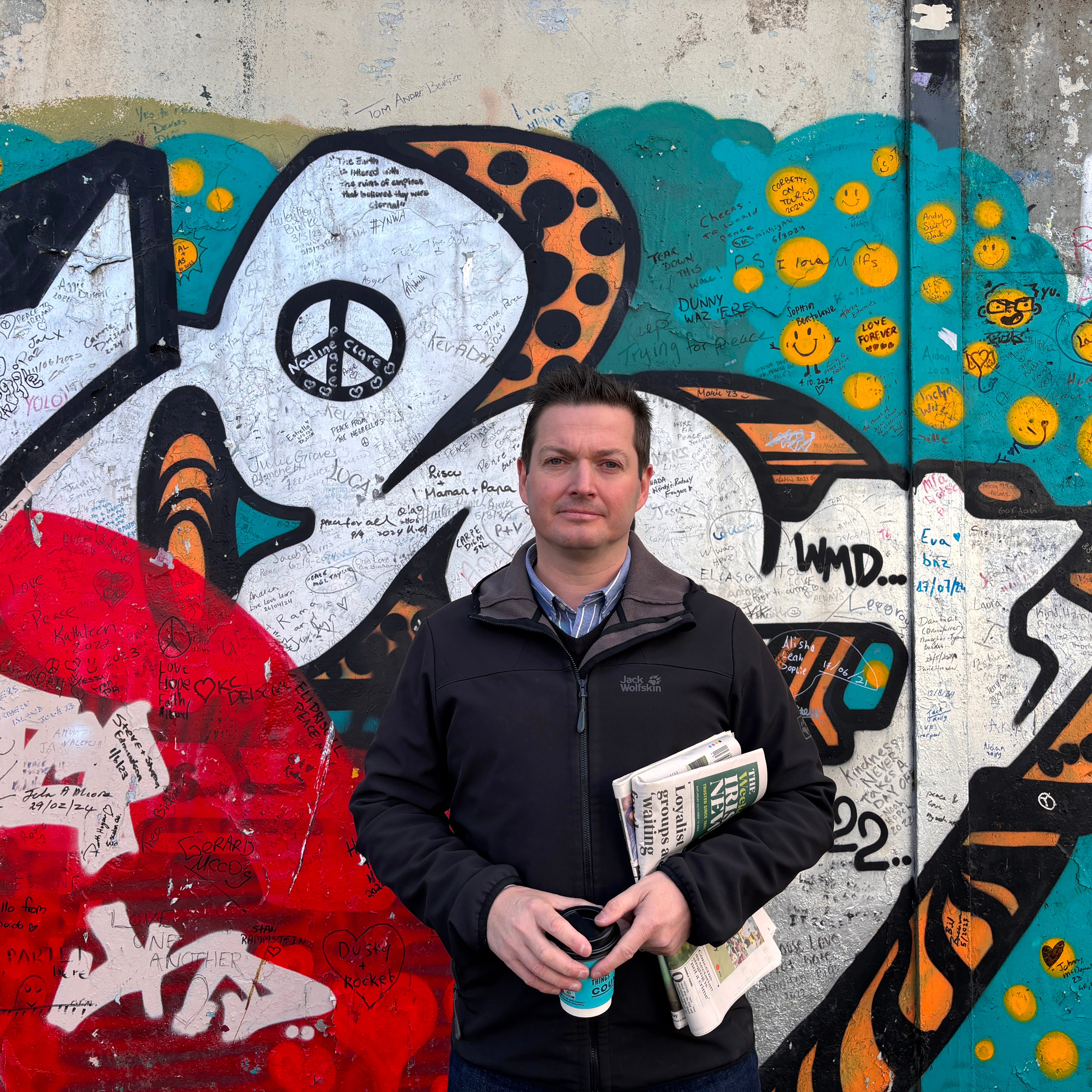 |
| Aaron Edwards is the author of critically acclaimed books, UVF: Behind the Mask and Agents of Influence: Britain’s Secret Intelligence War Against the IRA. His next book, Enemies Within: The Explosive True Story of Johnny ‘Mad Dog’ Adair, Northern Ireland’s Most Infamous Paramilitary, will be published by Merrion Press on 10-September 2026. |


No comments